 Skip to content

Professional Tree Care · San Jose & South Bay
Tree Decay
Detection
What You Can't See Can Still Be a Serious Risk — A Proper Assessment Tells You What's Actually There
Why It Matters
Arborist-Led Assessment — The Right Method for the Right Tree
A tree can look entirely healthy from the outside while decay has been quietly progressing inside the trunk or along a major limb for years. Bark closes over old wounds. Foliage continues to grow. From the ground, nothing looks wrong. And then a branch fails unexpectedly — and the internal condition that caused it becomes visible for the first time.
Decay detection is not a single technique. Our Board-Certified Master Arborist selects the most appropriate diagnostic approach for each tree and situation — from percussion testing to resistograph technology, which uses a fine drill bit to measure wood resistance and map the extent of decay with significantly greater precision than visual inspection alone.
The goal in every case is the most accurate picture of the tree's internal condition — so you can make a sound decision about its future.
Schedule Your Assessment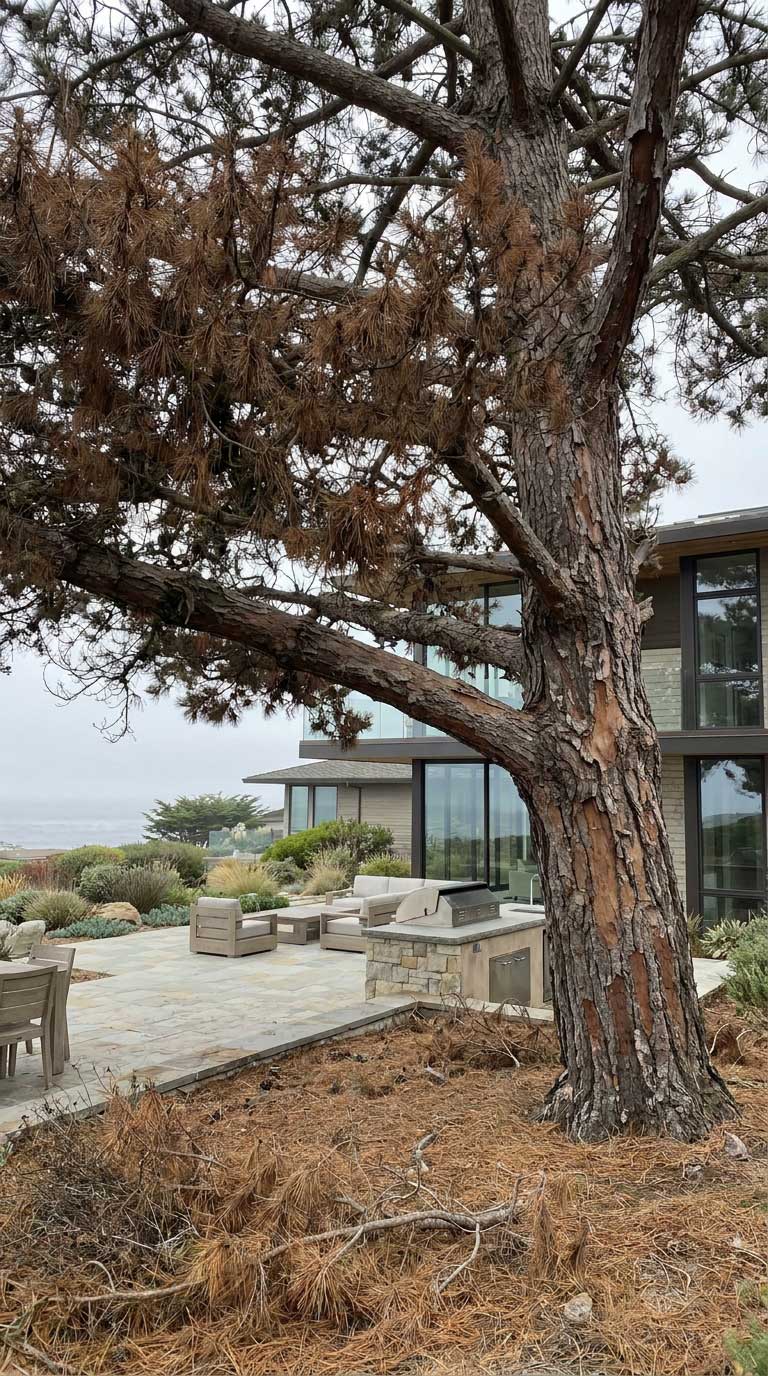
Master Arborist
What We Know
Why Decay Is More Common Than Most Homeowners Realize
No tree is immune to decay, and resistance diminishes as a tree ages or is repeatedly stressed. The concern is not decay itself — some degree is normal in mature trees. The concern is the extent and location of that decay relative to the tree's structural requirements.
How Decay Starts
Old pruning cuts made incorrectly, wounds from past storms, construction impacts, and equipment damage all create entry points for fungal colonization. Once established, fungi break down the wood's cell structure — and trees' natural compartmentalization process is imperfect at containing it.
Urban Stress Factors
Trees in urban landscapes face compacted soil, heat reflection from hardscape, and root zone disturbance from construction and irrigation — conditions that weaken a tree's ability to manage wounds. A tree that might have contained decay successfully in a natural setting may struggle to do so in a typical residential landscape.
The Invisible Risk
Many trees with meaningful internal decay show no visible signs at all. Bark closes over wounds, foliage continues to grow, and from the ground nothing looks wrong. A professional assessment with appropriate diagnostic tools provides a level of confidence that visual inspection alone cannot.
Signs to Watch For
Consider a Decay Detection Assessment If:
If you're noticing any of the following, the right first step is a professional evaluation — not a removal decision. A decay assessment doesn't always lead to removal. Frequently it leads to a management plan that extends the tree's safe life significantly.
- A tree has large old wounds, cavities, or areas where bark has been lost on the trunk or major limbs
- Fungal conks, mushrooms, or bracket fungi are growing at the base or on the trunk
- A limb has failed previously from what appeared to be a sound tree
- The tree has a history of construction activity, root disturbance, or repeated stress events nearby
- You're preparing a tree risk assessment for insurance, permit, or legal purposes
- A tree is located near a structure, high-use area, or anywhere that failure would have serious consequences
- You simply want to know the internal condition of a significant tree before making decisions about its care
"The goal is accurate information — and from there, the right decision."
Know Before You Decide
A professional decay assessment gives you the confidence that comes from knowing what's actually inside the tree — rather than wondering. We assess each situation individually and recommend removal only when it's genuinely warranted.
(408) 422-1313Our Process
Our Decay Detection Process
A layered diagnostic approach — each step building toward the most accurate picture of the tree's internal condition.
Visual Inspection
The assessment begins with a thorough visual examination of the entire tree — trunk, major limbs, branch attachments, bark, and base. We look for external indicators of internal issues: cracks, cavities, unusual bark patterns, fungal growth, subtle lean changes, and signs of past wound response.
Percussion and Sound Testing
For many trees, careful percussion of the trunk and major limbs provides meaningful information about internal condition. A solid, living wood column sounds distinctly different from one with significant decay or hollow space. This technique is non-invasive and appropriate for initial screening across a broad area of the tree.
Resistograph Testing (Where Indicated)
When a more precise assessment of decay extent is needed, resistograph technology allows us to measure wood resistance at specific points within the trunk or limb. The instrument creates a resistance profile as it advances through the wood, clearly distinguishing between sound wood and decayed or hollow areas — providing diagnostic accuracy that visual inspection alone cannot achieve.
Findings and Recommendation
Based on the complete assessment, we provide a clear finding of the tree's internal condition and a specific recommendation — whether that's continued monitoring, targeted pruning to reduce load on a compromised area, cabling or bracing to provide structural support, or removal where the decay has progressed to a point where structural integrity is genuinely compromised.
Specialized Capabilities
Specialized Decay Detection Capabilities
Beyond standard assessment, we offer targeted diagnostic capabilities for situations that require greater precision or formal documentation.
Our Difference
Why Homeowners Choose Us
Homeowners across San Jose come to us for decay detection because they want an honest answer — not an automatic recommendation to remove. Our approach is to determine what's actually present, explain what it means in plain terms, and give you the information you need to make a sound decision that reflects both the safety of your property and, wherever possible, the preservation of the tree.
Certain decay patterns and fungal species are more prevalent in the South Bay than in other regions. The mature oak, sycamore, redwood, and ornamental species found throughout established neighborhoods in San Jose, Los Gatos, and Saratoga each have their own characteristic decay patterns and species-specific indicators that inform how an assessment is approached. Robert's years of evaluating trees specifically in this geography means he's drawing on direct experience — not a generalized framework.
"We don't remove trees we don't need to remove. But we also don't minimize genuine structural concerns to tell you what you want to hear."
Schedule an AssessmentEvery decay assessment is conducted by Robert Apolinar, BCMA — with the training and direct field experience to interpret what diagnostic tools are actually showing.
When visual and percussion assessment isn't enough, resistograph testing provides precision mapping of internal decay — a level of diagnostic accuracy that observation alone cannot match.
Decay patterns vary by species and region. Robert's experience evaluating the specific trees found throughout San Jose, Los Gatos, and Saratoga informs every assessment.
A decay assessment frequently leads to a management plan — not a removal. Monitoring, structural support, or targeted pruning can extend the safe life of many trees significantly.
Common Questions
Frequently Asked Questions — Tree Decay Detection
Can a tree with internal decay be saved, or does it always need to come down?
Not all decay leads to removal. The critical factors are the location of the decay, how extensive it is, and what structural demands are placed on the affected area. Decay in a lower-priority limb may simply be monitored over time. Decay near a major branch attachment or in a load-bearing section of the trunk is a more serious concern. In some cases, cabling or targeted pruning to reduce load can extend the safe life of a tree with localized decay significantly. We assess each situation individually and recommend removal only when the structural compromise genuinely warrants it.
What are the most common signs that a tree might have internal decay?
The most telling external indicators are fungal growth — particularly bracket fungi or mushrooms at the base or on the trunk — large open cavities, areas of missing or deeply furrowed bark, and cracks that run along the grain of the wood. A history of past limb failures from what appeared to be a healthy tree is also significant. That said, many trees with meaningful internal decay show none of these signs at all, which is exactly why a professional assessment with appropriate diagnostic tools provides a level of confidence that visual inspection alone cannot.
What is resistograph testing and is it harmful to the tree?
A resistograph uses a very fine drill bit — roughly the diameter of a thick needle — to measure the resistance of the wood as it advances into the trunk. The resistance profile clearly distinguishes between sound wood and areas of decay or hollow space. The drill hole is extremely small and causes no meaningful harm to a healthy tree. For a tree with significant decay concerns, the diagnostic value far outweighs the minimal impact of the test itself.
How does decay typically get started in a tree?
The most common entry points are pruning cuts that weren't made correctly, leaving exposed wood that fungi can colonize over time, and wounds from mechanical damage — whether from equipment, construction activity, storm impact, or animal activity. Once a fungal pathogen establishes itself in the exposed wood, it begins breaking down the cell structure. Trees have a natural process called compartmentalization that attempts to wall off the decay and limit its spread, but this process is imperfect, and some species manage it significantly better than others.
If I'm planning to sell my property, should I have my trees assessed for decay?
It's a reasonable step, particularly for large or mature trees near structures. A documented decay assessment provides clarity for both the seller and prospective buyers, and removes uncertainty that might otherwise complicate a transaction. If a tree is found to have significant structural concerns, addressing it before listing is generally better than having it surface during a buyer's inspection. If the trees are found to be sound, that documentation can be a positive asset in the transaction.
Know What's Inside
Before It Becomes a Problem.
If you have a tree you're concerned about — or simply want to know the internal condition of a significant tree on your property — a professional assessment is the most reliable way to find out.
