
The real difference boils down to one simple fact: preventive tree care is a manageable, planned investment, while emergency tree service is a premium-priced crisis response. Being proactive almost always costs significantly less than reacting to a disaster that has already happened.
For many South Bay homeowners, the question of when to spend money on tree care feels like a gamble. You don't want to pay for services you don't need, but you also don't want a surprise emergency when a tree fails and damages your home, car, or power lines. This guide breaks down why understanding the cost difference is crucial for protecting both your property and your budget.
The True Cost of Waiting: A San Jose Cost Comparison
For many South Bay homeowners, thinking about tree care costs feels like a calculated risk. It’s natural to want to avoid spending money on a tree that looks perfectly healthy. But nobody wants to wake up to the nightmare of a massive limb crashing down on their house during one of California's atmospheric rivers.
The common misstep is assuming that if a tree looks healthy, it's safe, and that waiting to call a professional saves money. However, data shows that years of drought followed by heavy storms have weakened many trees across California. Internal decay, root stress, and structural imbalance often go unnoticed until failure occurs, making reactive tree service far more expensive and disruptive.
Why Reactive Tree Service Costs So Much More
The assumption that a tree is safe just because it has green leaves can be a dangerous one. Internal decay, root systems compromised by years of drought, and poor branch structure are often invisible to the untrained eye. These are the exact hidden problems that turn a predictable maintenance task into a costly emergency.
This chart lays out the dramatic difference between planned and emergency tree service costs right here in the San Jose area.
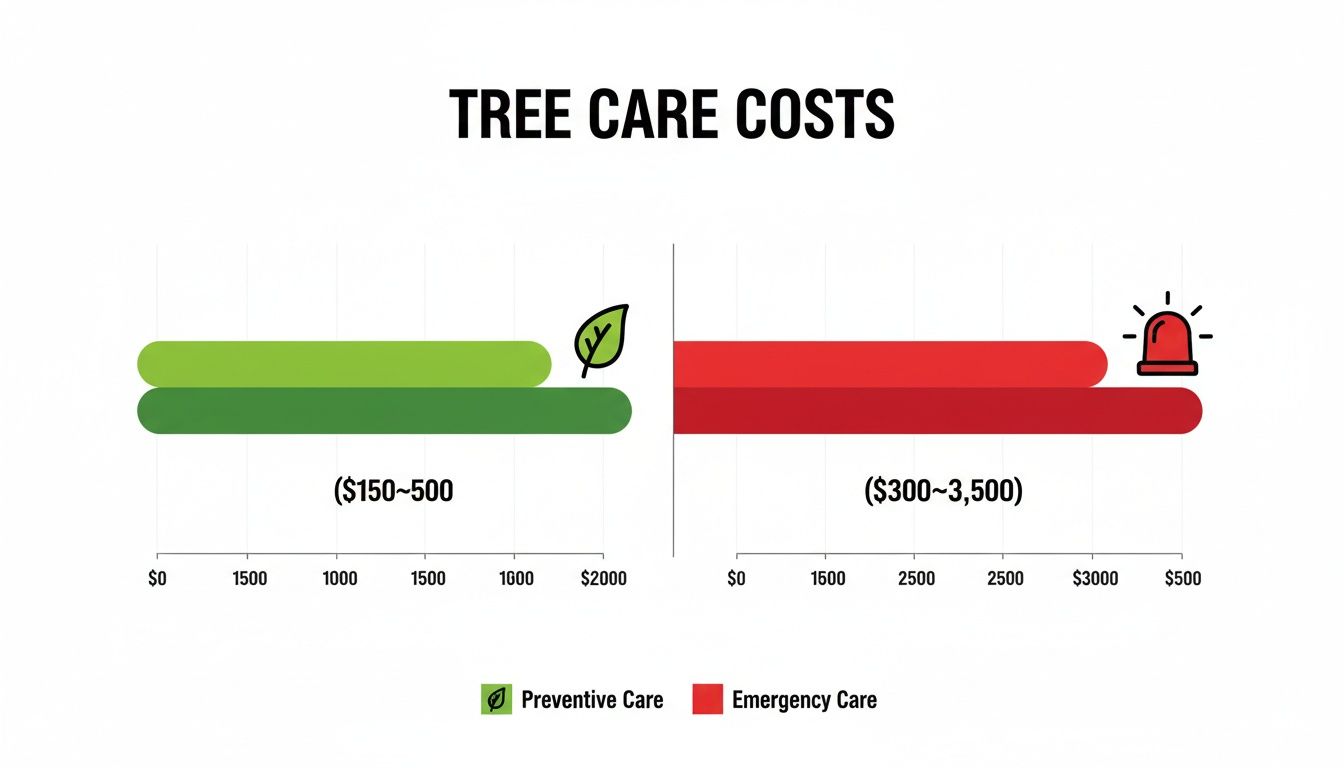
As you can see, the price of reacting to a crisis is exponentially higher than the cost of preventing one in the first place. Proactive care is proven to reduce liability, property damage, and expensive emergency calls.
Let’s put this into perspective. Think about a mature oak tree in your San Jose backyard. A routine preventive pruning session for a tree like that typically runs between $150 and $500. Now, imagine that same tree fails during a winter storm. The cost for an emergency removal skyrockets to $300–$3,500 or more.
The numbers don't lie. Neglected trees can lead to 50% higher service fees during emergencies due to the urgency, the need for specialized equipment like cranes, and after-hours call-outs. You can find more insights on emergency tree service costs over at Modernize.com.
For a clearer picture, here’s how the costs and circumstances break down side-by-side.
At-a-Glance Cost Comparison: Preventive Care vs. Emergency Service
This table offers a straightforward look at the typical costs and key differences you'll encounter between planned maintenance and an urgent call-out in the San Jose area.
| Service Aspect | Preventive Tree Care (Proactive) | Emergency Tree Service (Reactive) |
|---|---|---|
| Typical Cost | $150 – $500 (for routine pruning/inspection) | $300 – $3,500+ (for removal/major repair) |
| Timing | Scheduled at your convenience during regular hours. | Immediate, often 24/7, including nights & weekends. |
| Goal | Health, safety, and long-term structural integrity. | Damage control and immediate hazard mitigation. |
| Labor Rates | Standard, competitive rates. | Premium rates for urgency and after-hours work. |
| Equipment | Standard trucks, chippers, and climbing gear. | May require cranes, heavy-duty rigging, and specialized tools. |
| Job Complexity | Straightforward, planned work. | Complex, high-risk, and often involves property damage. |
As you can see, the financial argument for proactive care is compelling. Planning ahead not only saves you a significant amount of money but also avoids the immense stress that comes with a tree-related emergency.
The Proactive Approach Is Just Smart Financial Planning
The key is to start viewing tree care as a form of home protection, not just cosmetic yard work. A much better approach involves:
- Preventive Tree Evaluations: San Jose Tree Service & Landscaping provides evaluations, not just removals. Our licensed professionals combine arborist insight with hands-on service to spot problems long before they become disasters.
- Strategic Pruning: We address small structural issues before a storm can expose them as catastrophic weaknesses, catching problems early.
Here in San Jose and across the South Bay, our unique climate of prolonged drought followed by intense storms makes this proactive mindset absolutely essential. Understanding how much preventive tree care costs compared to emergency tree service is the first step in protecting both your property and your wallet.
Breaking Down Your Preventive Tree Care Investment
Think of preventive tree care like you would an annual HVAC tune-up or a roof inspection—it’s a smart investment in your property's safety and long-term value. When you schedule proactive service, you're not just paying for a quick trim. You're bringing in a licensed professional whose trained eye can spot the subtle warning signs of future failure.
It’s all about shifting from a reactive mindset—cleaning up a mess after it happens—to a proactive strategy that protects both your home and your wallet. We perform a thorough assessment, from the roots up, to catch risks before they have a chance to become dangerous and expensive problems.

What Your Investment Covers
Preventive care isn't just one service; it's a combination of actions designed to make your trees healthier, stronger, and more resilient. Your investment funds the critical work needed to keep them structurally sound, especially when faced with the South Bay’s unpredictable weather.
Typically, your costs will cover these essentials:
- Structural Pruning: This is arguably the most important thing you can do for mature trees. Our arborists remove or reduce branches with weak connections, fix crossing limbs that could snap under pressure, and promote a strong central trunk.
- Canopy Thinning and Cleaning: By strategically removing dead, dying, or diseased branches ("cleaning") and reducing the overall density of the leaves ("thinning"), we help wind move through the canopy instead of pushing against it.
- Health and Risk Assessments: A professional arborist sees things most homeowners miss. We’re looking for early signs of fungal infections, pest problems, compacted clay soil around the roots, and hidden internal decay—all common issues in the San Jose area.
Pro-Tip: An annual assessment is like a health screening for your trees. Catching a problem early is always less invasive and far less expensive than performing emergency surgery after a crisis hits.
Key Factors That Influence Preventive Care Costs
No two preventive care plans cost the same because every tree and property is different. Getting a handle on these factors will help you understand your quote. For a deeper dive, you can also read our guide on why tree service prices vary so much in San Jose. The final price really comes down to a few key things.
Tree Size and Species
It’s simple: bigger trees require more time, labor, and specialized equipment like bucket trucks to work on safely. A towering redwood will naturally cost more to prune than a small, ornamental Japanese maple.
Accessibility and Location
Where the tree is on your property plays a huge role in the price. A tree standing alone in the front yard is straightforward. But one wedged between your house and a neighbor’s fence or with branches dangling over power lines requires complex rigging and extra safety measures.
Overall Tree Health and Condition
A tree that’s been looked after regularly is always less expensive to maintain than one that's been neglected for years. If we find significant deadwood or structural defects, the scope of work gets bigger, but it paves the way for much more affordable maintenance down the road.
The High Price of an Emergency: What Drives Up the Cost
Emergency tree service is expensive for a reason—it’s a high-stakes, reactive solution to an immediate crisis. This isn't like a routine trim you schedule weeks in advance. An emergency call mobilizes a specialized response team, often in the middle of the night, to handle a situation that’s both unpredictable and dangerous.
The entire operation is priced at a premium because the risks, resources, and urgency are dramatically higher. Waiting for a disaster is a costly gamble that disrupts your life, your finances, and your peace of mind.
Immediate 24/7 Response and After-Hours Premiums
When a tree fails, you can't wait until Monday morning. Our crews have to be ready to roll 24/7, including nights, weekends, and holidays. That immediate availability means paying skilled climbers and ground crews premium overtime rates, which is a huge factor in the final bill.
If you're dealing with an urgent situation, you can learn more about our dedicated emergency tree services in San Jose.
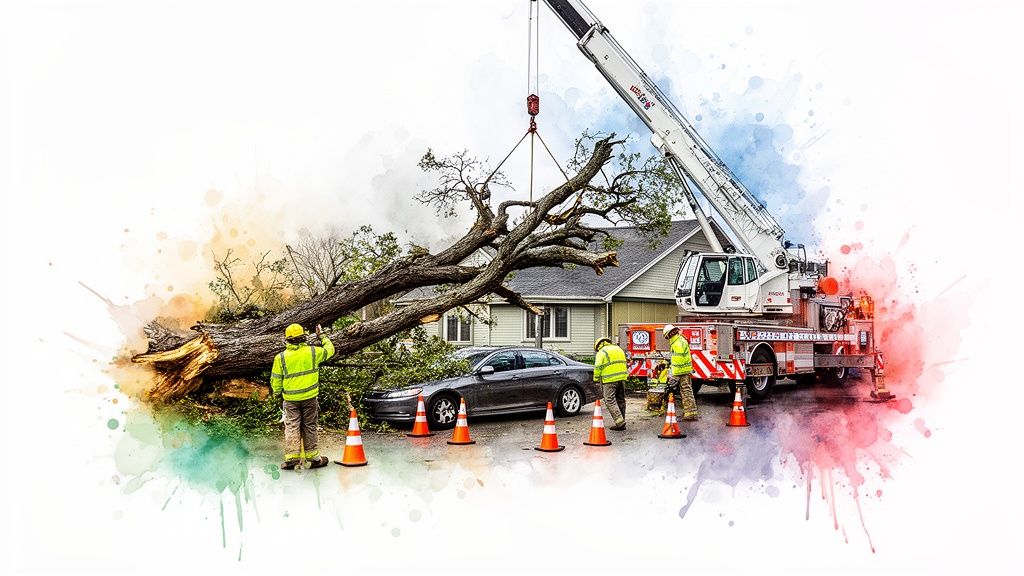
A classic South Bay scenario: A mature valley oak comes down after an atmospheric river. Crews might have to work through the night in pouring rain, navigating hazards like downed power lines and saturated, unstable ground—conditions that demand higher pay and extreme caution.
Heightened Risk to Crews and Property
Working on a storm-damaged tree is one of the most dangerous jobs in our industry. Unlike a healthy tree that we've assessed, a failed or failing tree is a complete wild card.
Here are a few of the risks we have to manage on-site:
- Unpredictable Weight Shifts: A tree that’s hung up or partially fallen can shift or roll unexpectedly as we cut.
- Entangled Power Lines: Working around live wires is incredibly hazardous and requires specialized training.
- Compromised Structural Integrity: The parts of the tree still standing might have hidden cracks or weaknesses.
This level of danger means we send our most experienced people, use advanced safety protocols, and carry higher insurance premiums—all of which are factored into the price.
Specialized Heavy Equipment on Demand
Emergency jobs often require more than just chainsaws and ropes. When a massive tree is leaning precariously over your house or has already crashed onto your roof, a crane is often the only safe way to get it out.
The costs tied to that equipment add up quickly:
- Crane mobilization fees alone can run into the thousands of dollars.
- Specialized crane operators are needed, which adds to the labor cost.
- Complex rigging is essential to lift enormous sections of wood without causing even more damage.
When a neglected tree falls on your house, the financial burden can be staggering. It's smart to understand what your insurance might not tell you about a fallen tree on house claim as you navigate the aftermath.
Uncovering The Financial Benefits Of Proactive Tree Care
Beyond the immediate sticker shock of an emergency call, the real value of preventive tree care is what it saves you in the long run. For homeowners in the South Bay, thinking ahead isn't just an expense—it’s a smart way to manage one of your biggest assets. Your trees aren't just scenery; they're a vital part of your property's overall worth.
Investing in your trees is really an investment in your home's future value and safety. It’s a decision that pays you back in more ways than one, going far beyond just dodging a huge emergency bill.
Enhancing Property Value And Curb Appeal
Healthy, well-structured trees are a huge selling point. They create a welcoming, established look, provide shade that cuts cooling costs, and give a neighborhood its character. In fact, research shows that 98% of homeowners believe landscaping increases property value (HomeLight, 2023).
On the flip side, neglected trees with dead, dangling limbs can signal to potential buyers that other parts of the home may have been neglected, too. This can definitely hurt your home’s marketability.
Reducing Liability And Insurance Headaches
Having a record of regular, professional tree care is your best defense if something goes wrong. If a branch from your tree falls and damages your neighbor’s car, that maintenance history shows you took responsible steps to prevent it. This kind of documentation can be a lifesaver when you’re filing an insurance claim.
Without it, a fallen tree could be chalked up to negligence, potentially leading to denied claims and leaving you with a massive out-of-pocket expense. You can learn more about exactly what tree maintenance helps prevent storm damage to my property in our detailed guide.
Proactive care transforms a potential liability into a documented asset. It provides peace of mind, knowing you've minimized risks to your family and neighbors while protecting your financial interests.
Just like you'd follow a maintenance schedule for your home's HVAC system, creating a flawless preventive maintenance schedule for your trees is key. It helps you plan and budget for care, steering you clear of the financial chaos that an unexpected disaster brings.
Long-Term Value: Preventive Maintenance vs. Reactive Response
The true financial picture really comes into focus when you look at the costs over a few years. A proactive plan involves small, predictable expenses. A reactive approach, on the other hand, is basically a gamble where the stakes are incredibly high.
| Financial Factor | With Preventive Care Plan | Without Preventive Care (Reactive Only) |
|---|---|---|
| 5-Year Maintenance Cost | $750 – $2,500 (Annual inspections/pruning) | $0 (No planned costs) |
| Emergency Risk | Low. Structural issues are caught and fixed early. | High. Hidden defects are left to worsen over time. |
| Potential Emergency Cost | Minimal. Major emergency service is highly unlikely. | $3,000 – $10,000+ (One major failure) |
| Property Value Impact | Positive. Boosts curb appeal and perceived value. | Negative. A visible hazard can decrease value. |
| Insurance Premiums | May qualify for discounts with documented care. | Risk of increased premiums after filing a claim. |
| Total 5-Year Outlook | Predictable costs, enhanced property value, and peace of mind. | Zero planned costs but a high risk of a massive, unexpected expense. |
When you look at it this way, the choice is clear. Preventive tree care is one of the smartest financial decisions a homeowner can make.
How to Assess Your Trees and When to Call a Professional
Knowing the price difference between proactive care and emergency work is one thing, but how do you know when your trees actually need a professional’s touch? While a certified arborist has a trained eye for subtle problems, any homeowner can learn to spot the major red flags. This quick guide is designed to help you make smarter, more confident decisions.
A Homeowner's Tree Assessment Checklist
You don't need to be an expert to spot trouble. Just grab a notepad, walk your property, and give each of your large trees a good look from a few different angles.
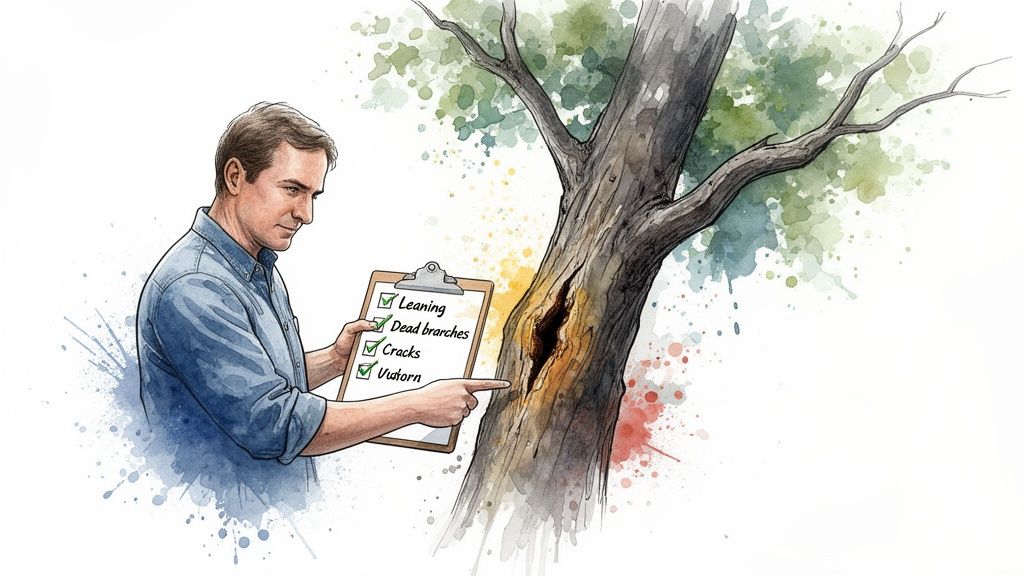
- Significant Leaning: Is the tree leaning more than it used to? Check the ground on the opposite side for heaving soil or exposed roots—that’s a critical warning sign.
- Large Dead Branches: Look up into the canopy. Do you see big limbs with no leaves during the growing season? Arborists often call these "widow-makers" for a good reason.
- Cracks or Splits in the Trunk: Deep vertical cracks are serious business, especially where large limbs meet the trunk, as this is a major weak point.
- Signs of Sickness or Decay: Mushrooms growing on the trunk or near the base are often a sign of internal rot. Also look for large patches of missing bark.
If you spot any of these issues, it is absolutely time to call a professional. These are not DIY fixes. They are clear indicators of significant structural problems that need an expert eye.
Evaluating Location and Potential Risk
A tree's health is only half the story—where it's located is just as important. A hazardous tree in an open field is a low risk, but that same unstable tree right next to your house is a massive liability.
Ask yourself these questions:
- Proximity to Structures: Which branches are hanging over your roof, deck, or garage?
- Overhead Utilities: Are any limbs growing into or even near power lines? This is an extremely dangerous situation that only a qualified, licensed tree removal contractor should handle.
- High-Traffic Areas: Does the tree loom over your driveway, a public sidewalk, or your kids' play area?
If a tree has visible defects and is in a high-risk location, scheduling a professional assessment should be your top priority. For more tips, check out our guide on how you can prevent tree damage before the next big storm in San Jose.
Why to Always Hire a Licensed and Insured Contractor
When it is time to call for help, choosing the right company is everything. Tree work is one of the most dangerous jobs out there, and hiring an uninsured or unlicensed worker puts all of the liability squarely on your shoulders.
A license isn't just a piece of paper—it's your assurance of professionalism, accountability, and safety. It proves the company has the right skills, carries the necessary insurance, and runs a legitimate business.
At San Jose Tree Service & Landscaping, we are fully licensed (CSLB #985639) and have been BBB Accredited since 2013. These credentials offer you peace of mind, showing our long-standing commitment to safe, high-quality work in the South Bay community.
Your Partner for Proactive Tree Care in San Jose
When you line up the costs of preventive tree care against emergency services, the numbers don't lie. Being proactive is overwhelmingly more affordable and far less stressful. Simply waiting for a tree to fail isn't a savings plan—it's a risky gamble with your property and safety on the line.
For those of us living in San Jose and the greater South Bay, this proactive mindset is essential. Our local climate, with its punishing cycles of drought followed by intense atmospheric rivers, puts incredible strain on our urban canopy. A tree can look perfectly fine on the outside while hiding structural weaknesses that only a trained eye can spot.
From Reactive Panic to a Proactive Partnership
At San Jose Tree Service & Landscaping, we want to be more than the crew you call in a crisis. Our goal is to become your long-term partner in managing the most valuable living assets on your property. We have deep roots in this community and understand the specific challenges facing local species like our native oaks, redwoods, and other common ornamentals.
We bring an arborist's insight to every job, combining expert diagnostics with licensed, hands-on care. This allows us to build a maintenance strategy that actually fits your property and your budget, catching small issues before they become dangerous emergencies.
Don't wait for the next big storm to expose a problem that’s been brewing for years. Take the first step toward a safer, more predictable approach to tree care. Our team is ready to conduct a thorough evaluation of your trees, identify potential risks, and develop a proactive plan that delivers genuine peace of mind.
Protect your property and your investment. Contact San Jose Tree Service & Landscaping today to schedule a professional tree evaluation and discover the financial benefits of proactive care.
Frequently Asked Questions About Tree Care Costs
How often should I have my trees inspected in the San Jose area?
For mature trees like oaks or redwoods, a professional inspection annually or every two years is a smart move. An expert eye can spot subtle problems like drought stress or weak branches before they become a hazard during storm season.
Does my homeowner's insurance cover emergency tree removal?
Most policies cover removal costs only if a tree falls and damages a covered structure like your house or garage. They typically will not cover removal if the tree just falls in your yard, and almost never cover removing a problem tree before it falls.
Is a permit required for tree pruning or removal in San Jose?
Yes, it's very likely. San Jose has an ordinance to protect certain trees, and a permit is often mandatory for removing or significantly pruning them. A licensed tree service contractor like us will handle the local permit process for you.
Can I save money by doing tree pruning myself?
It's a huge risk for any tree you can't prune with your feet on the ground. Pruning large, mature trees is extremely dangerous without proper training and gear. Professionals bring safety equipment and an understanding of tree biology to make cuts that help the tree thrive.
What is the difference between an arborist and a tree service company?
An arborist is a certified "tree doctor" who diagnoses health issues. A tree service company has the licensed crew and equipment to do the physical work. At San Jose Tree Service & Landscaping, we combine arborist-level expertise with the hands-on team to get the work done safely and effectively.
