 Skip to content

Direct Answer: Poison oak returns because most of the plant is an underground rhizome network. Cutting the stems removes the smallest part, and the roots push new shoots up in the same spot.
You cleared that back corner in spring. Long sleeves, gloves, a tarp, the whole afternoon. And by the next year there are fresh shoots coming up along the same stretch of fence.
I hear this from homeowners in Almaden Valley, Los Gatos, and the Saratoga foothills almost every season. The frustrating part is the assumption that follows, that somebody cut corners or did the job wrong.
Usually nobody did anything wrong. The poison oak root system is built to survive exactly what most people do to it. Once you understand what is happening below the soil line, the pattern stops feeling like a failure and starts feeling like a plan you can actually work against.
The Poison Oak Root System Is Most of the Plant
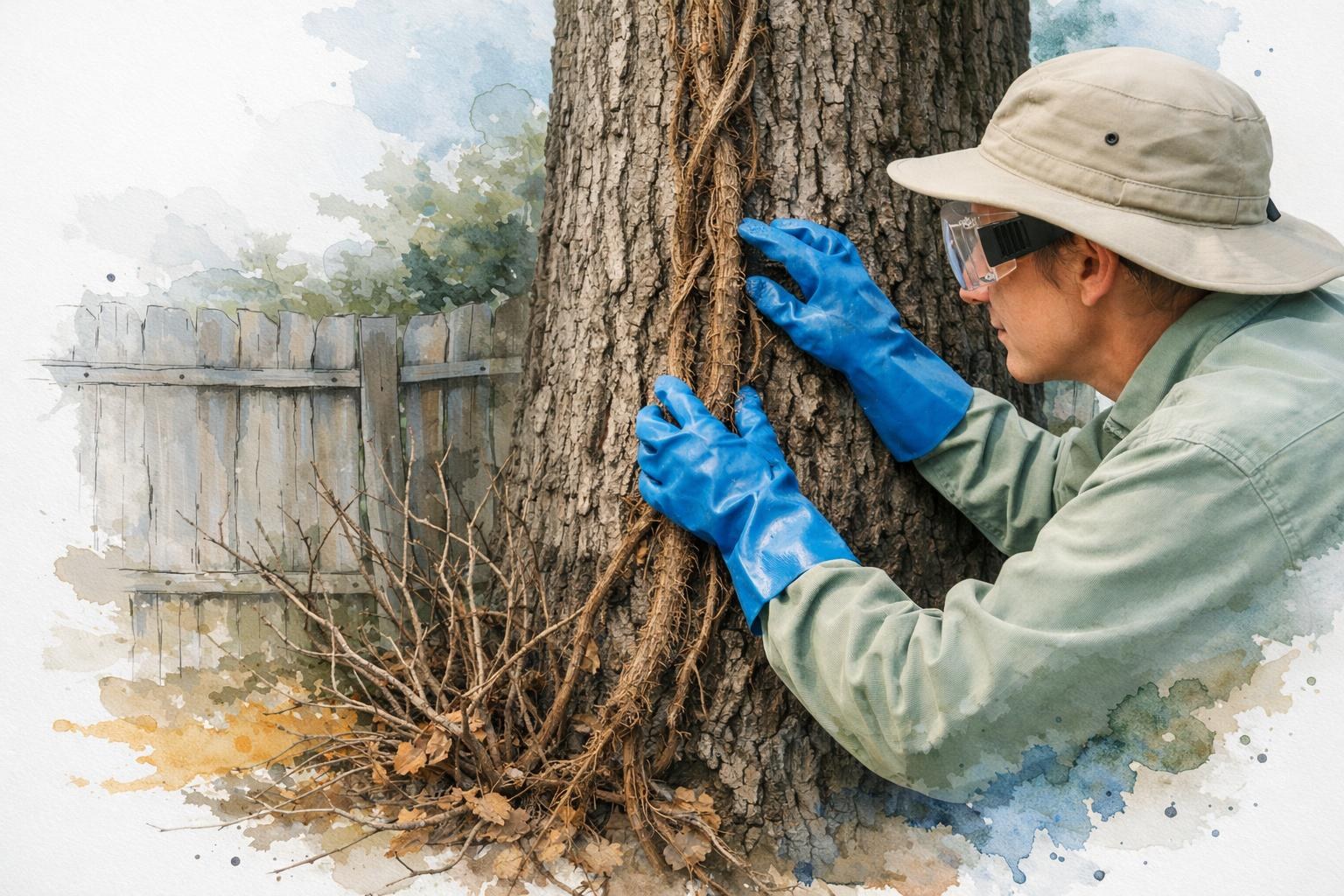
What you see above ground is the smallest part of poison oak. Underneath, the plant runs a network of rhizomes, which are woody underground stems that creep sideways through the soil and store energy.
Those rhizomes can travel several feet from the original plant. They send shoots up wherever conditions are decent, which is why a patch tends to march along a fence line or down a slope instead of staying in one tidy clump.
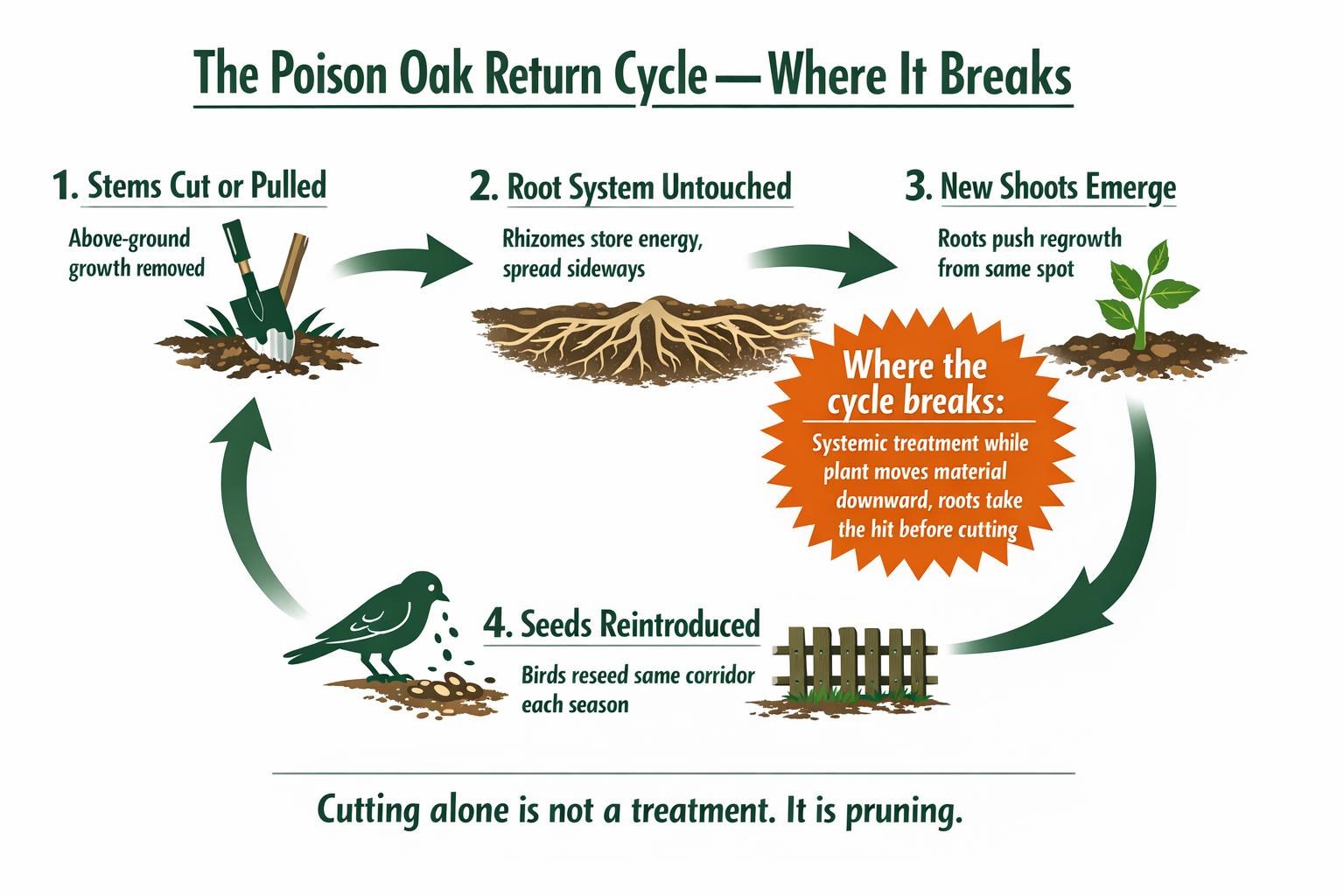
So when you cut or pull the stems, you have removed the leaves and the top growth. The storage system is untouched, and it has reserves to push out new shoots. The UC Statewide Integrated Pest Management Program notes that poison oak resprouts readily from crowns and root fragments, which is the whole problem in one sentence.
A few things make this worse on South Bay properties:
- Root fragments left in the soil can sprout on their own after digging or grading
- Birds drop seed in the same spots year after year, especially under oaks and along fence lines
- Our wet winters give the root system a long recharge window before summer heat arrives
- Shade under a mature canopy keeps the soil cool enough for rhizomes to spread quietly
Cutting alone is not a treatment. It is pruning.
Where It Actually Turns Up on Properties Here
Poison oak is not picky, but it does have favorite addresses. On the properties I walk around San Jose and the foothill towns, it shows up in the same handful of places.
- Dry slope edges where the irrigated yard ends and the native hillside begins, common on Almaden Valley lots
- The oak understory on Los Gatos and Saratoga foothill properties, where it grows in filtered shade
- Shared fence lines that neither neighbor has cleared in years
- The overgrown back corner behind a shed, a woodpile, or a compost bin
- Climbing as a vine up into a mature tree, where the leaves blend in with the canopy
That climbing habit is the one that surprises people. The same plant can look like a low shrub on the slope and a thick hairy vine running 20 feet up into an oak, and homeowners often do not connect the two.
Here is the detail that matters most in January. Leafless winter stems still carry the oil. Urushiol, the compound that causes the rash, is in the stems, roots, and bark, not just the leaves.
So a bare gray stick along the fence in winter can give you the same reaction as a leafy plant in June. One homeowner who had just moved in wrote to us about clearing dead material and getting defensible space squared away, and had no idea the dormant stems in that corner were poison oak at all.
What the Plant Is Doing Through the Year
Season changes what is happening underground, and that changes what any given approach accomplishes. This is general behavior, not a treatment calendar.
| Time of year | What the plant is doing | Why cutting alone falls short |
|---|---|---|
| Wet winter months | Leafless above ground, root system resting on stored energy | Stems look dead but still carry oil, and the rhizomes are untouched |
| Spring flush | New leaves out, plant actively growing and spending reserves | Removing top growth now signals the roots to resprout |
| Dry summer | Growth slows under heat and drought stress | Plant is less responsive, and clearing stirs up dry oily material |
| Late summer into fall | Plant moves sugars back down toward the root system | This downward flow is the window that matters most for any systemic approach |
Three Common Approaches That Make It Worse
I bring these up because fire season clearing deadlines push a lot of people into that back corner with a machine, and the machine is often the problem.
Weed whacking it. A string trimmer turns oily plant tissue into a fine mist and flings it across your arms, neck, and face. It also leaves every rhizome in the ground and shreds the stems into fragments that can resprout.
Pulling it, then handling the gloves. People do the work carefully and then take the gloves off wrong, or toss them in the truck and pick them up a week later. Urushiol stays active on tools, gloves, boot laces, and dog fur for a long time.
Burning the debris pile. Never burn poison oak. The oil rides the smoke, and inhaling it can cause a reaction in the airway that is far more serious than a rash on your forearm.
One more thing worth separating in your head: clearing for fire season and removing poison oak are two different jobs that happen to live in the same corner of the yard. Weed abatement work is about cutting fuel down to a compliant height before a county deadline. Poison oak removal is about the root system. Treating them as one afternoon of work is how people end up at urgent care.
Why the Same Patch Returns
A quick visual of the cycle most homeowners get stuck in, and where it breaks.
What an Actual Removal Plan Looks Like
A real plan is sequenced, and the order is the opposite of what most people assume. Treatment comes first. Cutting comes later.
The reason is simple biology. A systemic product has to be carried from the foliage down into the root system by the plant itself, so the leaves need to be there and the plant needs to be moving material downward. Cut the stems first and you have thrown away the delivery route.
A sound approach generally looks like this:
- Identify what is actually there, including vines climbing into trees and leafless stems that do not look like much
- Treat the living plant while it can still move product to the roots
- Wait, which is the part nobody enjoys, while the root system takes the hit
- Remove the dead material carefully, with the right protection for the crew
- Walk the same area the following season and treat any new shoots before they rebuild reserves
The part my returning clients care about most is what happens to everything else in that corner. A patch growing under a coast live oak is sitting right on top of the root zone of a tree you have spent decades with, and the ornamentals next to it may be the ones you planted yourself.
That is where product choice and application method stop being a detail. Herbicide work here is performed under a California State Qualified Applicators License, and our technicians are trained directly by our arborist on plant identification, timing, and keeping the surrounding plants out of it. The difference between a treated patch and a dead understory is entirely in who is holding the sprayer and why.
Progress Gets Measured in Seasons, Not Afternoons
If someone tells you one visit will end a mature poison oak patch for good, I would want more detail about the patch. On properties with an established root network running under a fence line or down a slope, this is usually a multi season project.
That is not a sales structure. It is the plant. One of our longtime clients put it plainly in a review: “I have been using San Jose Tree Service yearly for the last 6 years to trim all of our trees and pull up poison oak.”
The honest version of a plan says so at the start. What you should see over time is less area covered, fewer new shoots, and a patch that gets easier to handle each year rather than one that resets every spring.
If you are already managing a property with mature trees, this fits into the same rhythm as everything else out there. Trees change more than people expect between visits, and the same is true of what is growing underneath them. Our notes on what shifts in a mature canopy over three years cover that side of it.
Frequently Asked Questions About Poison Oak Root Systems
Can I just dig the roots out instead of treating the plant?
You can try, and on a small young plant it sometimes works. On an established patch the rhizomes run farther than you expect, and every fragment you leave behind can sprout. Digging also brings a lot of oily root material into contact with your hands, tools, and clothes.
Is poison oak dangerous in winter when there are no leaves?
Yes. The oil is in the stems, bark, and roots year round, so bare winter stems can still cause a rash. This catches a lot of people during dormant season cleanup and brush clearing.
How much does poison oak removal cost in San Jose?
It depends on the size of the patch, how steep and accessible the area is, whether it is climbing into trees, and how many visits the root system is going to take. Costs vary quite a bit across the South Bay for that reason, so the honest answer is that it takes someone looking at the area to give you a real number. We are happy to quote it after an assessment.
Will treatment hurt my oak tree or the plants next to the patch?
It should not, if the product and the application method are chosen with the surrounding plants in mind. That is the whole reason this work is done under a qualified applicator license rather than handed to a general crew. Poison oak growing in an oak understory needs a different approach than poison oak on an open slope.
My neighbor’s side of the fence is full of it. Does treating my side help?
It helps, but expect reinfestation from their side over time. The root system does not recognize property lines, and birds keep reseeding the same corridor. A conversation with the neighbor usually does more than any single treatment.
Thinking Through a Poison Oak Patch on Your Property?
If you have a patch that keeps returning along a fence line, a slope edge, or under an oak in San Jose, Los Gatos, or Saratoga, we are available to look at it and explain what the root system is likely doing. Our arborist handles identification and treatment planning under the same license, so the plan accounts for the trees and plantings you want to keep. You can reach us at (408) 422-1313 or at sanjosetreemaintenance.com whenever you want to talk it through.
