
If you’ve ever looked up a tree trimming calendar online, you’ve probably seen the same advice over and over. While often well-intentioned, this generic guidance is dangerously misleading for those of us here in the South Bay.
The hard truth is that generic, one-size-fits-all advice doesn’t work for our unique climate and tree species. Relying on it often leads to stressed trees, wasted money, and avoidable storm damage. To truly care for your trees, you have to look past the national guides and understand what’s happening right here in our backyards.
Why Generic Trimming Calendars Fail South Bay Trees
Most tree care guides offer the same handful of tips: prune in winter, get rid of dead branches, don’t cut too much. However, our research shows that most providers fail to address local climate timing, San Jose tree species behavior, and city-specific rules. For properties in San Jose, Los Gatos, Campbell, and Almaden, this context is critical.
Our local environment is a story of extremes, swinging from long droughts that weaken roots to sudden atmospheric rivers that can topple a waterlogged tree. Generic calendars simply don’t factor in these realities. This knowledge gap is exactly where costly mistakes are made.
The Problem with a One-Size-Fits-All Approach
A standard trimming schedule can’t account for the nuances that certified arborists see every single day across South Bay microclimates. These simplified guides almost always overlook:
- Microclimate Variations: The right time to prune a tree in the cooler, shadier Los Gatos hills is often different than for the same species in the hotter, sun-baked flatlands of San Jose.
- Species-Specific Needs: Our native oaks have very strict trimming windows to fend off disease, while fruit trees need precise cuts at just the right time to give you a good harvest. You can’t apply the same rules to both without causing problems.
- Climate Stress Cycles: Emerging trends show climate extremes have weakened many Bay Area trees. Pruning at the wrong moment during one of these stress cycles can seriously weaken a tree’s structure, turning it into a hazard in the next big storm. For a deeper dive into the basic techniques, our guide on a professional’s approach to tree pruning lays out the fundamentals.
This is the expert pivot away from guesswork. Instead of relying on a generic calendar, precision trimming bases decisions on species biology, local weather patterns, and structural risk assessments.
Shifting to Precision Trimming
Our work is always overseen by certified arborists familiar with South Bay microclimates. We hold dual licenses for Tree Service (C-61/D-49) and Landscaping (C-27), so we’re trained to see how proper trimming integrates tree health and overall landscape design. We consider how pruning will change shade patterns, affect irrigation plans, and ensure growth cycles work together.
This approach ensures homeowners avoid expensive storm failures, preserve mature trees longer, and maintain healthier landscapes. It all comes down to getting the timing right for your specific trees, right here in your corner of the South Bay.
Your Species-Specific South Bay Trimming Guide
It’s time to move beyond vague seasonal advice. Generic tips like “trim in the fall” can actually stress your trees or invite disease, especially with our unique South Bay microclimates. The real secret to smart, long-term tree care is understanding what each specific tree on your property needs.
This is how a certified arborist thinks—not just about a calendar, but about biology. We use a deep understanding of each species’ life cycle to boost its health and resilience.
Deciduous and Fruit Trees
For trees that lose their leaves, like maples, liquidambars, and most fruit trees, winter is the prime time for a trim. Once the leaves are gone, the tree’s entire structure is laid bare, which lets us make incredibly precise and strategic cuts.
What are we aiming for with a winter trim?
- Improving Structure: With a clear view, we can easily spot and remove crossing branches, weak limbs, and awkward growth patterns that were hidden by summer foliage.
- Encouraging Vigorous Spring Growth: Pruning during dormancy signals the tree to put its energy into a strong burst of new growth come springtime.
- Maximizing Fruit Production: On apple, plum, and apricot trees, careful winter pruning is all about directing energy toward producing high-quality fruit, not just more leaves.
The timeline below really highlights the risk of following a generic calendar versus using precision timing. One path can lead to stress and failure, while the other builds a strong, healthy tree.
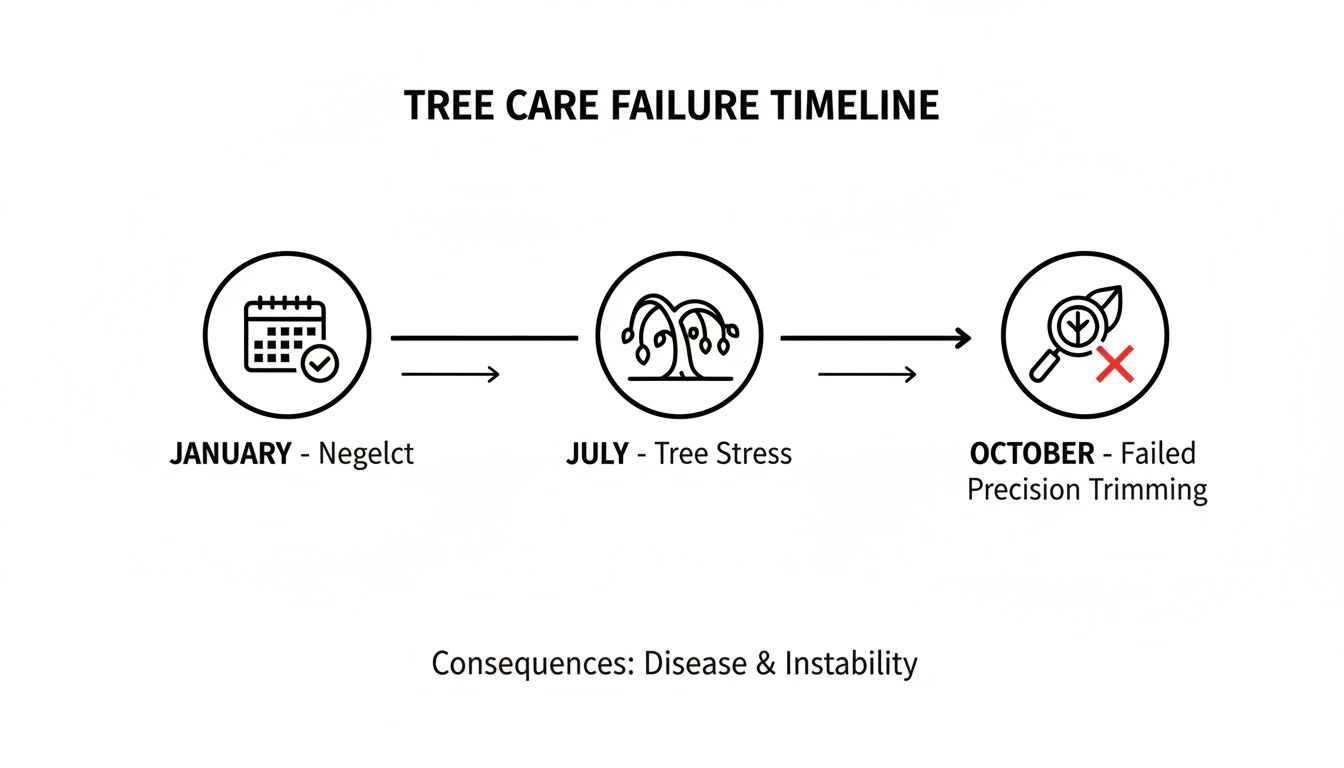
The takeaway here is that timing isn’t just about a season. It’s about working with the tree’s natural cycle to prevent harm and build strength for the long haul.
Evergreen and Flowering Ornamental Trees
Evergreens, like our iconic coastal redwoods and pines, play by a different set of rules. Since they don’t have a true dormant period, our timing is focused on minimizing stress. For them, late winter or early spring is generally the sweet spot for light shaping or clearing out deadwood before their big summer growth spurt.
Flowering ornamentals, like magnolias or crape myrtles, have their own simple but crucial rule.
Pro Tip: The best practice is to prune these trees right after they finish blooming. If you prune them too early, you’ll cut off the very buds that produce this year’s beautiful flowers.
This post-bloom timing lets you enjoy the entire floral display while still getting the tree shaped up for next season. Of course, knowing when to prune is just one piece of the puzzle; it starts with choosing the right tree for your yard in the first place.
The Critical Case of Native Oaks
Our native California oaks, especially the majestic Coast Live Oak, demand the most specialized care of all. They are tragically susceptible to diseases spread by beetles, most notably the devastating Sudden Oak Death (SOD) and other oak wilt pathogens.
Pruning an oak during its active growing season (roughly February through October) creates fresh wounds that are like a dinner bell for these disease-carrying insects. For any reputable, licensed tree service, the rules for trimming oaks are strict and non-negotiable.
Here’s what you absolutely must know:
- Only Prune During the Dry, Hot Season: The one safe window for pruning oaks in the South Bay is during the hottest, driest stretch of the year—usually from late July to September. The intense heat and lack of moisture are hostile to the fungi that cause these diseases.
- Never Prune in Wet Weather: Trimming an oak when it’s damp or raining is practically an invitation for pathogens to infect the tree.
- Hire a Certified Professional: A local arborist understands the grave risks and will always use sterilized tools and proper techniques to protect these priceless heritage trees.
Ignoring these species-specific rules isn’t just a mistake; it can lead to the loss of a tree that has stood for generations. It’s precisely why all our work is overseen by certified arborists who have spent their careers working with the unique challenges of the trees in San Jose, Los Gatos, and our surrounding communities.
South Bay Tree Trimming Calendar By Species
To make things a little easier, we’ve put together this quick-reference guide. It shows the best (and worst) times to trim common local trees, tailored specifically for our region’s climate.
| Tree Type | Primary Goal | Optimal Trimming Window (South Bay) | Time to Avoid and Why |
|---|---|---|---|
| Deciduous Trees (Maple, Sycamore) | Structural pruning, shaping | Late Fall to Late Winter (Nov-Feb) | Spring/Early Summer: Tree is pushing new growth; cuts can “bleed” sap and attract pests. |
| Fruit Trees (Apple, Plum, Pear) | Boost fruit yield, improve air circulation | Winter (Dec-Feb) while dormant | Late Spring/Summer: Pruning can remove developing fruit and cause sunburn on branches. |
| Evergreens (Pine, Redwood, Cedar) | Remove deadwood, light shaping | Late Winter/Early Spring (Feb-Mar) | Late Fall: New growth may not “harden off” before a potential frost, causing damage. |
| Native Oaks (Coast Live Oak) | Safety, crown reduction, deadwood | Hottest/Driest Period (Late July-Sept) | Feb-Oct (Wet/Cool Months): High risk of spreading Sudden Oak Death and other fatal diseases. CRITICAL. |
| Flowering Ornamentals (Magnolia, Crape Myrtle) | Shape, encourage next year’s blooms | Immediately After Flowering Finishes | Before Blooming: You will cut off the flower buds for the current season. |
Remember, this calendar is a strong guideline, but a professional assessment can account for your tree’s specific health, age, and location.
Timing Your Trims for Storm Safety and Hazard Prevention
Here in the South Bay, caring for your trees has become about much more than just keeping them looking good—it’s now a critical part of keeping your home and family safe. With the wild weather we’ve been seeing, from intense atmospheric rivers to damaging high-wind events, you can’t afford to be reactive. Proactive tree trimming is simply non-negotiable for any responsible homeowner.
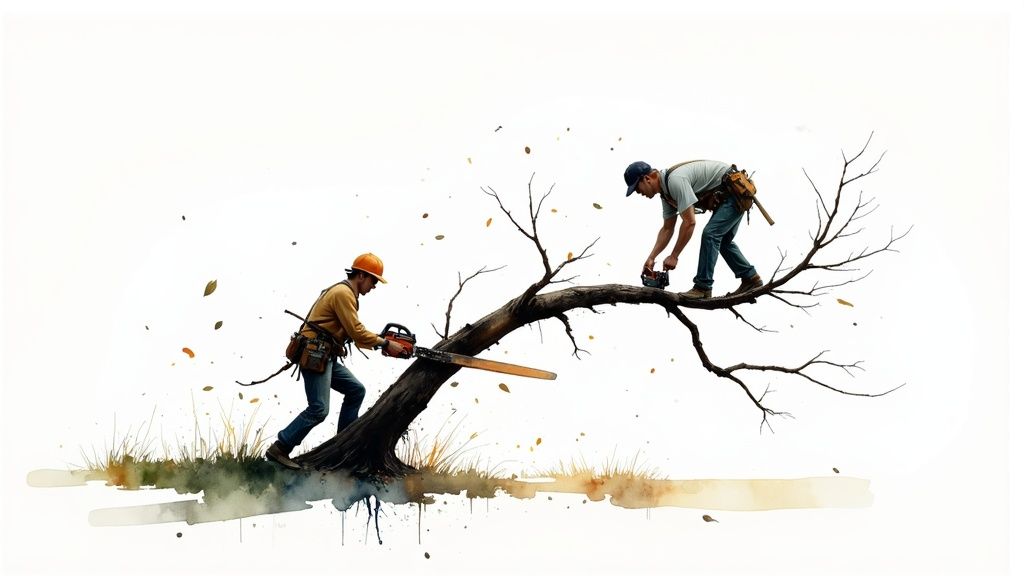
The cycles of long droughts followed by sudden, soaking storms have put immense stress on our local trees. When the soil is dry and compacted, roots get compromised. Then, when a deluge hits, the ground becomes oversaturated, creating the perfect recipe for a tree to uproot and come crashing down. This is where understanding hazard prevention becomes essential.
The Critical Window for Storm Preparedness
So, when is the best time to get ahead of the storm season? The sweet spot for safety pruning is in the late summer and early fall, generally from August through October. Trimming during this period gives us a clear look at the tree’s entire structure after a full season of growth, letting us spot and fix potential problems before winter storms roll in.
When our licensed crews perform a storm-prep trim, we’re not just cutting branches randomly. We have a clear game plan:
- Removing Deadwood: We hunt down and eliminate dead or dying branches—those notorious “widow-makers”—that are always the first to snap in high winds.
- Thinning the Canopy: Think of a dense canopy as a sail on a boat; it catches the wind and puts immense strain on the trunk. We strategically thin branches to let the wind pass through, reducing that dangerous “sail effect.”
- Correcting Structural Flaws: Our arborists have a trained eye for weak branch attachments, co-dominant stems (where the tree has two competing main trunks), and other defects that could split under the weight of rain or wind.
- Balancing Weight: Those long, heavy limbs hanging over your roof, driveway, or patio are a major liability. We reduce their length and weight to minimize leverage and lower the risk of them breaking.
This isn’t about aggressive cutting; it’s smart, strategic risk reduction. For a deeper dive into these techniques, check out our guide on how to prevent tree failure this winter.
Managing High-Stakes Risks Around Power Lines
Now let’s talk about one of the most dangerous and complex jobs in tree care: working near power lines. To prevent outages and reduce fire risk, PG&E requires a minimum clearance around its wires, and as the homeowner, you are responsible for the trees on your property. This is never a DIY job.
Safety Alert: Attempting to trim trees near power lines yourself is not only incredibly hazardous but can also lead to severe legal and financial consequences. This work should only be performed by qualified, licensed professionals.
As a licensed tree service contractor (CSLB #985639), we have the training, insurance, and equipment to handle these high-stakes situations safely. We know the specific clearance rules and work with utility services when needed to get the job done right—without endangering your home, our crew, or the local power grid.
Why Proactive Timing Is a Safety Imperative
The risks of putting this off or hiring the wrong person are very real. Ultimately, timing your trims for storm safety is one of the smartest investments you can make in your property. By addressing potential hazards before the storms arrive, you protect your family, your home, and your community—all while preserving the health and beauty of your mature trees for years to come.
Staying on the Right Side of the Law: Local Tree Rules and Neighborly Lines
Most homeowners don’t realize that cities like San Jose have a whole rulebook for trees. Getting the timing right for your tree’s health is one thing, but knowing the local laws is a whole other layer. Ignoring them can turn a simple weekend project into a five-figure mistake.
Are You Pruning a Protected “Heritage” Tree?
In our area—especially in places like San Jose, Campbell, and Los Gatos—some trees are basically local celebrities with their own legal protection. They’re often called “heritage,” “significant,” or “protected” trees, and the city takes them very seriously.
What gives a tree this VIP status? It usually comes down to:
- The Species: Native trees get top billing, particularly our majestic oaks.
- The Size: A tree’s girth is often the deciding factor. In San Jose, for example, a tree with a trunk circumference of 56 inches or more is typically protected, regardless of the species.
- The Story: Sometimes a tree is protected simply because it’s part of local history.
If you make a major cut—or worse, remove—one of these protected trees without a permit, you could be looking at fines in the thousands of dollars. This is why the very first call you should make for any big tree job is to a professional who knows the local rulebook.
That Tree on the Property Line: A Thorny Issue
Things get even trickier when a tree is straddling a property line. You have the right to trim branches and roots from a neighbor’s tree that cross over into your property. But—and this is a big but—you can only touch what’s on your side of the line.
Legal Note: Aggressive cutting that harms a neighbor’s tree can make you liable for the full replacement value of a mature tree, which can be an astronomical sum.
California courts expect you to act “reasonably.” A simple trim is one thing, but aggressive cutting that harms the tree can land you in a legal battle. You can read more about the specifics of California tree law and potential liabilities to understand just how seriously this is taken.
Why a Licensed Pro is Your Best Defense
Trying to figure all this out on your own is a huge gamble. A licensed and insured San Jose tree service isn’t just about having the right saws and equipment; it’s about having the knowledge to protect you from risk.
As a licensed contractor (CSLB #985639), we live and breathe the tree ordinances for every community in the South Bay. Our certified arborists can spot a protected tree, handle the city permit applications, and make sure every single cut is done by the book.
An Integrated Approach to a Healthy Landscape
Great tree care never happens in a vacuum. A tree isn’t just an isolated plant; it’s the centerpiece of a living, breathing ecosystem right in your yard. This is where our integrated expertise as both licensed tree service (C-61/D-49) and landscaping (C-27) contractors gives South Bay homeowners a real advantage. We see the big picture and understand that beyond the basics, tree trimming timing has to factor in the health of your entire property.
Think about it: a single pruning decision can create a ripple effect across your yard. When we thoughtfully thin a dense canopy, it does more than just improve the tree’s structure. It completely changes the sun and shade patterns on the ground below, which directly impacts the health of your lawn, flowerbeds, and the smaller shrubs living in the understory.
Connecting Tree Trimming to Total Yard Health
Every cut our certified arborists make is designed to work in harmony with your overall landscape goals. We don’t just see branches that need to be removed; we see a complete system where every single element is connected.
This holistic view allows us to use tree trimming as a powerful tool to:
- Optimize Water Use: By strategically pruning a tree’s canopy, we can actually reduce its thirst and allow more sunlight to reach damp, shady spots. This helps dry out soil that might otherwise grow fungus and cuts down on the overall irrigation your property needs—a huge win in drought-aware communities from Almaden to Campbell.
- Improve Soil Health: The right trim allows for better air circulation and sunlight penetration. This simple change can prevent soil from becoming compacted and stop moss from taking over. Better soil means healthier roots for every plant in your yard, not just the tree.
- Support Understory Plants: We’ve all seen it—smaller plants struggling to survive under the heavy shade of an overgrown tree. Well-timed thinning can give them the dappled light they need to flourish without the shock of full, harsh sun exposure.
A Cohesive Vision for a Resilient Landscape
Our dual licensing means we don’t just solve tree problems. We create beautiful, resilient, and water-wise outdoor spaces. When we come out to evaluate a tree, we’re also assessing its role in your landscape’s design, its impact on your irrigation zones, and how it interacts with the plants around it. This integrated approach stops one part of your yard from accidentally working against another.
An integrated approach to landscape health often involves optimizing various elements of your yard. An interesting angle on this is exploring how timing plays a role in every aspect of your outdoor space, such as when designing smart garden schedules.
This method also boosts the vitality of your trees. A healthy landscape with balanced soil and smart watering creates an environment where trees are naturally more resistant to stress. For more on protecting your entire landscape, check out our guide on pest and disease management of trees and plants. By making sure all the elements of your property work together, we build a landscape that is healthier, more sustainable, and better prepared for the South Bay’s unique climate challenges.
Recognizing When Your Trees Need Immediate Help
While most tree care is about smart seasonal planning, some situations simply can’t wait. Think of it less like a scheduled check-up and more like an emergency room visit—your tree is telling you something is seriously wrong, and it needs a professional’s help right away.
Learning to spot these urgent warning signs is a critical skill for any South Bay homeowner. Ignoring them isn’t just a risk; it can lead to catastrophic failure during the next big storm. This is the moment to pick up the phone and call a certified arborist.
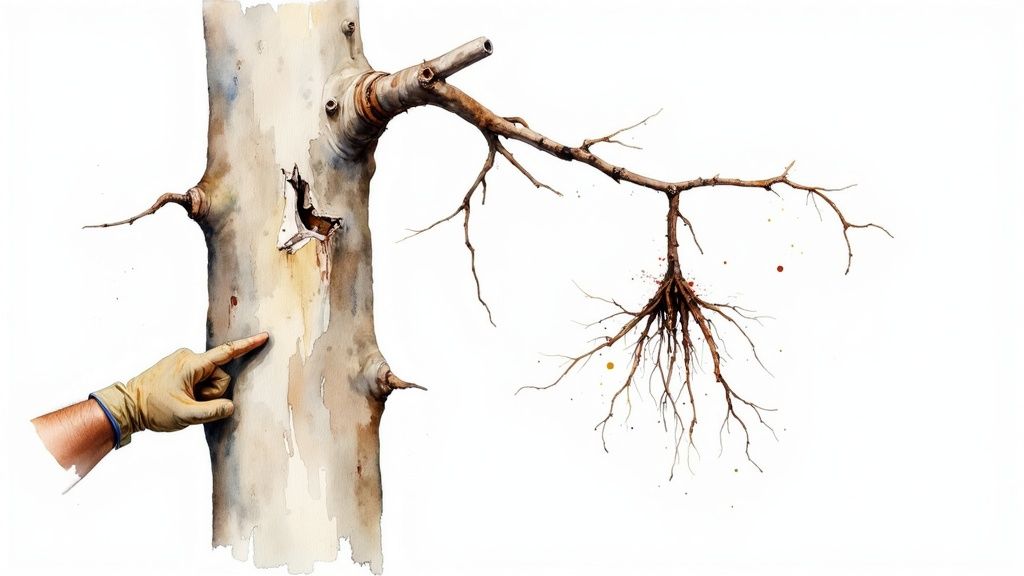
An Emergency Tree Hazard Checklist
Take a walk around your property and keep an eye out for these tell-tale signs of a tree in distress. If you spot any of them, it’s time to get a professional inspection, no matter the season.
- Large, hanging dead branches: Arborists call these “widow-makers” for a good reason. They are major hazards that can snap and fall without warning.
- Deep cracks or splits in the trunk: Look for vertical fissures that go deep into the wood. These are clear signs of structural instability.
- A sudden, unexplained lean: If a tree suddenly starts to tilt—particularly after heavy rain—its root system might be failing.
- Fungi or mushrooms on the trunk: Seeing fungal growth, especially near the base, is a classic sign of significant internal rot.
- Peeling bark or large bare patches: This often points to a serious health problem, like a disease or pest infestation.
Don’t Wait for a Catastrophe
Each of these red flags indicates a tree under extreme stress, turning it from a beautiful asset into a dangerous liability. Our guide on when it’s time to trim your tree is perfect for routine maintenance, but these symptoms are emergencies that override any calendar.
Your safety is the top priority. A potential hazard is never something to “wait and see” on. A quick assessment from a certified arborist can provide immediate peace of mind and a clear action plan.
As a licensed (CSLB #985639) and experienced San Jose tree service, we’re equipped to handle urgent assessments and emergency tree work safely and efficiently. If you see any of these warning signs on your property, don’t hesitate—contact us immediately for an expert evaluation.
Conclusion: Partner with South Bay Tree Trimming Experts
Generic tree trimming advice fails South Bay homeowners because it ignores our unique microclimates, native species, and the increasing stress from climate extremes. Precision trimming, guided by a certified arborist, is the only way to ensure your trees are healthy, safe, and resilient. By aligning trimming schedules with species-specific biology and local weather patterns, you can avoid costly storm damage, comply with local regulations, and enhance your entire landscape.
Ready to stop guessing and give your trees the expert care they need to thrive? The certified arborists and licensed professionals at San Jose Tree Service & Landscaping are here to help. Contact us today for a seasonal evaluation and a free estimate.
Frequently Asked Questions
1. When is the absolute worst time to prune most trees in San Jose?
For most trees in our area, late fall is the worst time to do major trimming, as it encourages tender new growth that can be damaged by an early frost, stressing the tree.
2. Can I trim trees near power lines myself?
Absolutely not. This is an extremely hazardous job that requires a certified and qualified professional who can coordinate with PG&E to ensure safety and compliance.
3. Is it okay to trim my fruit trees in the summer?
Yes, a light summer trim to remove suckers or thin the canopy for better airflow is beneficial. However, save heavy structural pruning for the dormant winter season to maximize fruit production.
4. How do I know if a tree service contractor is properly licensed?
Ask for their CSLB number and verify it on the California State License Board (CSLB) website. Our CSLB # is 985639, showing active licenses for Tree Service (C-61/D-49) and Landscaping (C-27).
5. Is it cheaper to trim my trees every few years instead of annually?
It often costs more in the long run. Waiting longer requires a more aggressive, stressful pruning for the tree. Regular, lighter pruning is healthier, safer, and typically more budget-friendly over time.