 Skip to content

Quick Answer
Yes. Research shows that strong landscaping can raise resale value, but the return depends on what you improve and how well it fits the property. In San Jose, the highest-value work usually combines healthy mature trees, clean maintenance, water-wise planting, and practical outdoor layout rather than decorative upgrades alone.
If you're asking does landscaping increase home value, you're usually also asking a second question: which yard work actually pays off, and which projects just add cost. In the South Bay, that answer depends on climate, tree condition, water use, fire exposure, and whether the landscape looks intentional, easy to maintain, and legally compliant.
The Data Behind Landscaping and Property Value
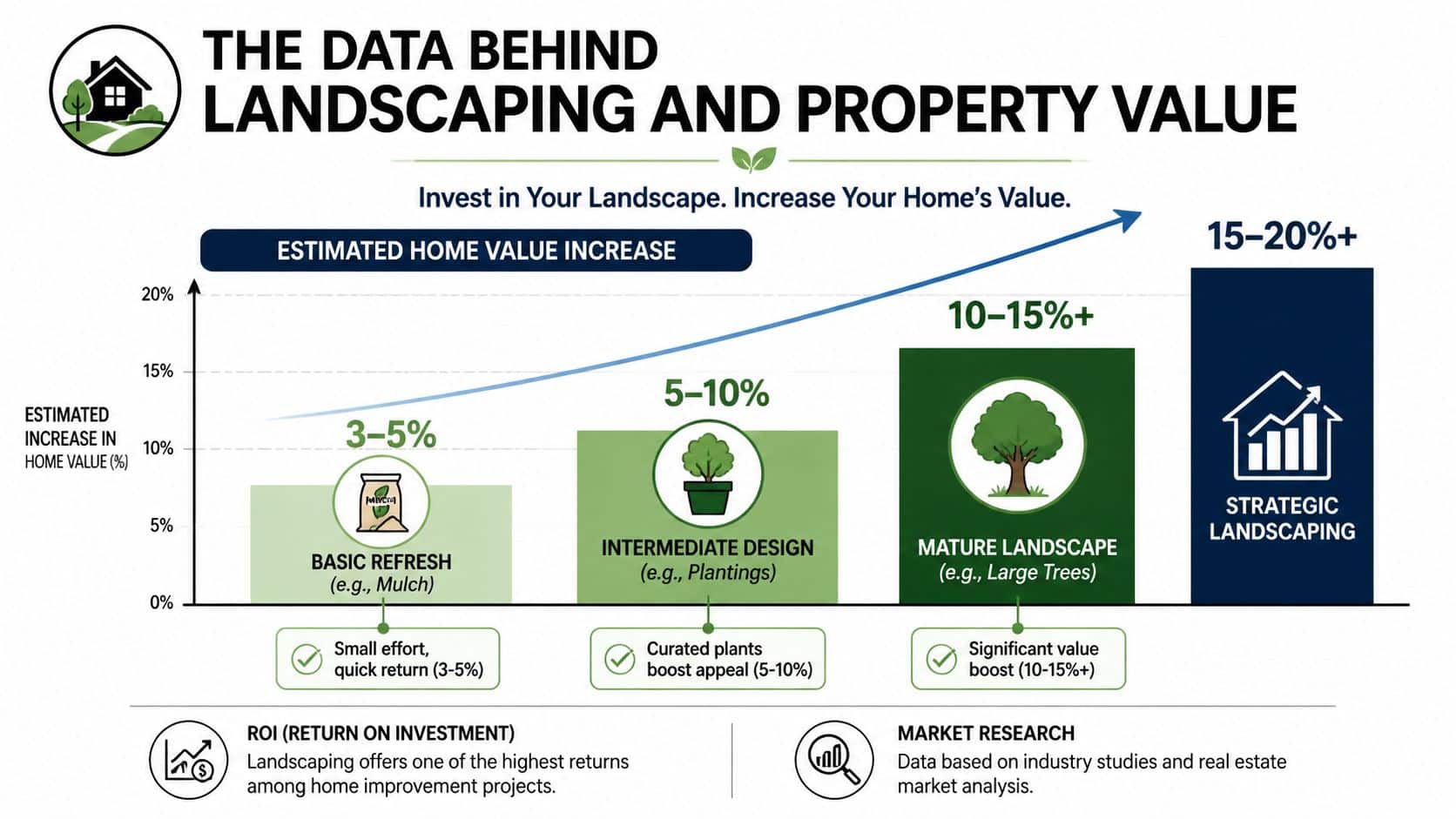
The strongest long-running research on this question is still clear. Virginia Tech found that upgrading outdoor design from average to excellent can increase home value by 10% to 12% according to its multi-state research on residential garden aesthetics and value (Virginia Tech landscape valuation research).
That matters because it lines up with what buyers respond to in the field. They notice structure, maturity, and upkeep. A yard with healthy trees, clear bed lines, decent irrigation, and planting that fits the house reads as cared for before anyone steps inside.
Why the numbers vary so much
Outdoor property enhancements do not raise value in a flat, predictable way. A fresh layer of mulch and pruning can help one property a lot if the yard was neglected, while the same work on another home barely moves the needle because the exterior grounds were already in good shape.
Virginia Tech's findings are useful because they separate average landscaping from excellent landscaping. The jump comes from design sophistication and mature plant material, not from adding more plants. That's a big distinction.
Practical rule: Buyers pay more for landscapes that look settled, functional, and easy to live with. They don't pay more just because a yard has more pieces in it.
In San Jose, tree quality changes the equation
In the South Bay, the arborist side of the job matters as much as the planting side. Mature trees shape first impression, shade, privacy, and neighborhood character. Poor pruning, crowded planting, root conflicts, or visible decline can drag down that benefit fast.
Water-smart planning matters too. A front yard that still depends on high-input turf often looks dated compared with outdoor designs built around lower-water planting, drip irrigation, mulch, and lawn alternatives. If you're weighing that direction, this overview of water-smart landscape installation in San Jose is a useful local reference.
What actually creates value
The value isn't only visual. Good landscaping does three jobs at once:
- It improves curb appeal by making the home look maintained and intentional.
- It reduces buyer objections by removing obvious signs of deferred outdoor care.
- It improves usability with shade, circulation, and cleaner outdoor living areas.
Outdoor design can look expensive and still miss all three. That's why the best return usually comes from balanced work, not showpiece work.
High-ROI Landscaping Projects for Maximum Return
The broad resale numbers are strong. Studies cited by Project Evergreen from ASLA and NAR indicate professional landscaping can increase home resale value by 15% to 20%, with curb appeal alone boosting value by 7%, and healthy lawns showing ROI up to 217% (Project Evergreen on landscaping and resale value).
That doesn't mean every project deserves the same priority. In practice, the best return usually comes from work that improves appearance and lowers future hassle at the same time.
The projects that usually make sense first
Start with the basics buyers notice in the first minute:
- Maintenance cleanup: pruning, weed removal, mulch refresh, edging, and dead material removal
- Irrigation corrections: replacing wasteful spray patterns with better coverage and water-wise control
- Plant selection: removing mismatched or struggling plantings and replacing them with durable material
- Layout fixes: making paths, entries, and seating areas feel intentional instead of improvised
If the site can support it, hardscape can help too. Walkways, patios, lighting, fences, and outdoor rooms are commonly treated as worthwhile structural upgrades. For homeowners considering permeable surfaces for drainage and water-conscious design, this guide to eco-friendly paving options at Paving Supplies is a practical reference.
Landscaping Project ROI Comparison
| Project Type | Typical ROI Range | Primary Value Driver |
|---|---|---|
| Professional landscaping | 15-20% | Overall resale appeal and finished presentation |
| Curb appeal improvements | 7% | Stronger first impression |
| Healthy lawn maintenance | Up to 217% | Visible care and immediate visual improvement |
| Landscape maintenance | 104% average ROI | Protects appearance and prevents decline |
| Front walkway | 100% | Entry sequence and usability |
| Deck or patio | 89% | Outdoor living space |
| Landscape lighting | 59% | Evening appeal and usability |
What works better than people expect
Simple maintenance often outperforms ambitious renovation when the property already has good bones. If the trees are sound, the irrigation works, and the layout is coherent, cleanup and correction can do more for value than a full redesign.
A neglected yard raises questions about the whole house. A clean, restrained landscape lowers those questions.
In San Jose, lawn alternatives can also be a smart play when they're done with discipline. Gravel-only yards often look harsh unless planting softens them. Turf replacement works best when the irrigation, tree canopy, mulch depth, and plant spacing all support the final look.
What tends not to pay off
Overbuilt features are the usual problem. Too many focal points, oversized specimen planting in small lots, awkward retaining, or trendy materials that clash with the house can make a yard feel expensive but not valuable.
A good plan matches the price range of the neighborhood and the architecture of the home. If you're comparing scopes before committing, this local breakdown of landscape design cost in San Jose helps frame the trade-offs without guessing from generic national advice.
How Mature Trees Impact Your Home's Worth
A mature tree isn't just part of the background. On many South Bay properties, it's one of the most valuable outdoor design assets on site.
The International Society of Arboriculture, as cited by LawnStarter, notes that mature trees can add immediate value and increase sellability by up to 20%, while new plantings may take 5-10 years to reach full visual and financial impact (LawnStarter on landscaping timelines and tree value).
Why established trees matter so much
Mature trees do work that new installations can't do yet. They create shade, scale, privacy, and a sense that the property is settled. In neighborhoods like Willow Glen, Almaden Valley, Saratoga, and Los Gatos, that established canopy often shapes the whole feel of the street.
That value depends on condition. A well-structured tree with proper clearance, healthy foliage, and sound branch architecture helps the property. A neglected tree with deadwood, poor past cuts, visible decay, or root conflict can turn into a buyer concern.
Good tree care protects value better than cosmetic trimming
Homeowners often make a mistake by focusing on making a tree smaller instead of making it healthier, safer, and better structured. Structural pruning, crown reduction where appropriate, deadwood removal, cabling and bracing in select cases, and tree health diagnosis usually protect value better than indiscriminate cutting.
A real estate perspective can be helpful here too. Edinhart Realty's guide to property value reinforces the basic point that visible condition and maintenance shape buyer perception long before a formal inspection.
Healthy mature trees add value. Poorly managed mature trees create hesitation.
If you're planning future planting, species choice matters just as much as current care. Some trees fit South Bay lots and water limits far better than others. This local guide on good trees to plant in San Jose is a solid starting point for long-term decisions.
Planning Your Investment Timing and Maintenance
Timing changes the return. Some outdoor improvements pay back mainly by improving immediate presentation before a sale. Other work creates value over years as the greenery fills in and matures.
Mature trees can bring immediate value, while new plantings may need 5-10 years to reach their full impact according to the same ISA-based summary cited earlier in the article through LawnStarter. That difference is one of the main reasons homeowners should separate short-term sale prep from long-term property improvement.
If you're selling soon
Focus on work that reads clearly and immediately:
- Prune for structure and clearance: especially at entries, windows, and walkways
- Refresh beds: mulch, weed control, and plant cleanup make a fast visual difference
- Repair irrigation problems: buyers notice runoff, dry spots, and failing plants
- Remove liabilities: dead trees, unstable limbs, and obvious hazards don't belong on a listing
This kind of work doesn't need to be flashy. It needs to make the property feel maintained.
If you're staying put
Longer-term value comes from patient decisions. Tree preservation, smart species selection, lawn reduction where appropriate, irrigation upgrades, and phased planting usually age better than fast installs.
South Bay sites also vary a lot. One yard has dense clay, another has reflected heat off paving, another has HOA visibility issues, and another sits near a hillside exposure with different fire concerns. A plan that works in Campbell may need different plant spacing and irrigation in Evergreen.
Maintenance isn't optional
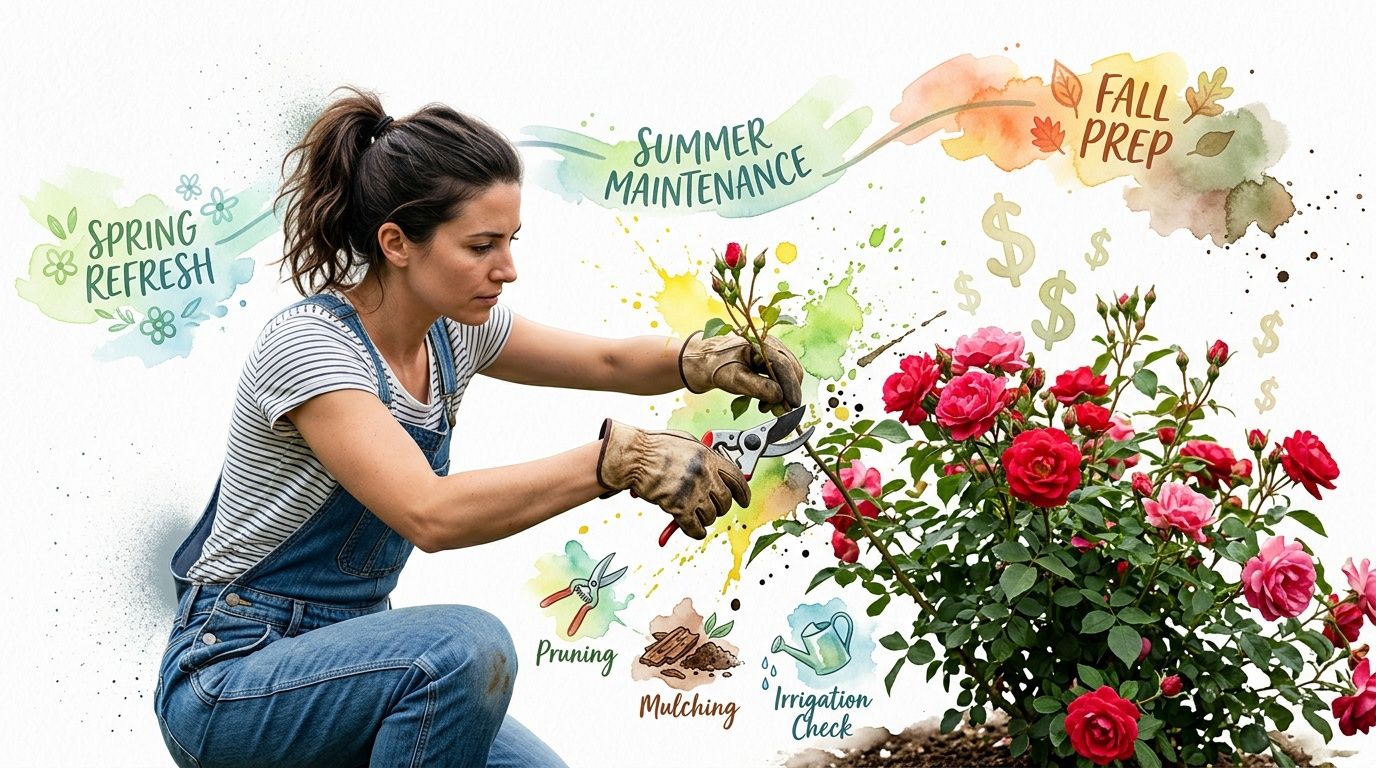
Landscaping loses value when maintenance stops. Mulch thins out. Shrubs swallow walkways. trees develop poor end weight. Drip lines clog. A yard can go from asset to objection without any dramatic event.
That's why maintenance should be built into the decision from the start. If the long-term upkeep doesn't fit your schedule, the design is wrong.
Before installing anything major, it's worth looking at a local cost framework so the scope matches your goals. This guide on what landscape installation really costs in San Jose is useful for that planning stage.
South Bay Specific Factors for Landscaping and Value
Generic landscaping advice misses what matters most in San Jose. Buyers here don't just respond to beauty. They respond to water use, shade, maintenance level, fire awareness, and code compliance.
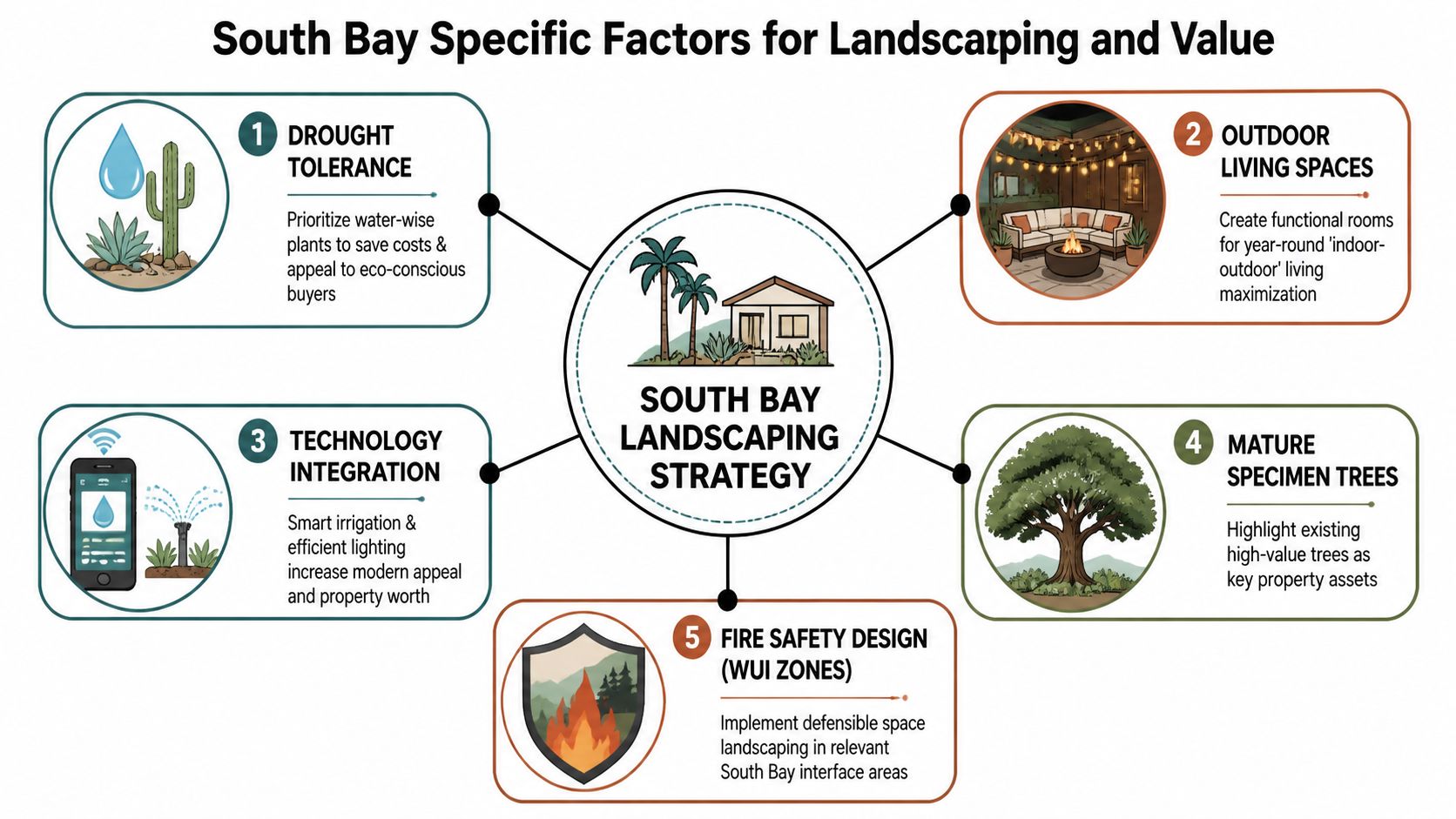
In drought-prone California, sustainable low-water designs like xeriscaping and native plantings are increasingly preferred by eco-minded buyers, and shade trees may reduce summer energy costs by 20% to 50% according to Redfin's housing market overview of landscaping value (Redfin on landscaping value and drought-tolerant design).
Water-smart landscapes fit the market better
In the South Bay, high-maintenance lawns often underperform compared with outdoor environments that look good without constant water and repair. Native and drought-tolerant planting, drip irrigation, mulch, and lawn alternatives usually align better with local expectations.
That doesn't mean every yard should become gravel and cactus. Buyers still want softness, seasonal interest, and a sense of care. The strongest water-wise outdoor designs look intentional, not stripped down.
Fire safety affects value in exposed areas
In hillside and edge conditions around Almaden, Los Gatos, and parts of Saratoga, fire-conscious layout matters. Plant spacing, dead material control, canopy separation, weed abatement, and the placement of shrubs near structures can affect both safety and buyer confidence.
This doesn't require turning the yard into a bare zone. It means choosing plants and spacing that reduce risk while preserving shade and visual appeal.
Local tree rules and site constraints matter
Outdoor improvements can lose value if they ignore city ordinances or tree preservation issues. Protected trees, permit requirements, root zones, sidewalk conflicts, and visibility clearances all affect what can safely and legally be changed.
South Bay landscaping adds the most value when it solves local problems, not when it copies a magazine look from another climate.
If you're updating a yard with resale in mind, the best approach is usually integrated. Keep strong mature trees where they belong, reduce wasteful water use, improve defensible spacing where needed, and build a layout that won't look overgrown in two seasons. For a local look at that direction, see these 2026 landscaping trends that can save water and raise home value.
Frequently Asked Questions About Landscaping Value
How much should I budget for landscaping to increase home value?
There's no single number that fits every property, and broad averages can be misleading in San Jose. The right budget depends on tree condition, irrigation, drainage, lot size, access, and whether you need a cleanup, targeted upgrade, or full renovation. A site visit is the only reliable way to scope it properly.
Can I get a good ROI with DIY landscaping?
Sometimes, yes. DIY can work for cleanup, mulching, weeding, and simple planting if you already understand irrigation, spacing, and species selection. DIY usually falls short when the property needs tree work, layout changes, drainage thinking, permit awareness, or a coordinated plan that has to look settled rather than improvised.
Do I need a permit for landscaping or tree work in San Jose?
Sometimes you do, especially for certain tree removals or work involving protected trees and regulated sites. Basic maintenance often doesn't trigger permits, but removals, major alterations, and some preservation-related work can. It's better to check first than to assume, because local rules vary by city and by tree.
What is the difference between a C-27 landscaper and a C-61/D-49 tree service contractor?
A C-27 exterior site contractor handles outdoor installation and property-related improvements such as planting, irrigation, lawn alternatives, and overall grounds work. A C-61/D-49 tree service contractor focuses on tree care such as pruning, removal, stump grinding, and related arboricultural operations. On properties with mature trees, both skill sets often need to work together.
How long does a typical landscape renovation project take?
It depends on scope, access, permitting, and plant availability. A cleanup or focused refresh moves much faster than a full yard renovation with irrigation, grading, and coordinated planting. Tree-related work can also affect sequencing if preservation, pruning, or removals need to happen before installation starts.
Should I remove a mature tree before selling?
Not automatically. A healthy, well-placed mature tree is often an asset, especially if it provides shade and fits the lot. Removal makes sense when the tree is dead, failing, causing serious structural conflict, or creating a safety issue that will likely come up during buyer review.
Are drought-tolerant landscapes less valuable than traditional lawns?
In the South Bay, usually not when they're designed well. Buyers often prefer outdoor spaces that look good with less water and less upkeep. The weak version is a barren yard with no shade, no structure, and no planting layers. The strong version has canopy, texture, and a clear design.
Next Steps for Your San Jose Property
So, does landscaping increase home value? Yes, when the work fits the house, the lot, and the South Bay climate. The biggest gains usually come from thoughtful maintenance, healthy mature trees, water-wise planting, and a layout that feels easy to own rather than expensive to manage.
If you want a clear answer for your own property, the next step is an on-site assessment. Looking at the trees, irrigation, plant health, access, and neighborhood context in person is what turns general advice into a useful plan.
If you'd like a practical opinion on your yard, San Jose Tree Service & Landscaping offers on-site consultations for homeowners across San Jose and the South Bay. Call (408) 422-1313 or visit sanjosetreemaintenance.com to discuss tree care, garden improvements, and whether your current property setup is likely to increase value.
