
San Jose’s wild weather swings, from long, dry spells to sudden, intense storms, are changing the game for local landscape contractors. Homeowners are no longer just thinking about pretty flower beds; their focus has dramatically shifted from pure aesthetics to pure resilience. We’re seeing a surge in requests for services that protect homes and yards from flooding, soil erosion, and dangerous tree falls.
This isn’t just a small trend—it’s reshaping the entire South Bay landscaping industry. This guide explains the shift and shows what homeowners now need from a modern landscape contractor.
The New Reality of San Jose Landscaping Needs
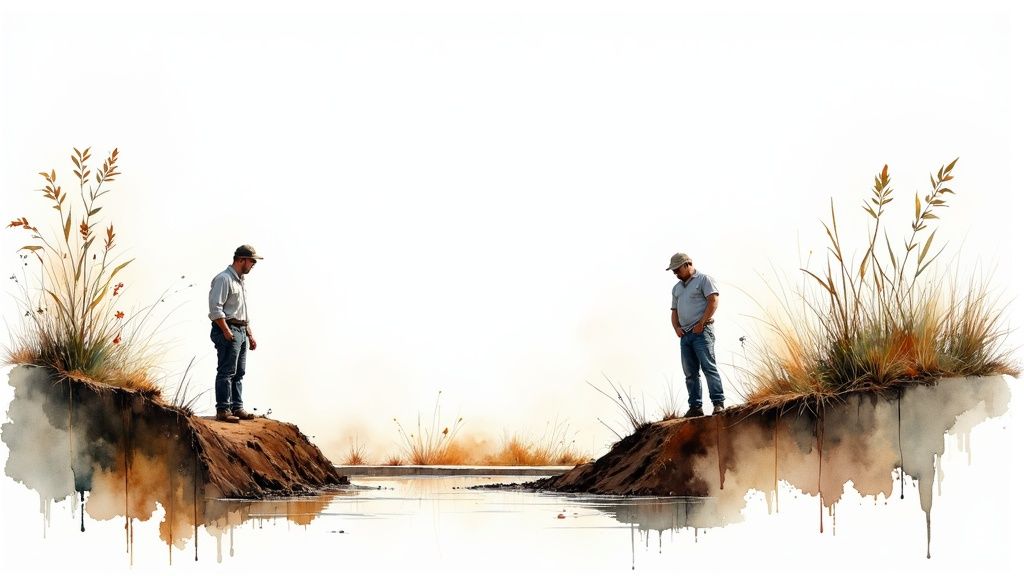
The old model for landscaping in San Jose is quickly becoming outdated. For years, the main goal was curb appeal: perfect green lawns and ornamental shrubs. While looks still matter, the punishing atmospheric rivers we’ve seen have created a much more urgent priority: property protection.
Residents of San Jose know that drought followed by heavy storms leaves many yards flooded, stressed, or destabilized. This pattern affects clay-heavy soils across Willow Glen, Evergreen, Cambrian, and Berryessa, where waterlogged ground alternates with months of drought. This “weather whiplash” results in swamped backyards, dangerously unstable trees, and hillsides that give way, leading homeowners to seek real, proactive solutions.
A Fundamental Shift in Homeowner Priorities
Today’s homeowner isn’t just searching for a “gardener.” They’re looking for specialists who can solve complex problems related to our local climate challenges. South Bay homeowners increasingly search for terms like “best drainage landscaping San Jose,” “storm-ready yards,” and “landscape contractor near me with native plant experience.”
We’re seeing a huge jump in people looking for:
- Advanced Drainage Systems: Folks are specifically asking for French drains, bioswales, and permeable pavers to actively manage stormwater.
- Soil Stabilization and Erosion Control: After seeing saturated ground slide, property owners now prioritize retaining walls and strategic plantings on slopes.
- Emergency and Preventative Tree Care: Calls for licensed tree removal contractors explode after a big storm, but proactive pruning is becoming a wise, preventative measure.
- Drought-Tolerant and Native Landscaping: Homeowners now understand the best plants are those that handle both dry and wet seasons, making sustainable landscape design a top request.
The table below breaks down this evolution in what homeowners are asking for.
Shift in San Jose’s Landscape Service Demand
| Traditional Priority | New Storm-Driven Priority | Primary Homeowner Goal |
|---|---|---|
| Manicured Lawn | Permeable Surfaces & Drainage | Prevent water damage and flooding |
| Ornamental Flowers | Native, Deep-Rooted Plants | Reduce erosion and water usage |
| Aesthetic Pruning | Structural & Safety Pruning | Stop tree failure and property damage |
| Decorative Hardscaping | Functional Retaining Walls | Secure slopes and prevent landslides |
This means landscape contractors must be problem-solvers with expertise in water management, soil science, and tree care. Companies offering integrated, resilient solutions are winning the jobs. The conversation has moved from simple beauty to long-term safety, and it takes a new kind of contractor to meet that demand.
The Weather Whiplash Effect on San Jose Yards
Anyone who’s lived in the South Bay knows the pattern: months of bone-dry summer heat followed by sudden, intense winter downpours. It’s a cycle we call “weather whiplash,” and it’s doing more than just messing with weekend plans—it’s completely changing the game for yards and the contractors who care for them.
Think of our local clay soil like a kitchen sponge left out to bake until it’s rock-hard. When you finally pour water on it, the water just rolls right off. That’s exactly what happens when the first atmospheric river of the season hits, causing localized flooding in neighborhoods from Willow Glen and Cambrian to Evergreen and Berryessa.
From Bone-Dry to Waterlogged
But the problem doesn’t stop there. As the storms keep coming, that once-impenetrable clay soil eventually becomes fully saturated. It goes from a hard, unreceptive surface to a soupy, unstable mess. This dramatic shift is at the very heart of how San Jose’s storm seasons are reshaping landscape contractor demand.
Once the ground is waterlogged, a new set of dangers emerges:
- Unstable Trees: When tree roots sit in mushy, saturated soil, they lose their anchor. Add high winds, and the risk of a mature tree falling increases dramatically.
- Serious Flooding and Pooling: With the ground unable to absorb another drop, standing water can damage home foundations and drown expensive lawns.
- Erosion on Slopes: For any property with a grade, oversaturated soil is a huge liability that can destabilize entire hillsides and retaining walls.
This isn’t just a once-in-a-while event. A recent storm season dumped an incredible amount of rain on us, with some months hitting 147% of the historical average for California, mostly thanks to powerful atmospheric rivers. That kind of intensity has a history of causing landslides and significant flooding right here in the Santa Clara Valley.
The real takeaway for San Jose homeowners is that most traditional landscapes were never built for this kind of volatility. A yard designed purely for looks often crumbles when faced with the one-two punch of extreme drought followed by a powerful deluge.
A New Demand for Proactive Landscaping
Recognizing this weather whiplash is the first step toward creating a landscape that can actually survive it. We’re seeing a huge shift in what homeowners are asking for—they’re moving away from simple reactive cleanups and demanding proactive solutions. Homeowners wanting to see the bigger picture can benefit from understanding major storm patterns like El Nino.
Preparing for this new reality isn’t about just trimming a few branches; it’s about a smarter, forward-thinking approach. For anyone looking to get ahead of the next storm season, our guide on how to prevent tree failure this winter is a great place to start.
The Growing Demand for Storm-Ready Services
San Jose’s weather has become a story of extremes. Years of drought leave the ground hard and our trees stressed, followed by intense atmospheric rivers that dump incredible amounts of rain. This cycle has created two very different, yet closely linked, waves of demand for landscape and tree care professionals.
Homeowners are now forced to plan for two scenarios: the immediate, chaotic aftermath of a major storm and the long-term resilience of their property. This cycle of “weather whiplash” is what we’re seeing across the South Bay, driving the huge uptick in both emergency calls and preventative projects.

Emergency Reactive Services
When a big storm hits, the first 24 hours are all about safety and damage control. The focus is purely on dealing with immediate hazards.
We see the same requests every time the wind howls:
- Hazardous Tree and Limb Removal: The combination of high winds and water-logged soil is a recipe for disaster. First calls are almost always for fallen trees on houses, cars, or tangled in power lines.
- Debris Cleanup: Storms leave a massive mess, from small branches to completely uprooted shrubs, requiring professional-grade cleanup.
- Emergency Flood Mitigation: When a yard turns into a lake, homeowners need immediate help diverting water away from their home’s foundation.
This work is urgent and stressful for a property owner. Our team is always on standby to respond with professional emergency tree services when the unexpected happens.
Proactive Preventative Services
The biggest shift we’ve seen in how San Jose’s storm seasons are reshaping landscape contractor demand is the incredible surge in proactive, preventative work. Homeowners are tired of the frantic, expensive scramble after a storm and are looking to invest in making their properties storm-proof before the rainy season begins.
Homeowners are realizing that an investment in preventative landscaping is far less costly than a major post-storm repair. It’s a fundamental change from reactive spending to proactive property protection.
Here are the top preventative services people are asking for:
- Strategic Tree Pruning: We perform structural pruning to strategically thin a tree’s canopy. This reduces the “sail effect,” allowing strong winds to pass through rather than pushing the tree over.
- Root Zone Inspections: An arborist can assess root system health, which is critical in our heavy clay soils, spotting instability long before the tree becomes a hazard.
- Advanced Drainage Installation: This is a top request. We install French drains, bioswales, and dry creek beds to manage and redirect heavy rainfall.
- Soil Grading and Erosion Control: Proper grading ensures water flows away from the foundation. For hillside properties, we use native plants with deep roots to lock the soil in place.
Homeowners now need an expert who can walk their property, identify weak points, and engineer smart, durable solutions. This shift toward creating resilient landscapes is the new standard for living in the South Bay.
Designing Landscapes For Climate Resilience

Simply cleaning up after a storm is one thing, but a growing number of San Jose homeowners are looking for a more permanent solution. This has sparked a real shift toward climate-adaptive landscaping—a smart approach that designs a yard to handle our specific weather extremes. It’s a holistic game plan that pulls together soil science, water management, and expert tree care.
This proactive thinking is a huge part of how San Jose’s storm seasons are reshaping landscape contractor demand. Instead of fighting our local environment, we work with it to create a property that’s beautiful, low-maintenance, and genuinely storm-ready.
Integrating Water Management and Plant Selection
At the core of any resilient landscape is its ability to handle water. In San Jose, that means dealing with our heavy clay soils. A climate-adaptive design tackles this problem head-on, starting with strategic landscape grading to guide water flow safely away from your home.
From there, smart hardscaping choices make a world of difference. Key solutions include:
- Permeable Pavers: These allow rainwater to soak into the ground, drastically cutting down on surface runoff.
- Bioswales and Rain Gardens: These purpose-built features collect, slow down, and filter stormwater, turning a hazard into a resource.
- Dry Creek Beds: These channel huge volumes of water during a downpour and add a unique visual element during dry months.
Recent intense rainfall has fueled a 30-50% year-over-year increase in demand for these flood-resilient redesigns. If you want to dive into the numbers yourself, you can review seasonal rainfall data here.
Building a yard that can weather both droughts and deluges is essential. The table below outlines the core features we integrate to create a truly climate-adaptive landscape.
| Feature | Description | Primary Benefit |
|---|---|---|
| Native California Plants | Flora adapted to local soil and rainfall cycles, requiring minimal water and maintenance once established. | Drought tolerance, soil stability, and reduced irrigation costs. |
| Strategic Grading | Reshaping the land to direct water flow away from structures and toward absorption zones. | Prevents foundation damage, pooling water, and localized flooding. |
| Permeable Surfaces | Using materials like special pavers or gravel that allow water to penetrate the ground instead of running off. | Reduces stormwater runoff and helps replenish groundwater. |
| Bioswales & Rain Gardens | Depressed, planted areas designed to collect, hold, and filter rainwater from roofs and hardscapes. | Manages heavy rainfall, prevents erosion, and filters pollutants. |
| Smart Irrigation | Drip systems and weather-based controllers that deliver water precisely when and where it’s needed. | Maximizes water efficiency and promotes deep, healthy root growth. |
| Healthy Soil & Mulch | Amending soil with organic matter and applying a thick layer of mulch to retain moisture. | Improves water absorption, reduces evaporation, and suppresses weeds. |
These elements work together, creating a robust system that prepares your property for whatever our changing climate throws its way.
The Power of Native California Plants
The right plants are the unsung heroes of a storm-ready yard. Native California plants are perfectly suited for this role, with deep, powerful root systems that are fantastic at anchoring soil and preventing erosion on slopes.
These plants are already tuned into our cycle of wet winters and dry summers, so they require far less water. Just as important, their tough roots can handle periods of saturated soil much better than most non-native ornamentals. Statistics show that outdoor water use can be reduced by up to 50% with drought-tolerant landscaping (Source: S.J. Tree Service & Landscaping Intelligence Report).
For South Bay homeowners, a climate-adaptive landscape offers more than just curb appeal; it provides genuine peace of mind. It’s a long-term investment in your property’s safety, cutting the risk of costly flood damage and emergency tree failures.
The Dual-License Advantage for Integrated Design
Pulling off a truly resilient landscape requires a deep understanding of both landscaping (a C-27 license) and professional tree services (a D-49 license). A tree’s health is directly linked to the soil and drainage around it, and any new landscape design has to account for the safety and stability of mature trees.
When a contractor holds both licenses, like we do at San Jose Tree Service & Landscaping, they can develop a single, cohesive plan. This integrated approach ensures a new drainage system won’t suffocate critical tree roots and that new plantings protect existing trees. To learn more, have a look at our guide on irrigation management best practices.
Choosing the Right Landscape Contractor Today
The intense storm seasons we’re seeing in San Jose have changed the game for homeowners. Our climate now demands a true expert in water management, soil health, and tree safety. Picking the right professional is one of the most critical decisions you can make to safeguard your property.
You’re looking for a contractor who thinks like an engineer just as much as a designer—someone focused on making your yard resilient for the long haul. Their past work should demonstrate an understanding of our local challenges, from handling winter downpours to securing mature trees against fierce winds.
Your Vetting Checklist for a Modern Contractor
When you start looking, this checklist will help you find a real pro who’s ready for San Jose’s unique climate. A truly qualified contractor will tick these boxes without hesitation.
Essential Credentials to Verify:
- Proper State Licensing: In California, a landscape contractor needs a C-27 license. For tree work, they also need a D-49 (Tree Service) license. A company that holds both, like San Jose Tree Service & Landscaping (CSLB #985639 – C-61/D-49 + C-27), can create a seamless, integrated plan.
- BBB Accreditation: Check for a contractor with a solid track record. Our own BBB accreditation since 2013 reflects more than a decade of consistent, trustworthy service.
- Proof of Insurance: This is non-negotiable. Never hire anyone without seeing proof of both liability insurance and workers’ compensation to protect you from financial fallout.
Key Questions to Ask During a Consultation
The in-person consultation is where you really get a feel for their expertise. A contractor who’s on top of their game will have clear, confident answers to questions about storm resilience.
A contractor’s ability to discuss local soil behavior, native plant survival rates, and city permits is a non-negotiable part of the vetting process. This local knowledge is the difference between a landscape that thrives and one that fails.
Don’t be shy—ask them directly how they plan to handle our specific weather patterns. For a deeper dive, our guide on what to look for before hiring a tree service in San Jose has even more great tips. As you’re doing research, explore the range of local San Jose landscape contractor services to see who truly gets our regional climate challenges.
Critical Storm-Preparedness Questions:
- How will your design manage heavy winter rain, considering my property’s specific slope and soil?
- What’s your experience with drainage solutions like French drains or bioswales?
- Which native plants do you suggest that can handle both our dry summers and soaking wet winters?
- What’s your game plan for protecting my large trees from wind damage?
- Can you show me local projects you’ve done that were specifically about fixing drainage or storm-proofing a yard?
Hiring a contractor is about finding a partner to protect your investment. By asking the right questions, you can feel confident that your property is in the hands of a professional ready for the new reality of San Jose’s climate.
Conclusion: Building Your Storm-Ready South Bay Property
Here in San Jose, the way we think about landscaping has fundamentally changed. The cycle of long droughts giving way to intense atmospheric rivers is our new normal. Understanding our local climate patterns and working with, not against, our heavy clay soils is essential for creating a safe, sustainable property.
This reality makes proactive work, like strategic tree pruning and installing modern drainage systems, one of the best investments you can make for your home. By embracing climate-adaptive designs with native plants and permeable surfaces, you prepare your property to handle whatever Mother Nature throws at it. A storm-ready property protects your home, enhances its value—as 98% of homeowners believe landscaping increases property value (Source: S.J. Tree Service & Landscaping Intelligence Report)—and reduces the stress of wondering if your yard can withstand the next major storm.
For a deeper dive into making your property more resilient, check out our guide on how San Jose homes can prepare for drought and storms.
Take the Next Step Toward a Resilient Landscape
The right time to prepare is now, before the storm clouds gather. If you live in San Jose, Campbell, Los Gatos, Saratoga, Almaden, or Evergreen, our team can help you build a landscape that’s safer, more beautiful, and ready for anything.
As a company with dual licensing in both Tree Service (D-49) and Landscaping (C-27), we bring integrated expertise that’s crucial for assessing your entire property. We don’t just see individual trees and plants; we see a complete ecosystem.
Contact San Jose Tree Service & Landscaping today for a professional assessment. Let’s take the first step toward a landscape that offers security and beauty, no matter the weather.
Frequently Asked Questions (FAQs)
What’s the first step to storm-proofing my San Jose yard?
Start with a professional assessment from a licensed contractor with both landscaping (C-27) and tree service (D-49) expertise. They can identify drainage issues, soil problems, and at-risk trees to create a holistic plan.
Are native plants really better for handling heavy rain?
Yes, California native plants have deep, fibrous root systems adapted to our clay soil and weather cycles. They are excellent for preventing hillside erosion and can tolerate both drought and temporary waterlogging far better than non-native ornamentals.
How do I know if my property needs a French drain?
If you see standing water near your home’s foundation, a persistently soggy lawn, or water pooling on patios after rain, a French drain is likely a good solution. It helps redirect excess groundwater away from critical areas.
Is it expensive to make a landscape storm-ready?
The initial investment in solutions like drainage systems or structural tree pruning can vary, but it’s almost always less expensive than repairing a flooded basement, a cracked foundation, or damage from a fallen tree. Think of it as proactive property protection.
Why is having a dual-licensed contractor important for this kind of work?
A dual-licensed contractor (C-27 Landscaping & D-49 Tree Service) understands the complete ecosystem of your yard. This ensures that a new drainage plan won’t damage tree roots and that tree care complements the overall landscape’s resilience, providing a safer, more integrated solution.
Contact us for a professional assessment and a free estimate.