
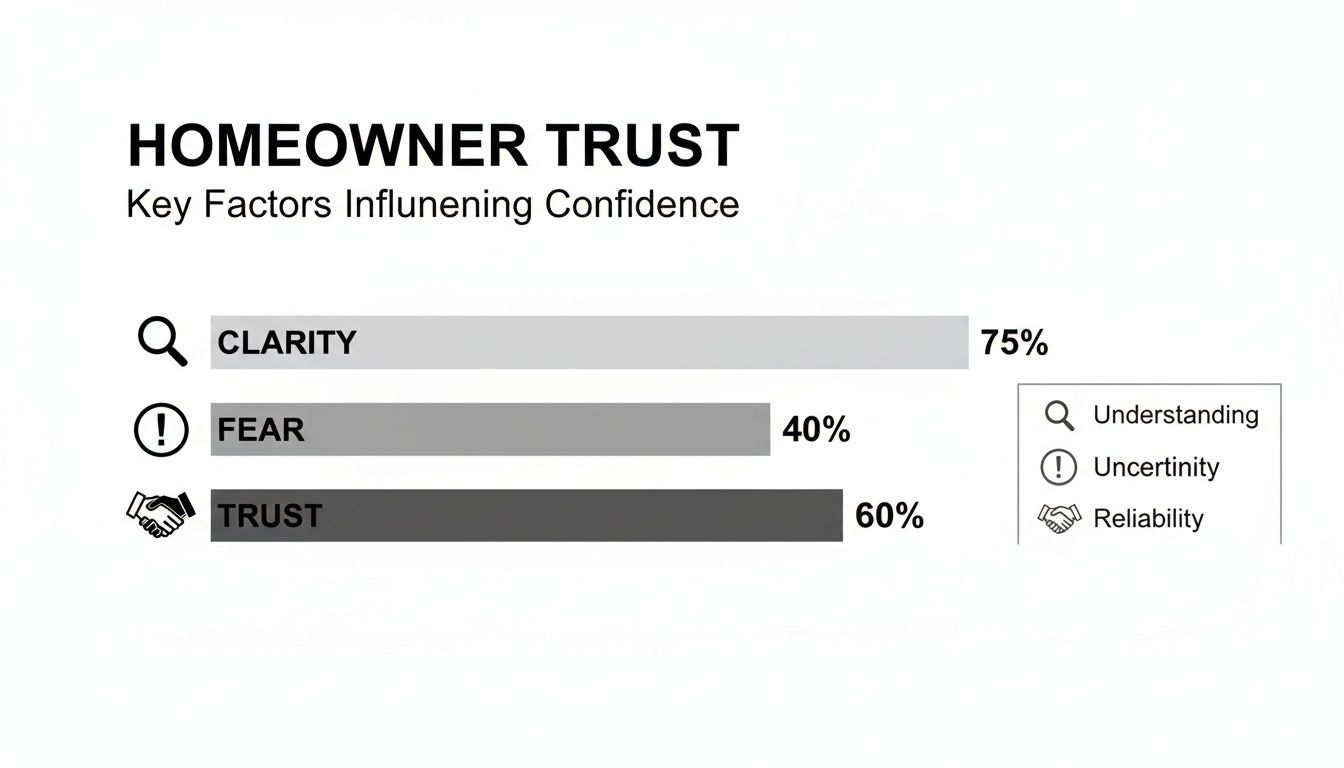
When you're explaining tree service costs, you have to shift your mindset. You're not just giving a quote; you're educating the client. Recent insights show that customers lack clarity on what goes into tree service pricing—labor, equipment, safety protocols, and arborist oversight—and this uncertainty directly fuels distrust.
When homeowners don't know what a service includes, they default to fear and gravitate toward the cheapest bid or delay necessary work. Taking the time to break down your process builds trust and shows them exactly why your professional service is worth the investment.
Why Clear Pricing Builds Instant Trust with Homeowners
Let's be honest. When most homeowners see a quote for tree work, their first thought is, “Am I being taken advantage of?” This isn't because they're cheap; it's because they're afraid of what they don't know. The average person doesn’t know the first thing about the cost of professional tree care, which makes them feel like "an easy target" for unqualified operators with shockingly low bids.
When customers can't see the value—the skilled labor, strict safety protocols, and proper debris disposal—they get suspicious. That uncertainty either pushes them toward the riskiest option or causes them to put off necessary work, letting a small problem turn into a major hazard.
What this actually means for you is: You must shift from quoting to educating. When a homeowner doesn't understand the service, their default reaction is fear. By breaking down your process, you stop being a "mystery price" provider and become a credible, trustworthy expert.
The Problem of the Unexplained Quote
A number on a piece of paper with no explanation forces the homeowner to fill in the blanks, and they almost always assume the worst. They see the price, but they don't see the certified crew, the specialized aerial lift needed to protect their roof, or the insurance policy that protects them from liability. This is where price objections come from.
To overcome this, you need a different strategy. Frame every estimate as a quick, educational conversation. This simple change reduces cost anxiety and can significantly boost job acceptance rates. It shifts the focus to what homeowners actually care about: safety, tree health, and property value.
Before you even get to the price, it helps to point them toward resources that explain what to look for when hiring a tree service in San Jose. This context helps them immediately see the difference between a pro and the competition.
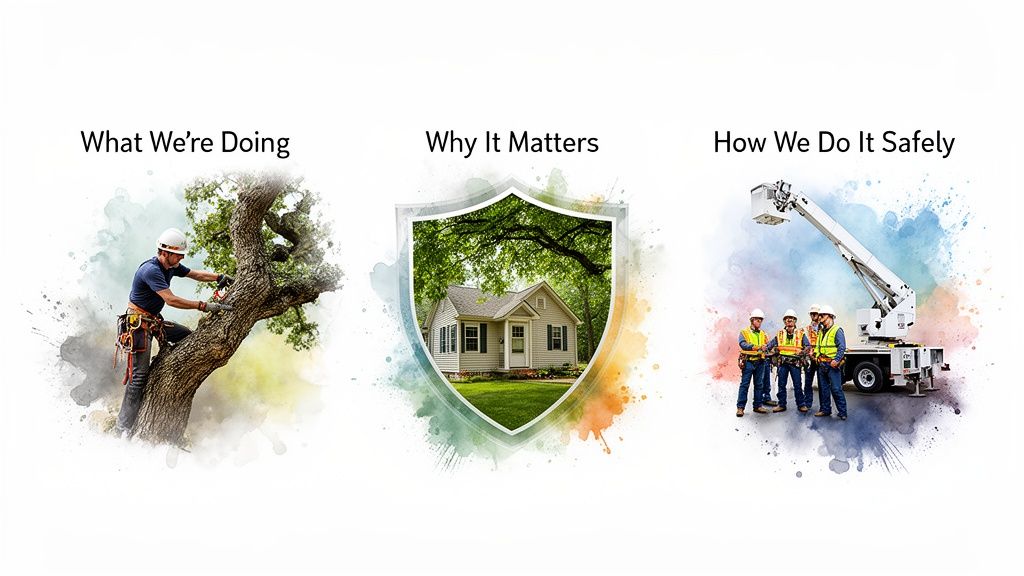
This educational approach boils down to a 3-part explanation model for every estimate:
- What we’re doing: Break down the specific tasks and explain the arboricultural reasons for each one.
- Why it matters: Connect the work directly to benefits they understand, like property safety, storm-readiness, and curb appeal.
- How we do it safely: Give them a quick rundown of the crew, the equipment you'll use, and your professional cleanup process.
Breaking Down a Professional Tree Service Quote
When a homeowner gets a quote, they usually just see one final number. They don't see the layers of expertise, risk, and operational costs that go into that price. Breaking down your estimate is a powerful way to demystify the cost and show the true value of hiring a professional.
The U.S. tree trimming industry is a massive $38 billion sector for a reason. Running a safe, effective operation requires a serious investment. A single aerial lift can cost over $100,000, and certifying a crew is extensive and ongoing. Explaining these components highlights the risks of hiring under-equipped, low-ball bidders.
This is all about turning a homeowner's anxiety into understanding. The more clarity you provide, the less fear they feel, which is the foundation for building the trust you need to win the job.
Let's walk through the key components that should be reflected in your pricing.
Skilled Labor and Crew Safety (40-50%)
The biggest slice of the cost goes to the skilled professionals doing the work. This isn't general labor; it's a team of trained experts who understand complex rigging, proper pruning cuts, and the physics of safely felling a massive tree next to a home.
In the dense neighborhoods of the South Bay, that expertise is critical. Our crews are masters of safety protocols to protect both themselves and your client's property. This cost covers fair wages, continuous training, and the experience needed to handle anything from a simple trim to an emergency removal after an atmospheric river.
Specialized Equipment and Machinery (20-30%)
Proper tree work requires much more than a chainsaw and a ladder. The cost of owning, maintaining, and deploying specialized machinery is a huge factor in any legitimate quote.
This includes gear like:
- Aerial Lifts and Bucket Trucks: For safely reaching high canopies without damaging the tree or surrounding structures.
- Industrial Wood Chippers: To efficiently process large volumes of limbs and debris on-site.
- Stump Grinders: The correct tool for completely removing the tree base after a removal.
- Cranes: Essential for large-scale removals in tight spaces, requiring certified operators and meticulous planning.
Using the right equipment makes the job safer, faster, and cleaner. It's a direct investment in protecting your client's property.
Debris Disposal and Cleanup (10-15%)
A job isn't done until the property is spotless. This part of the quote covers the labor and hard costs of hauling away and legally disposing of all green waste. That means fuel, tipping fees at local recycling facilities, and the man-hours to rake, blow, and leave the site pristine.
Insurance, Licensing, and Compliance (5-10%)
This non-negotiable cost protects everyone involved. As a licensed contractor (CSLB #985639) and BBB Accredited business, we carry comprehensive general liability and workers’ compensation insurance. This shields the homeowner from any financial responsibility if an accident were to happen on their property.
To give homeowners a clearer picture, here’s a typical breakdown of how a professional quote is structured.
Typical Tree Service Cost Breakdown for a San Jose Homeowner
This table provides a transparent look at how a typical tree service quote is structured, helping homeowners understand where their money goes.
| Cost Component | Percentage of Total Quote (Approx.) | What It Covers |
|---|---|---|
| Skilled Labor & Crew Safety | 40-50% | Wages for trained arborists and ground crew, ongoing safety training (e.g., aerial rescue, chainsaw safety), and personal protective equipment (PPE). This is the expertise needed to perform the work safely and correctly. |
| Specialized Equipment & Machinery | 20-30% | Costs for purchasing, fueling, and maintaining bucket trucks, wood chippers, stump grinders, cranes, and other essential gear. Includes depreciation and repair funds to ensure equipment is always safe and operational. |
| Debris Disposal & Cleanup | 10-15% | Fuel for transport vehicles, tipping fees charged by green waste recycling facilities, and the labor required for thorough site cleanup (raking, blowing, hauling). |
| Insurance, Licensing & Compliance | 5-10% | Premiums for General Liability insurance (protects the homeowner's property) and Workers' Compensation (protects the crew and homeowner from injury liability). Also covers state licensing fees, bonds, and other compliance costs. |
| Company Overhead & Profit | 5-10% | The costs of running the business, including office staff, marketing, software, and vehicle maintenance. The profit margin allows the company to invest in better equipment and training, ensuring long-term quality and reliability for future customers. |
By laying it all out like this, you remove the guesswork and build a foundation of trust before the work even begins.
To learn more about the specific factors that can make one job cost more than another, check out our detailed guide on why tree service prices vary so much in San Jose. And remember, using clear and well-designed professional quote templates can make a huge difference in how your proposals are received.
A Practical Framework for Explaining Your Estimates
Knowing your numbers is only half the battle. The key is walking a homeowner through your estimate so they feel confident, not confused. I've found it’s far better to use a simple, educational approach for every conversation.
I've refined this down to a simple three-part model: explaining the what, the why, and the how of the job. It’s a reliable way to explain tree service costs, calm anxieties, and make it easier for them to say "yes."
Part 1: What We’re Doing (Tasks and Rationale)
Start with the specific task, but immediately tie it to a clear arboricultural benefit. Keep it direct and skip overly technical terms.
- Don't just say: "We need to prune this oak."
- Try this instead: "We're going to perform a crown cleaning on this mature oak to selectively remove the dead and crossing branches. This improves airflow and helps the tree fight off common local issues like powdery mildew."
That simple shift tells the homeowner what you're doing (crown cleaning) and why it's necessary (preventing disease). It builds instant credibility.
Part 2: Why It Matters (Safety and Longevity)
Next, connect that tree-health benefit to something the homeowner genuinely cares about—their safety, property value, or peace of mind.
You can continue right from where you left off:
"By improving the tree's health, we’re also making it much safer ahead of the next atmospheric river. A well-maintained tree is far less likely to drop large limbs during a storm, protecting your roof. Think of it as a proactive investment in safety."
Suddenly, the job isn't just about the tree; it's about protecting their home. This isn't unique to our industry; look at the factors that drive website pricing—any good service provider knows that explaining the "why" behind the cost is a best practice.
Part 3: How We Do It Safely (Crews and Equipment)
Finally, reassure them that you have the right people, gear, and safety protocols to do the job properly. This justifies why they're hiring a licensed and insured pro.
Here’s how you can wrap it up:
- Our Crew: "Our experienced crew, with certified arborist guidance, will be on-site. Everyone is fully insured, which completely protects you from any liability."
- Our Equipment: "We'll use an aerial lift to safely access the canopy. This allows for precise cuts without climbing, which is safer for our team and healthier for the tree."
- Our Cleanup: "And our price includes chipping all brush and a full cleanup. We leave your yard looking even better than when we arrived."
Having a certified professional's oversight prevents expensive mistakes. For homeowners who want to understand why that expertise is so critical, learning more about an Arborist near me here can be a real eye-opener. This last step seals the deal, leaving no doubt about the quality and value you bring.
Translating Your Work Into Real Homeowner Value
Homeowners don’t think in terms of “structural pruning” or “crown reduction.” They care about safety, their property’s value, and having one less thing to worry about. The key to closing a deal is showing them why your work matters.
This is where you bridge the gap between industry jargon and what a client wants to hear. Instead of just stating the service, frame it with the outcome.
- Instead of: "We'll perform a structural prune on this redwood."
- Try this script: "We’ll carefully thin these lower branches to reduce weight and lift the canopy. This makes the tree far less likely to fail during a winter storm, protecting your roof. It also lets more sunlight reach your lawn and garden."
See the difference? You’ve connected your work directly to their immediate concerns. It’s not just a task; it’s a solution.
Frame Maintenance as a Smart Investment
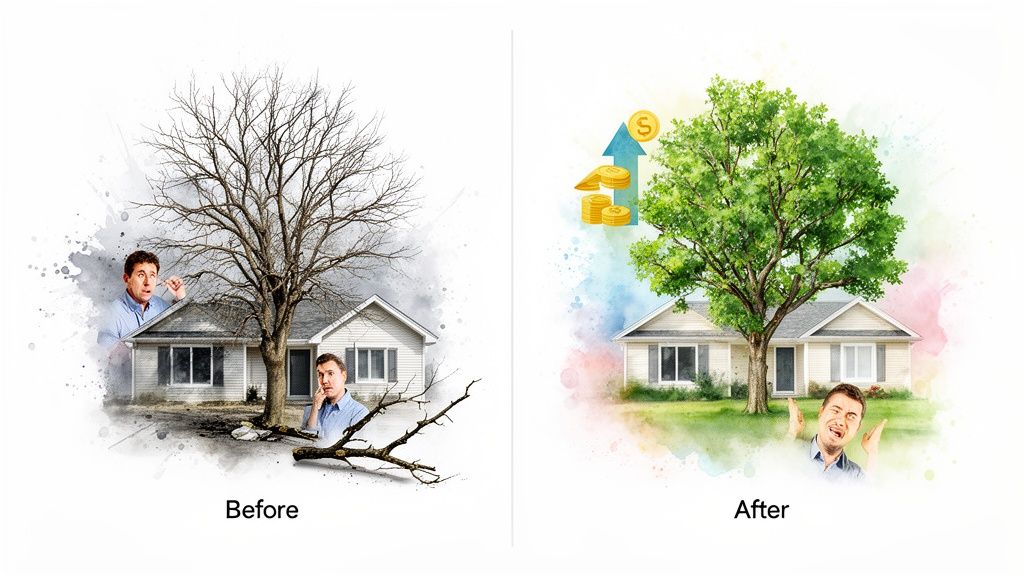
Proactive tree care is an investment in one of the most valuable assets on their property. Here in the South Bay, with home prices where they are, 98% of homeowners believe landscaping increases property value.
When you explain that your quote is built on years of experience with San Jose's tricky clay soil issues and unique microclimates, you’re not just selling a service. You’re selling expertise that prevents expensive mistakes down the road. Industry reports from sources like IBISWorld.com back up the growing demand for professional, insured services.
By framing your work in terms of ROI, you help homeowners see past the initial cost. They start to understand the value of hiring a true professional over grabbing the cheapest bid. You're not just trimming branches; you're protecting their biggest investment.
This educational approach also opens the door to explain why working with a crew guided by real arboricultural principles is so important. Most homeowners don't know the massive difference in skill and safety between a trained arborist and a basic "tree guy."
For a deeper dive into this, check out our guide on the difference between an arborist and a tree guy. Taking a minute to explain this justifies your pricing and turns safety-conscious homeowners into loyal customers.
Answering the Tough Questions About Your Price
Even with a detailed estimate, homeowners will have questions. This is a good thing. Treat their questions as an opening to show them what real expertise looks like.
How you handle these moments is everything. It's your chance to move beyond the numbers and build trust.
"Why Is Your Quote Higher Than Another One I Got?"
You'll hear this one a lot. The key is to avoid getting defensive. Instead, use it as an opportunity to explain the difference between a professional, risk-free operation and a low-ball offer.
Your answer should pivot to things that protect the homeowner.
- Safety and Insurance: "That’s a fair question. Our price includes comprehensive general liability and workers' compensation insurance. It’s a non-negotiable for us because it means you are 100% protected from financial risk if an accident happens on your property. Many lower bids cut corners on insurance, leaving the homeowner legally on the hook for accidents."
- Expertise and Equipment: "We also factor in the cost of having certified arborists on site and using specialized equipment. That’s how we guarantee the work is done safely and in a way that protects your other trees and landscaping."
This reframes the conversation from cost to value and safety. Suddenly, your higher price is an investment in getting the job done right. To fully grasp the risks, homeowners should understand what's required when hiring a licensed tree removal contractor in California.
"Is This Service Really Necessary Right Now?"
When a homeowner asks this, they're balancing their budget. This is your moment to connect your recommendation to the real risks we face here in the South Bay.
Tie your answer directly to local concerns.
"I understand wanting to time your expenses. The reason I’m strongly recommending we handle this now is because these limbs show clear signs of weakness. With our cycle of heavy winter storms and atmospheric rivers, leaving them as-is creates a serious risk of failure. Proactive care is almost always cheaper than an emergency call plus repairs."
This kind of answer shifts their perspective from a discretionary spend to a necessary safety precaution. By specifically mentioning things like California's storm cycles, you’re a local expert helping them make a smart, informed decision.
Conclusion: You're Not Just a Bid—You're the Expert They Need
At the end of the day, this guide boils down to one simple idea: stop giving prices and start educating your clients. When you can clearly explain the why behind your estimate—translating technical work into real value and peace of mind—you change the entire conversation. This is what separates true professionals from low-ball bidders who often create more problems than they solve.
Adopting this mindset isn't just a sales tactic. It’s about building the kind of trust that wins you the job and makes you their go-to expert for life. Your expertise is your most powerful tool—use it.
For tree service professionals in the South Bay, explaining your value clearly is the key to reducing bid drop-off. We invite you to access our free communication checklist or request guidance on structuring homeowner-friendly explanations that build trust.
FAQs: Your Top Questions About Tree Service Costs
Why is removing a tree so much more expensive than trimming it?
Tree removal is a high-risk, multi-stage operation involving intense labor, extreme safety precautions, and massive debris disposal. Trimming is routine maintenance, while removal is major surgery requiring more crew, equipment, and time.
Does the type of tree really change the price?
Absolutely. Servicing a towering oak is far more complex than pruning a small ornamental tree. The price depends on the tree’s size, health, and location, especially if it's near structures or power lines.
Do I need a permit for tree work in San Jose?
In many cases, yes, particularly for "heritage" or other significant trees protected by local ordinances. A professional San Jose tree service handles the permitting process to ensure your project is fully compliant and avoids fines.
Is stump grinding included with tree removal?
Stump grinding is almost always quoted as a separate, optional line item. This gives you control over the final cost, as it requires different heavy machinery and not every homeowner needs it.
What's the risk of choosing the cheapest quote?
An unusually low bid is a major red flag, often indicating corners are being cut on insurance, safety gear, or crew training. Hiring an uninsured operator can leave you financially liable for accidents or property damage.
Ready to get a clear, transparent quote for your tree care needs? The expert team at San Jose Tree Service & Landscaping is here to help. Contact us today for a professional assessment and a detailed estimate that you can trust.