
When you see a broken sprinkler head, the decision seems simple: fix it. But what if it's the third one this season, or your water bill is creeping up for no obvious reason? Many San Jose homeowners ask this because their landscape looks fine, yet their water costs keep climbing. This guide will help you understand when a targeted repair is the right move and when a full system replacement is the smarter long-term investment.
The truth is, most irrigation failures happen underground or inside controllers, not where you can easily see them. The right choice hinges on your system's age, how often it's breaking down, and your goals for water efficiency in our South Bay climate.
The Hidden Costs of an Aging Irrigation System
It’s a frustratingly common story for San Jose homeowners: the lawn looks fine, but the water bill is skyrocketing. The confusion is totally understandable. We tend to think irrigation problems are obvious, like a sprinkler head shooting a geyser into the air. In reality, the most costly issues are subtle.
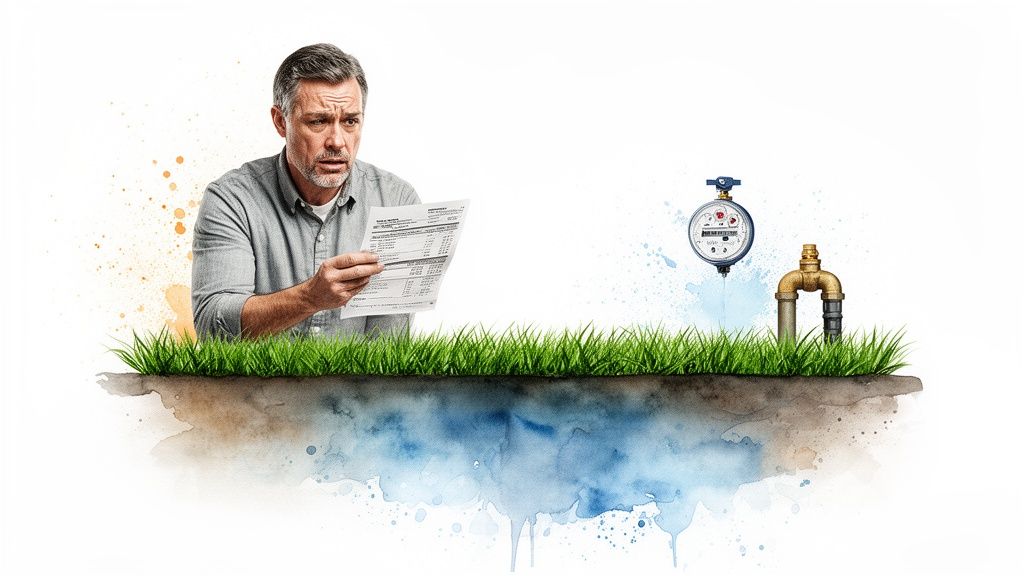
The most expensive failures are the silent ones happening underground or inside the controller box. Subtle leaks from cracked lateral lines, valves that are stuck partially open, or even just the wrong water pressure can waste thousands of gallons without a single visible clue. Given that landscape irrigation can consume a staggering 70–80% of household water use, even tiny inefficiencies add up fast.
Ignoring these issues just makes things worse. A single sprinkler repair might run you about $250, but that's just the start. Bigger problems like buried leaks or bad valves quickly drive up the cost. Before you know it, you’re looking at water bills that have jumped by 30-50%, not to mention potential soil erosion or even foundation damage from over-saturated ground.
Repair vs. Replace: A Quick Comparison
So, how do you decide which path to take? Here’s a breakdown of the core differences between patching up a problem and doing a complete overhaul.
| Factor | Targeted Irrigation Repair | Full System Replacement |
|---|---|---|
| Best For | Isolated, recent, or minor issues. | Chronic problems, old systems, poor design. |
| Upfront Cost | Lower | Higher |
| Long-Term Savings | Moderate (fixes immediate waste) | Significant (improves overall efficiency) |
| Water Efficiency | Restores original efficiency levels. | Maximizes efficiency with modern tech. |
| Property Value | Minimal impact. | Can increase property value. |
A proper irrigation repair starts with a zone-by-zone audit: checking pressure, flow, coverage, and controller settings. This allows a licensed technician to diagnose the true health of your system and give you recommendations that actually fit your yard and our local water conservation rules. You can find more advice in our guide on how to maintain a green summer lawn.
When a Targeted Repair is the Smart Move
So, when does it make sense to simply repair your irrigation system instead of tearing it all out and starting over? The answer usually comes down to the scale of the problem. For many homeowners in the San Jose area, especially in neighborhoods like Willow Glen or Almaden Valley with mature landscapes, a targeted repair is often the most practical and budget-friendly solution for a specific glitch.
If your system has been reliable but suddenly has one or two clear problems, repair should absolutely be your first thought. A snapped sprinkler head from a lawnmower, a valve that's stuck open in one zone, or a controller that's gone haywire are all perfect examples of issues where a focused fix gets you back up and running without the massive cost of a full replacement.
Common Problems That Just Need a Fix
Not every issue means your system is on its last legs. While getting a professional opinion is always the best way to start, here are some classic scenarios where a repair is the obvious choice:
- A Single Busted Sprinkler Head: This is a common casualty of lawnmowers and foot traffic. Swapping out a single head is a quick, inexpensive job.
- One Zone Not Working: Is one section of your lawn a swamp while the rest is fine? This usually points to a single stuck valve or a controller glitch for that zone, not a total system failure.
- Low Pressure in One Spot: This could be a small crack in a lateral line or even just a clogged nozzle in one part of your system. It's often a simple fix that doesn't involve the main lines.
- Controller Glitches: Sometimes the problem isn't even in the yard. Your controller might just need to be reprogrammed after a power outage or adjusted for seasonal watering schedules.
Here's a solid rule of thumb we use in the field: If the cost of the repair climbs past 50% of the price of a brand-new system, it’s time to seriously consider replacement. This simple financial checkpoint keeps you from sinking money into a system that's already on its way out.
The Financial Side of a Repair
Choosing to repair is often a great financial decision, particularly when the problem is minor. Industry data shows the national average for a sprinkler repair hovers around $275. Simpler jobs, like replacing one sprinkler head, might only cost $65–$90, while more complex work like fixing a leaky underground pipe could run anywhere from $120–$400. You can see a detailed breakdown of these kinds of costs in this handy guide from Angi.com.
When you put those numbers up against the thousands of dollars a full replacement costs, the upfront savings from a targeted repair are obvious. For a system that’s otherwise in good shape, fixing small issues as they pop up is a smart maintenance strategy. To learn more about keeping your system healthy, take a look at our guide on irrigation management best practices.
Red Flags Signaling a Full System Replacement
While a quick fix is perfect for a single broken sprinkler head, there's a tipping point where you're just throwing good money after bad. Continuing to patch up an old, failing irrigation system is like putting a band-aid on a broken bone—it completely misses the real problem. Learning to spot the signs of a system-wide failure can save you a ton of money and frustration down the road.
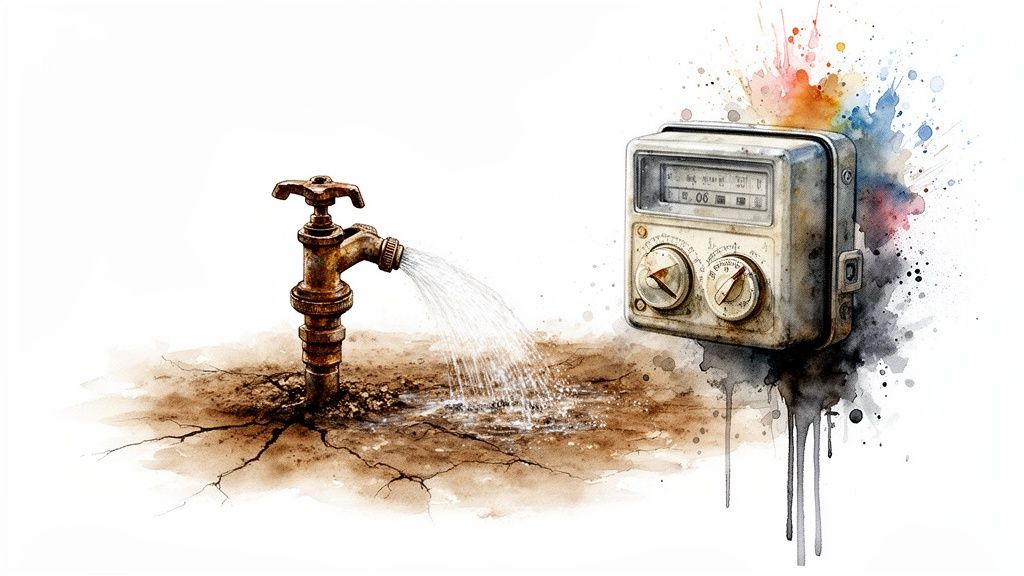
If you're seeing constant breakdowns in different spots, that’s not just bad luck. These aren't isolated incidents; they're symptoms of a system that's at the end of its rope. This is when the question shifts from "is irrigation repair worth it?" to "is it finally time for a full replacement?"
Your System's Age and Performance
Sometimes, the clearest indicator is just simple math. The average irrigation system has a lifespan of about 15 to 20 years. Once your system hits that age, its core components—pipes, valves, and wires—are starting to give out. The plastic gets brittle, seals dry up, and a design that was fine in the 90s is hopelessly inefficient by today's standards.
Another huge red flag is a widespread drop in water pressure. If you notice every zone seems weak and fiddling with individual heads does nothing, the problem is likely much deeper. It could be failing main lines or a worn-out backflow preventer, both of which are major jobs that often point to the entire system being compromised.
When you’re chasing down constant leaks across multiple zones, it’s usually a sign of a bigger problem, like cheap materials or a flawed original design. Swapping out one valve after another becomes a never-ending chore. A full system replacement might seem like a bigger investment upfront, but it often brings more long-term savings and peace of mind.
When Breakdowns Become Routine
An occasional fix is just part of home ownership. But if you and the irrigation tech are on a first-name basis, it’s time to rethink your strategy. A full replacement is probably on the horizon if you're dealing with any of these issues:
- Frequent Leaks in Multiple Zones: When new leaks keep popping up in different areas, it’s a strong sign that the pipes throughout your system are failing.
- Constant Electrical Problems: A controller that keeps glitching or zones that won’t turn on often points to decaying wires buried underground. Tracing and fixing these electrical gremlins is notoriously difficult and expensive.
- Outdated, Inefficient Technology: Old-school controllers and spray heads waste a shocking amount of water. Modern systems with smart controllers, rain sensors, and high-efficiency nozzles are designed for California's strict conservation goals. Keeping up with these standards is essential, and you can learn more about how new water rules impact landscaping choices.
In the end, if your system is unreliable and demands constant attention, replacing it is more than a matter of convenience. It’s a smart upgrade that boosts your water efficiency, lowers your bills, and does a much better job of keeping your San Jose landscape healthy.
The Money Talk: Breaking Down the Cost of Repair vs. Replacement
When you're staring down a broken sprinkler, the immediate financial question is always front and center. It's easy to see the appeal of a quick fix, but the real decision isn't just about the initial cash outlay—it’s about the long-term value and what makes the most financial sense for your San Jose home.
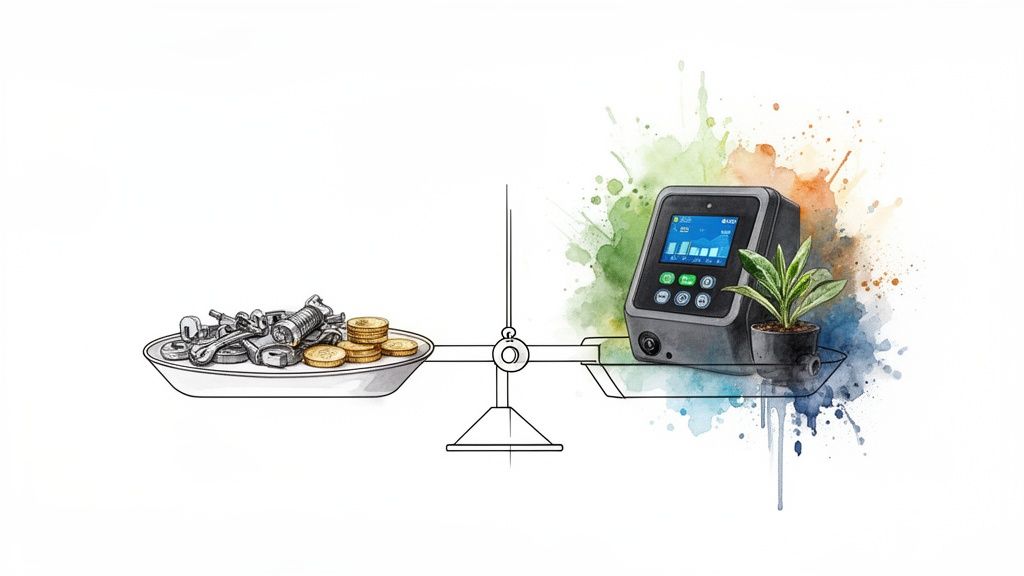
The instant gratification of a repair is tempting. A smaller bill right now feels like a win. But patching up one problem after another can feel like a game of whack-a-mole, and before you know it, you’ve spent more on band-aids over a few years than a brand-new, reliable system would have cost from the start. We call it "death by a thousand cuts" for a reason.
Costs and Returns: A Head-to-Head Look
To really understand what you're getting for your money, you need to look past the first invoice. Let's compare the short-term spend against the long-term financial picture.
This table lays out the financial reality of both choices, from the immediate cost to the lasting impact on your wallet and property.
| Financial Factor | Irrigation Repair | Full System Replacement |
|---|---|---|
| Upfront Cost | Lower You're looking at parts and labor for a single problem, usually running between $75 and $400 for common issues. |
Higher This is a major investment covering design, all-new materials, and professional installation for your entire landscape. |
| Long-Term Savings | Moderate Fixing a specific leak stops immediate water waste, which will help your next water bill. |
Significant Smart controllers and high-efficiency heads can slash water bills year after year. |
| Emergency Calls | Higher Likelihood When one old part fails, it's often a sign that another isn't far behind. This leads to more surprise expenses. |
Lower Likelihood With new components and a proper installation, the risk of unexpected breakdowns and costly emergency calls drops dramatically. |
| Property Value | Minimal Impact Buyers expect a working sprinkler system, so a repair just maintains the baseline. |
Potential Increase In water-conscious California, a modern, efficient irrigation system is a very attractive selling point, as 98% of homeowners believe landscaping increases property value. |
As you can see, the decision isn't just about the initial sticker price. While a repair is cheaper today, a replacement is an investment that pays you back over time through lower bills and fewer headaches.
The Real Value of Modern Efficiency
So, what does that "significant" savings actually look like? A modern, well-designed irrigation system can cut your water use by up to 30% during the peak summer months. That’s a huge drop that shows up directly on your monthly bills and adds up to a powerful long-term ROI. Think about a typical San Jose yard with dozens of old sprinkler heads and aging valves—the constant tinkering and high water bills are a drain.
When you’re weighing the costs, it’s smart to see how this fits into your overall landscape budget. Using a tool like a landscaping cost estimator can help put all the potential expenses into perspective. Ultimately, the choice comes down to this financial reality. If you need help crunching the numbers for your own property, our guide on planning a realistic landscape installation budget is a great place to start.
Why a Professional System Audit Is Your Best First Step
Before you jump to a conclusion about whether to repair or replace your irrigation system, you need a clear diagnosis. Guessing is just a recipe for a costly mistake. The only way to get a real answer is with a professional, comprehensive system audit from a licensed contractor.
This isn't just someone walking around and glancing at your sprinkler heads. A real audit is a meticulous, zone-by-zone inspection that uncovers the hidden problems that are secretly driving up your water bill. It's a deep dive that goes far beyond what you can see from the surface.
What a Professional Audit Actually Uncovers
Think of an audit as a complete health checkup for your entire irrigation system. A seasoned pro will work through every single component, systematically hunting for the inefficiencies and looming failures that most people miss.
Here’s what that process looks like:
- Water Pressure Tests: We'll check the pressure at key points to make sure it's in the sweet spot for your specific sprinkler heads. Too high, and you're just creating a cloud of mist that blows away. Too low, and your lawn gets poor coverage.
- Zone-by-Zone Coverage Analysis: This is where we run each zone and watch. We're looking for tell-tale dry spots, overspray hitting your driveway, and uneven watering patterns that signal bigger design flaws.
- Controller and Valve Inspection: We'll dig into the controller's programming and then test every valve to confirm it opens and shuts properly. Just one valve stuck partially open can waste thousands of gallons a month.
- Leak Detection: This involves looking for subtle clues of underground pipe leaks, like persistently soggy patches of grass or weird dips in the soil that weren't there before.
An irrigation audit gives you the hard data you need to make an unbiased decision. The point isn't to sell you something; it's to find the most cost-effective path forward that meets your landscape's needs and San Jose's water conservation rules.
A thorough audit puts all the facts in your hands. Instead of guessing if a few new sprinkler heads will solve the problem, you’ll get a clear, detailed report on your system's true condition. This lets our team at San Jose Tree Service & Landscaping give you a recommendation based on evidence, not assumptions. We see this as a critical part of our holistic approach to sustainable landscape design and long-term plant health.
You can learn more about how we handle landscape irrigation services and work with homeowners to build smarter, more efficient systems.
Conclusion: Making the Right Choice for Your San Jose Landscape
Deciding between repairing and replacing your irrigation system comes down to long-term value. A quick, cheap fix might seem appealing right now, but constantly patching up an old, inefficient system can become a money pit, costing you a fortune in repeat service calls and wasted water.
The trick is to look past the single broken sprinkler head and see the bigger picture. We often use the "50% rule": if the estimated cost of repairs is approaching half the price of a new system, replacement is almost always the more sensible financial move. It's also a chance to consider your general landscaping needs and how a modern, water-smart system can help your entire yard thrive.
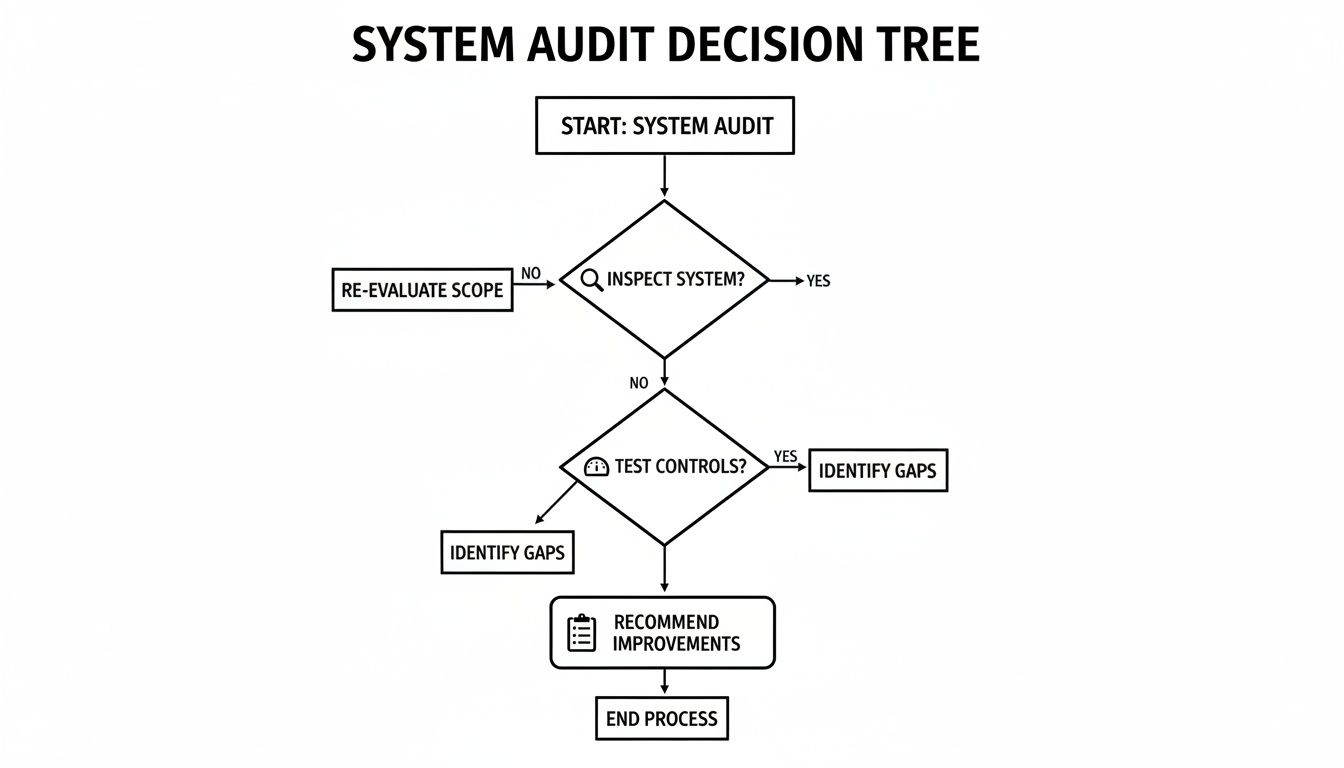
This systematic audit isn't just guesswork; it gives us the hard data needed to make an honest recommendation. At San Jose Tree Service & Landscaping, we approach irrigation repair as part of overall landscape health. Our dual C-27 (Landscaping) and C-61/D-49 (Tree Service) licenses mean we see your yard as a complete ecosystem, pairing repairs with seasonal adjustments and water-wise recommendations aligned with California’s conservation rules.
Ready to get a clear, expert opinion on your irrigation system's health? The team at San Jose Tree Service & Landscaping provides comprehensive audits to help you make the smartest, most cost-effective decision for your property.
Contact us today for a professional inspection.
Frequently Asked Questions
What is the average lifespan of a sprinkler system in California?
A well-maintained irrigation system can last about 20 years. However, individual parts like sprinkler heads may need replacing every 10–15 years, especially with the hard water we often see in San Jose.
How much can a smart irrigation controller really save me?
Switching to a weather-based smart controller is one of the best upgrades you can make. By automatically adjusting watering based on local weather, these devices can cut your outdoor water use by up to 30%.
Are there rebates for upgrading my irrigation system?
Yes, absolutely! Local agencies like the Santa Clara Valley Water District offer great rebates for things like high-efficiency nozzles, smart controllers, and converting lawn areas to drip irrigation. We can help you find programs you qualify for.
What are the most common signs of a hidden underground leak?
The most common signs of a hidden leak are a patch of grass that's much greener than the rest, ground that feels mushy long after watering, or a sudden spike in your water bill.
Can I repair my irrigation system myself?
Simple jobs like replacing a single broken sprinkler head can be a DIY project. For anything more complex involving valves, wiring, or underground pipes, it’s best to call a licensed professional to avoid causing a bigger, more expensive problem.
