
Choosing a landscape contractor in San Jose is a big deal. You're not just buying a service; you're making a long-term investment in your home's value and how you live in it. This guide explains how to find a single, unified team that handles both the creative design and the physical construction.
This integrated design-build approach ensures the vision for your yard is practical, sustainable, and tailored specifically for our unique South Bay environment from the very first conversation.
Why Finding the Right Landscape Partner Is So Important
A landscape project feels like a weighty decision because it is. The results are permanent, you only want to do it once, and it’s not always clear whether you need a designer, an installer, or a team that does both. This uncertainty is completely understandable, but getting this foundational choice right sets the stage for success.
Recent data shows that outdoor renovations are increasing as homeowners stay put longer. At the same time, new water regulations mean San Jose landscapes must now be designed for efficiency and compliance, not just aesthetics. According to recent industry reports, 98% of homeowners believe landscaping increases property value, making the choice of contractor even more critical (Source: San Jose Tree Service & Landscaping Content Intelligence Report, 2024).
The Pitfalls of a Disconnected Approach
A common misstep homeowners make is hiring a landscape designer and an installation contractor separately. On the surface, it seems logical, but this often leads to mismatched plans, poor drainage, irrigation problems, or plants that struggle long-term in San Jose's climate.
A beautiful design on paper might look great, but does it account for San Jose’s heavy clay soil? Or the protected root zone of that 50-year-old heritage oak? A disconnect here leads to expensive revisions, drainage headaches, and plants that are set up to fail.
Skipping the design phase entirely is even worse. That’s how you end up with a random collection of plants and a patio that doesn't quite work, lacking any real cohesion or long-term vision.
The Power of an Integrated Design-Build Team
Working with a single landscape design and installation contractor means the same team plans and builds the project, closing those gaps. Design decisions are made with real-world installation, soil conditions, irrigation needs, and tree protection in mind from day one.
This unified process brings serious advantages:
- Grounded in Reality: Designs are created with a deep understanding of your actual site—the soil, the sun patterns, and the existing trees. No fantasy plans that can't be built.
- One Point of Contact: A single team is accountable for the whole project, from the first sketch to the final walkthrough. This makes communication and problem-solving infinitely simpler.
- A Smoother Process: An integrated team moves more efficiently, helping keep the project on schedule and avoiding budget surprises that pop up when an installer discovers a flaw in a third-party design.
- Built-in Tree Expertise: San Jose Tree Service & Landscaping offers integrated design and installation guided by arborist insight. This protects your valuable, mature trees during construction and ensures new plants are compatible.
It’s about partnering with a professional who gets the unique demands of your project. This is why when you're looking for a contractor, understanding the process of finding a trusted hardscape contractor can provide valuable insight.
In San Jose, especially in neighborhoods like Willow Glen or Almaden Valley, mature trees, tight setbacks, and local water rules all shape what’s possible. An integrated team knows how to work with these constraints, creating a landscape that isn't just beautiful today but is built to thrive for years to come.
Verifying Your Contractor's License and Insurance
Before you even start dreaming about lush gardens and perfect patios, there’s a crucial first step. Verifying a landscape contractor's license and insurance isn't just bureaucratic box-checking; it's the single most important thing you can do to safeguard your San Jose home.
Hiring someone without the right credentials can open you up to a world of financial and legal trouble. It’s a risk you just don’t need to take.
Here in California, the law is crystal clear: any home improvement project valued at $500 or more—including both labor and materials—requires a state-issued contractor's license from the Contractors State License Board (CSLB). Frankly, almost any legitimate landscape project will easily surpass this amount.
What Do Those License Numbers Mean?
When you start talking to landscapers, you'll hear about different license classifications. Knowing what they are is key to hiring the right team, especially if your project involves existing trees.
- C-27 Landscaping Contractor: This is the main license you're looking for. A C-27 contractor can do it all: soil prep, planting, irrigation, drainage, and even installing hardscape elements like pavers, decks, and retaining walls.
- C-61 / D-49 Tree Service Contractor: This is a specialty license specifically for tree work. While a C-27 landscaper might trim a few small branches, any significant pruning or tree removal demands this D-49 classification.
Finding a company that holds both licenses, like we do at San Jose Tree Service & Landscaping (CSLB #985639), is a huge plus. It means one crew can seamlessly handle the entire project, from landscape design to certified tree care.
My Two Cents: Never, ever just take a contractor's word that they're licensed. Go directly to the CSLB website and run their license number yourself. It's free, takes about 30 seconds, and it’s the only way to know for sure that their license is active and in good standing.
The Insurance Policies That Actually Protect You
A valid license is just one piece of the puzzle. The contractor’s insurance is what acts as a financial shield, protecting you from liability if something goes wrong.
General Liability Insurance
Think of this as "oops" insurance for your property. If a worker accidentally cracks your driveway with a mini-excavator or shatters a window, their general liability policy covers the repair costs.
Workers' Compensation Insurance
This one is the real biggie. If a contractor's crew member gets injured on your property—say, they fall off a ladder—workers' comp covers their medical bills and lost wages. If the contractor doesn't have it, you could be held personally liable.
You have every right to ask for a Certificate of Insurance (COI). We believe in total transparency, which is why you can view our license and insurance details here.
Quick Contractor Verification Checklist
Use this simple checklist when vetting any landscape contractor in California to protect your investment.
| Verification Step | What to Look For | Why It Matters |
|---|---|---|
| CSLB License Check | An "Active" license status with the correct name and classifications (C-27, D-49). | Confirms they are legally authorized to perform the work in California. |
| General Liability | A current Certificate of Insurance with adequate coverage limits for your project's value. | Protects you from financial loss if the contractor causes damage to your property. |
| Workers' Compensation | A valid policy that covers all employees who will be on your property. | Protects you from being sued for medical costs if a worker is injured during the project. |
Running through these checks isn't optional—it's essential. Any true professional will have this documentation ready and will understand why you're asking. If a contractor hesitates or can't produce these documents, consider it a giant red flag and walk away.
Evaluating Portfolios For Local San Jose Expertise
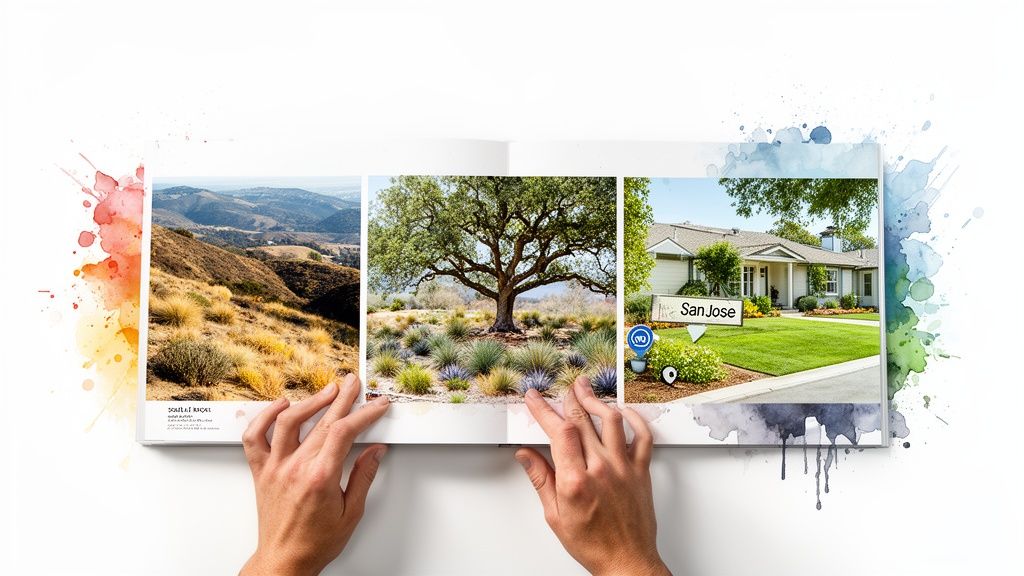
Once you've confirmed a contractor is licensed and insured, it's time to dig into their past work. A portfolio is more than just a collection of pretty pictures; it’s a visual resume that shows their skill level and their real-world understanding of our unique South Bay environment.
Looking through a gallery is your best chance to see if their design sense clicks with your own. Their body of work is the best proof of what they can actually deliver.
Looking Beyond the Pretty Pictures
It's easy to get wowed by a stunning photo. But to really vet a contractor, you need to look at their portfolio with a critical eye, specifically for proof they understand the challenges and opportunities of landscaping in San Jose.
A gorgeous, green lawn is one thing, but a truly successful landscape here requires a lot more thought.
Expert Insight: Don't just look for projects that are beautiful—look for projects that are smart. A strong portfolio should showcase problem-solving, like a well-built retaining wall on a sloped yard in the Almaden foothills or a clever paver design that makes a small Willow Glen backyard feel spacious.
To analyze a portfolio like a pro, keep an eye out for these specifics:
- Projects Like Yours: If you want a full backyard overhaul with a patio, find a project in their portfolio that shows they’ve successfully done just that.
- Smart Plant Choices: Look for drought-tolerant landscaping with California natives like Ceanothus, Manzanita, and ornamental grasses. These choices show an understanding of our local climate and water conservation needs.
- Working with Mature Trees: Pay close attention to how their designs interact with existing oaks or redwoods. This shows they have a deeper understanding of arboriculture, which is crucial for protecting your property's most valuable assets.
- Solutions for Local Problems: Look for evidence they’ve tackled common South Bay issues, like smart drainage for heavy clay soil or hillside stabilization.
Digging Deeper with References
A great portfolio is only half the story; it needs to be backed up by happy clients. Never feel shy about asking for references, especially for jobs that look a lot like the one you're planning.
Here are some powerful questions to ask:
- Did the project stick to the timeline and budget?
- How did the crew deal with unexpected problems when they came up?
- Was the job site kept clean and organized while they were working?
- How do the plants and hardscaping look a year or two later?
- Would you hire this company again without a second thought?
This kind of detailed feedback is how you build real confidence. A stunning portfolio paired with glowing references is a fantastic sign you've found a solid partner. You can see examples of our completed projects in the San Jose Tree Service & Landscaping gallery.
Understanding The Design-Build Process And Your Quote
Getting from a vague idea to a finished landscape can feel overwhelming. A professional, integrated design-build model makes the whole experience smooth and predictable.
With a design-build approach, the same team that dreams up your outdoor space is the one that actually brings it to life. This sidesteps the communication breakdowns that happen when a separate designer hands off blueprints to an installation crew they've never met.
The Stages Of A Landscape Transformation
While no two backyards are the same, a professional landscape project follows a logical path. Knowing these steps helps you understand what's happening and when.
- Initial Consultation & Site Analysis: This is more than a quick walkthrough. A real pro will check your soil, map sun exposure, figure out drainage, and assess the health of your existing trees.
- Concept Design & Material Selection: Based on that analysis and your wish list, the team will sketch out initial concepts and talk through layouts, plant palettes, and hardscape materials.
- Detailed Planning & Final Proposal: Once you’ve settled on a concept, it gets fleshed out into a detailed plan. This allows them to create a comprehensive, line-by-line quote that breaks everything down.
- Installation & Project Management: The build begins. A skilled crew handles everything from grading and planting to irrigation and hardscape, with a project manager keeping you in the loop.
Decoding Your Landscape Quote
A quote is more than just a number; it’s a direct reflection of a contractor's transparency. A vague, one-page estimate is a major red flag. What you want is a detailed scope of work that clearly itemizes every cost.
A quality quote will break everything down into clear categories:
- Labor: The cost for the skilled crew to perform the work.
- Materials: All the plants, soil, mulch, pavers, and irrigation parts.
- Permits: Any fees required by the City of San Jose.
- Disposal: The cost of hauling away old concrete or green waste.
When you’re looking over a proposal, zoom in on the structural details. For instance, how do they plan to provide rock-solid support for decks? Seeing this level of detail shows a real commitment to building things that last.
Key Takeaway: A detailed, itemized quote is your best protection. It creates a clear, shared understanding of exactly what will be delivered and helps you fairly compare bids from different companies.
Integrating Arborist Expertise
If you have mature trees, it is absolutely critical that the design-build process includes an arborist's perspective. Construction work, like digging trenches or grading, can permanently damage a tree by destroying its root system.
A contractor with in-house tree expertise (look for that C-61/D-49 license) will make tree protection a priority. They’ll establish a Tree Protection Zone (TPZ) and know the right techniques to work around critical root areas, making sure your valuable trees stay healthy. This foresight is the hallmark of a top-tier South Bay landscaping contractor.
For a clearer picture of what your project might cost, take a look at our guide on how much a landscape installation should really cost in San Jose.
Essential Questions To Ask Every Potential Contractor
You’ve done the initial legwork, checked their license, and confirmed their insurance. Now comes the most important part: the interview. This conversation is where you find out if they have the process, expertise, and professionalism to be a true partner.
With so many contractors out there, asking sharp, specific questions is how you cut through the noise and find the right fit. The fact that 74% of consumers begin landscaping research on search engines shows how crucial it is to be an informed buyer (Source: San Jose Tree Service & Landscaping Content Intelligence Report, 2024).
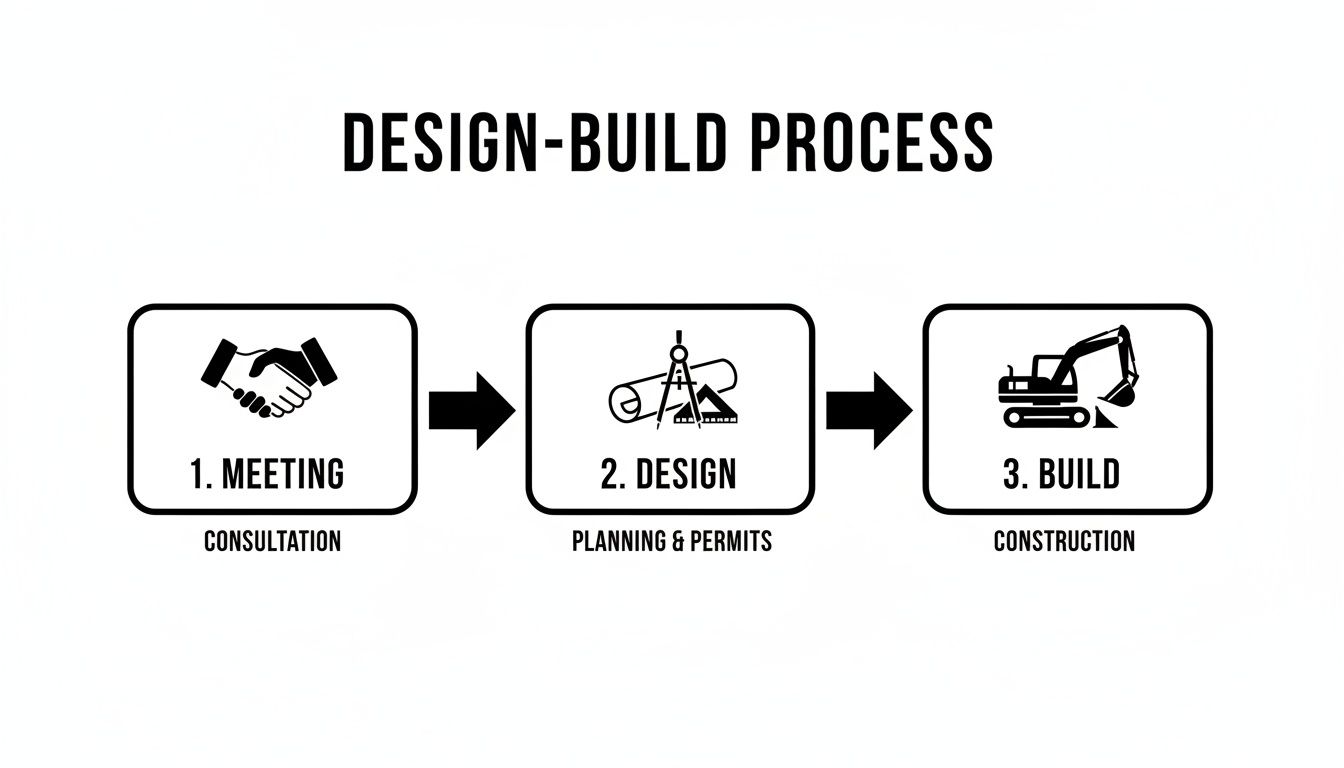
A good design-build process should feel seamless, taking you from the initial meeting through construction with one cohesive team.
Questions About Their Process And Communication
Good communication can make or break a project. You need to know exactly how they operate day-to-day.
- Who is my main point of contact once the project starts? You want to know if you'll be dealing directly with a dedicated project manager or foreman.
- How do you handle surprises or changes? An experienced pro will have a clear process for documenting issues, discussing options, and getting your written approval for any changes.
- What’s your plan for protecting my home and property during construction? This question reveals a lot. Do they lay down protection for your driveway? Do they clean up the site every day?
Questions About Their Expertise And Materials
Now it’s time to dig into their actual knowledge, especially when it comes to sustainable landscape design and the quality of their materials.
My Two Cents: Listen carefully to how they talk about plants. If their answers are generic, that's a red flag. A true San Jose expert should be able to rattle off specific drought-tolerant plants that will do well in your specific microclimate.
Here are a few questions you must ask:
- How do you approach water-wise and drought-tolerant landscaping in your designs? Their answer should be confident and detailed, mentioning native plants, smart irrigation, and proper mulching. Knowing that outdoor water use can be reduced by up to 50% with drought-tolerant landscaping makes this a critical topic (Source: San Jose Tree Service & Landscaping Content Intelligence Report, 2024).
- Where do you get your plants and hardscape materials? The best contractors have solid relationships with reputable local nurseries and suppliers, ensuring healthier plants and higher-quality materials.
- What kind of warranty do you offer on plants, materials, and workmanship? A contractor who is confident in their work will stand behind it. Get the specifics on paper.
By asking these focused questions, you shift the conversation from just talking about price to understanding the real value they bring to the table.
Conclusion
Choosing the right landscape design and installation contractor in San Jose is about finding a true partner for a major investment in your home. By verifying licenses, evaluating local expertise, understanding the design-build process, and asking the right questions, you can confidently select a team to create a beautiful, lasting outdoor space. The key is to find a professional who can translate your vision into a living, breathing landscape that is built to thrive in our unique South Bay climate.
When you're ready to take the next step, our integrated team of designers, installers, and certified arborists is here to create a stunning, sustainable landscape for your home.
Frequently Asked Questions (FAQs)
1. What is the difference between a landscape designer and a landscape contractor?
A landscape designer creates the plan and vision for your yard, while a landscape contractor physically builds it. A design-build firm like ours handles both, ensuring the design is practical and the installation is seamless.
2. How long does a typical landscape installation project take in San Jose?
A simple planting project may take one to two weeks, while a full backyard renovation with hardscaping can take four to eight weeks or more, depending on the complexity and weather.
3. Do I need a permit for my landscaping project in San Jose?
You typically do not need a permit for basic planting or a small ground-level patio. However, permits are usually required for decks over 30 inches high, retaining walls over four feet, and new electrical or complex irrigation work.
4. Why is a C-27 license so important for a landscape contractor?
The C-27 is the official state license required in California for any landscaping project over $500. It confirms the contractor has the necessary experience and has passed a state trade exam, protecting you as a homeowner.
5. How do you protect existing trees during a landscape renovation?
We establish a Tree Protection Zone (TPZ) around mature trees to prevent root damage from heavy equipment. Our certified arborists oversee the process to ensure your valuable trees remain healthy throughout the construction.
Ready to transform your outdoor space with a team that values quality, safety, and expertise? The professionals at San Jose Tree Service & Landscaping are here to help you design and build a beautiful, sustainable landscape that you'll love for years to come.
