
In San Jose, if there's a tree in that strip of land between the sidewalk and the street, you might be surprised to learn who's in charge of its upkeep. The adjacent property owner is responsible for routine street tree maintenance, which includes pruning.
This is a common gray area for homeowners. Street trees feel public, yet they're close enough to damage your roof, car, or utility lines. If you’re concerned about a street tree on your property, you're right to ask questions before taking action.
This guide clarifies your responsibilities, explains the city's rules, and outlines how to handle street tree care safely and legally.
Understanding Street Tree Responsibility in San Jose
So, you're looking at an overgrown tree on your curb and wondering what to do. The City of San Jose's policy is straightforward: property owners are the primary caretakers of the street trees adjacent to their land. This isn't just about appearances; it's a matter of public safety.
Overhanging branches can obstruct sidewalks, block driveway views, and interfere with utility lines. The city's shared stewardship model means that while it provides oversight, homeowners must arrange and pay for the work needed to keep street trees healthy and safe.
The Homeowner's Role vs. The City's Role
Since 1951, San Jose property owners have been legally responsible for the care of the city's 270,000 street trees. This is laid out in the San José Municipal Code, and you can read more about this city ordinance on their official site.
A common misstep is assuming street trees are either "the city’s problem" or safe to prune yourself without guidance. In San Jose, improper or unpermitted pruning can create safety hazards, damage the tree, and lead to city violations.
The first step for any street tree pruning should begin with a professional assessment from a licensed contractor. This ensures the work is done right, protecting you, your property, and the tree. To get a feel for what's involved, you can explore the types of professional tree services in San Jose.
San Jose Street Tree Responsibility At a Glance
| Task | Primary Responsibility | City's Role |
|---|---|---|
| Routine Pruning | Property Owner | Issues free permits, provides guidance |
| Emergency Situations | City of San Jose | Manages fallen trees or hazardous branches |
| Utility Line Clearance | Utility Company (e.g., PG&E) | Prunes trees near power lines |
| Tree Removal | Property Owner (with permit) | Reviews and issues removal permits |
| New Tree Planting | Property Owner or City Program | Approves species, issues planting permits |
Getting to Know San Jose's Street Tree Rules
In San Jose, street tree care is a partnership. The city's "shared stewardship" approach keeps our urban canopy—from the historic oaks in Willow Glen to the newer trees in Almaden Valley—healthy and safe.
Before you pick up a saw or hire a crew, you must get a permit from the city. This isn't just red tape; it's a critical step to avoid fines and prevent damage to a valuable community asset.
The Permit Process is Non-Negotiable
Here’s the bottom line: property owners are the primary caretakers, but the city has the final say. To do any work—whether it's trimming, removing, or planting—you must get a free permit from the Department of Transportation (DOT).
Think of the permit as a necessary quality check. A city arborist reviews the proposed work to ensure it’s appropriate and won’t create a public hazard. You can find official details on the City of San Jose's forestry page.
Pro Tip: Street tree pruning should begin with a professional assessment to identify deadwood, clearance issues, and structural defects. The goal is safety and longevity—not aggressive cutting. A licensed arborist can confirm city requirements before work begins.
What Counts as "Illegal" Pruning?
The city is very clear about what you can't do to a tree. These rules are based on horticultural science to prevent permanent damage. Getting this wrong can lead to hefty fines.
Here are a few of the biggest mistakes considered illegal without a proper permit and a skilled hand:
- Topping: Lopping off the main, upright leader stem or huge branches. It leaves ugly stubs and ruins the tree's structure forever.
- Over-Pruning: Never remove more than 25% of a tree’s living foliage at once. This puts the tree under immense stress, making it vulnerable to pests and disease.
- Bad Cuts: Leaving stubs or cutting flush against the trunk damages the tree's ability to heal, creating an open wound for decay.
If you perform unpermitted or improper work, you could be fined or be on the hook for the full replacement cost of a mature tree. This is why hiring a professional who knows San Jose’s rules is so important. Our guide on verifying professional licenses and credentials is a great place to start.
Solving Common Street Tree Problems
Figuring out what to do with a street tree problem can feel confusing. Different situations call for different experts, and knowing who to contact first will save you headaches and potential fines.
Let's walk through some of the most common issues San Jose residents face and pinpoint the right person for the job.
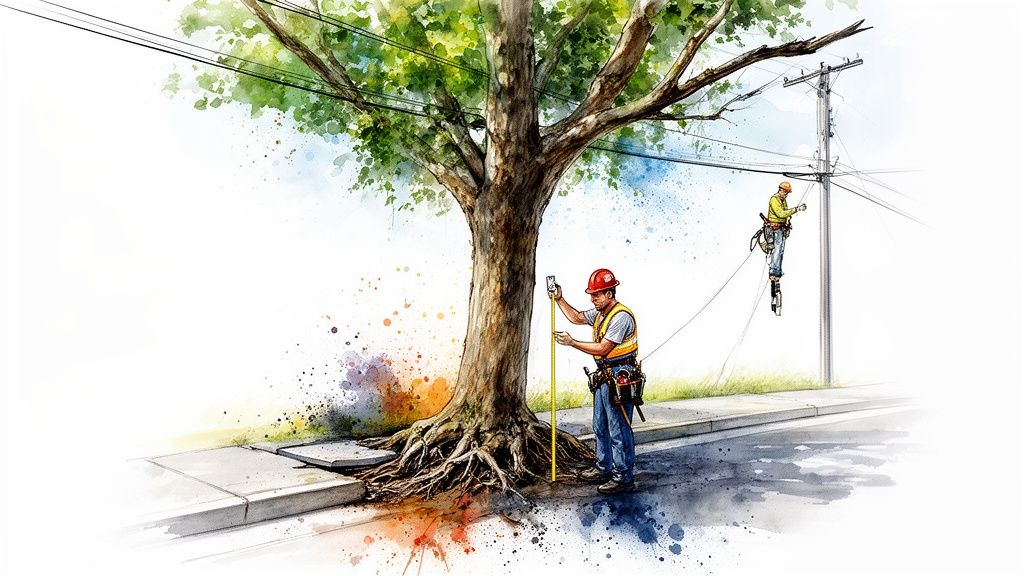
A Guide to Who to Call First
Hacking away at a tree without the right permit or expertise can lead to safety risks, permanent tree damage, and city violations.
Here’s a simple breakdown for handling specific street tree troubles in San Jose:
Problem: Branches are growing into power lines.
- Who's Responsible: The utility company (like PG&E) is legally required to keep high-voltage lines clear.
- Your First Step: Do not touch these branches yourself. This is incredibly dangerous. Contact your utility provider immediately to report it.
Problem: Tree roots are lifting and cracking the sidewalk.
- Who's Responsible: The adjacent property owner is generally responsible for sidewalk repairs caused by tree roots.
- Your First Step: Before calling a concrete contractor, bring in a licensed tree service contractor. An arborist can evaluate options like root pruning or a root barrier to prevent the problem from reoccurring.
Problem: Dead or hazardous limbs are hanging over the street.
- Who's Responsible: As the adjacent property owner, you're responsible for keeping the tree safe.
- Your First Step: Call a licensed and insured arborist for a professional opinion. They can spot structurally weak limbs and will know how to get the right city permit before safely removing them.
Problem: The tree is blocking a stop sign or streetlight.
- Who's Responsible: The City of San Jose is responsible for keeping public signs and streetlights clear.
- Your First Step: Report the obstruction to the City of San Jose’s Department of Transportation. They will send a crew to handle it.
Avoiding DIY Dangers and Improper Pruning
It's tempting to think, "I can handle that this weekend." But taking a DIY approach or hiring the cheapest person with a chainsaw is a mistake that can turn into a serious liability for San Jose homeowners.
Working on trees is hazardous, especially near traffic, pedestrians, and utility lines. One clumsy cut can send a heavy limb crashing onto a roof, fence, or car. Your insurance may not cover damage if the work wasn't done by a qualified professional.
The Hidden Damage of Bad Pruning
Improper pruning does more than make a tree look ugly; it can inflict long-term, sometimes fatal, damage. Aggressive hacking, or "topping," creates weak spots that invite decay.
Industry Insight: Recent storm cycles have left many urban trees structurally stressed. Data shows that poorly maintained street trees are often the first to fail during high-wind events, which is why preventive pruning is a much better investment than reactive cleanup.
A licensed and insured professional, like our team at San Jose Tree Service & Landscaping (CSLB #985639), approaches the job with a focus on safety and long-term tree health. We use industry-standard techniques that improve a tree's structure and resilience. This is critical for staying on the right side of the rules on who is responsible for street tree pruning in San Jose.
Our primary goals on any job are to:
- Identify and remove deadwood before it can fall.
- Ensure proper clearance for pedestrians, vehicles, and property.
- Correct structural defects that could cause future failure.
Using the right methods from the start protects your property and prevents bigger, more expensive problems later. Learn more about what not to do in our guide on the top tree trimming mistakes that kill healthy trees.
How to Hire the Right Licensed Tree Contractor
Once you've confirmed the street tree is your responsibility, finding the right person for the job is the most important step. Hiring a qualified and licensed tree contractor is your best defense against property damage, city fines, and a botched job that could harm your tree.
This is not a task for a general gardener. Street tree work demands expertise in urban forestry, strict safety protocols, and a solid understanding of San Jose's permit requirements.
Your Contractor Vetting Checklist
When researching professional tree service companies, a reputable one will readily provide its credentials.
Here's a simple checklist to guide you:
- Verify Their State License: Any legitimate tree service in California must hold a CSLB C-61/D-49 Tree Service license. Our license, CSLB #985639, can be verified on the CSLB website.
- Confirm They’re Fully Insured: Ask for proof of both general liability and worker's compensation insurance. This protects you from financial responsibility for property damage or crew injuries.
- Ask About San Jose Permit Experience: An experienced local pro will know the city's free permit process inside and out. They should confidently explain how to get one or offer to handle the paperwork for you.
A true professional will walk the property with you, pointing out what needs to be done—from removing deadwood to ensuring proper clearance. This initial consultation is your first glimpse into their expertise. Learn more in our guide on how to tell if an arborist is giving you honest advice about your tree.
Conclusion: Partner with an Expert for Safe, Compliant Tree Care
When it comes to the street tree in front of your house, the responsibility ultimately rests with you. But you don't have to navigate San Jose's rules alone.
Bringing in a licensed tree care company is the smartest move you can make. It protects your property, keeps your neighborhood looking great, and contributes to a healthier city—especially in areas with mature trees like Willow Glen and Almaden Valley. Our arborist-led team provides street tree pruning that understands local conditions, liability concerns, and proper pruning standards.
At San Jose Tree Service & Landscaping, we handle the entire process with a safety-first approach, ensuring all work is city-compliant and beneficial for the tree's long-term health. If you need help understanding what’s allowed and what’s needed for your street tree, we’re here to guide you toward responsible care.
Frequently Asked Questions (FAQs)
1. Do I really need a permit just to trim a few branches on my street tree?
Yes, absolutely. Any pruning of a city street tree in San Jose requires a free permit from the Department of Transportation to ensure the work meets city standards and protects the tree's health.
2. What happens if a street tree's roots are tearing up my sidewalk?
You are typically responsible for repairing sidewalk damage caused by the adjacent street tree's roots. Your first call should be to a certified arborist to evaluate solutions like root pruning or barriers before contacting a concrete contractor.
3. Who is liable if a branch from my street tree falls and damages a car?
As the person responsible for the tree's routine care, you could be found liable for damages if a branch fails due to neglect. Proactive inspections and professional pruning are your best defense against accidents and liability.
4. Can I prune branches from my neighbor's street tree that hang over my property?
While state law often allows this, San Jose's street tree rules still require a permit. The best approach is to speak with your neighbor and jointly hire a licensed tree service to handle the work legally.
5. How do I know if a tree service is legitimately licensed and insured?
Ask for their California State License Board (CSLB) number (it should be a C-61/D-49 specialty license) and verify it online. Also, request a current certificate of insurance showing both general liability and worker's compensation coverage.
Navigating city rules while ensuring your trees are safe requires expertise. The team at San Jose Tree Service & Landscaping is licensed (CSLB #985639), insured, and deeply familiar with San Jose's permit process. Contact us today for a professional assessment and a free estimate to manage your street trees with confidence. Learn more at https://sanjosetreemaintenance.com/.
