
Crafting a truly great outdoor living space is about more than just a concrete patio. It's about extending your home's comfort into the fresh air, creating a retreat for relaxation, entertainment, and nature. This guide will walk you through turning your daydreams into a workable, beautiful plan for your San Jose home.
Defining Your South Bay Outdoor Living Vision
Before breaking ground, it's critical to define what "outdoor living" means to you. Do you envision a quiet corner for coffee, a bustling outdoor kitchen for parties, or a safe play area for kids?
Nailing down this vision is the most important part of the process. This planning saves you from costly changes later, ensuring the final design aligns with your lifestyle and the unique South Bay climate.
What Is Your Primary Goal?
The main way you'll use the space will drive every other decision, from pavers to plants.
- Relaxation and Retreat: Prioritize deep seating, shade from a pergola, a calming water feature, and strategic privacy plantings.
- Entertaining and Socializing: Focus on a spacious patio, a built-in BBQ, ambient lighting, and open space for guests to mingle.
- Family and Recreation: Think about durable lawns, safe play structures, non-toxic plants, and clear sightlines from the house.
This desire for functional outdoor spaces is a major homeowner trend. According to one report, "98% of homeowners believe landscaping increases property value" (Content Intelligence Report). Homeowners are investing seriously in making their backyards a year-round extension of their living space.
A well-defined vision is your project's roadmap. For more ideas, explore different landscape design tips. To fully integrate your spaces, you might even consider how to transform your porch into a sunroom.
Designing for the Local Climate and Ecology
A successful South Bay outdoor living space must work with our unique environment, not fight it. A landscape that can't handle our summer heat, atmospheric rivers, or clay soil is doomed. The secret is creating a climate-resilient oasis that belongs right here in San Jose.
It all starts with choosing drought-tolerant and native plants. This isn't just a trend; it's the smartest move for a sustainable, water-wise garden that can weather a heatwave with little help once established.
Embracing Native and Drought-Tolerant Plants
Our heavy, dense clay soil can be a nightmare for plants that aren't adapted to it. Native species like California lilac (Ceanothus), Manzanita, and various sages thrive here because they are built for our exact conditions.
Their benefits are significant:
- Less Water, Lower Bills: They are naturally adapted, meaning you'll see a noticeable drop in water usage. In fact, "Outdoor water use can be reduced by up to 50% with drought-tolerant landscaping" (Content Intelligence Report).
- Less Work for You: Once established, they need far less pruning, fertilizer, and pest control than non-native ornamentals.
- A Boost for Local Wildlife: These plants support local birds, bees, and butterflies, turning your yard into a living ecosystem.
Your vision is the trunk of a tree, branching into zones for relaxation, entertaining, or play—all supported by smart, climate-appropriate design.
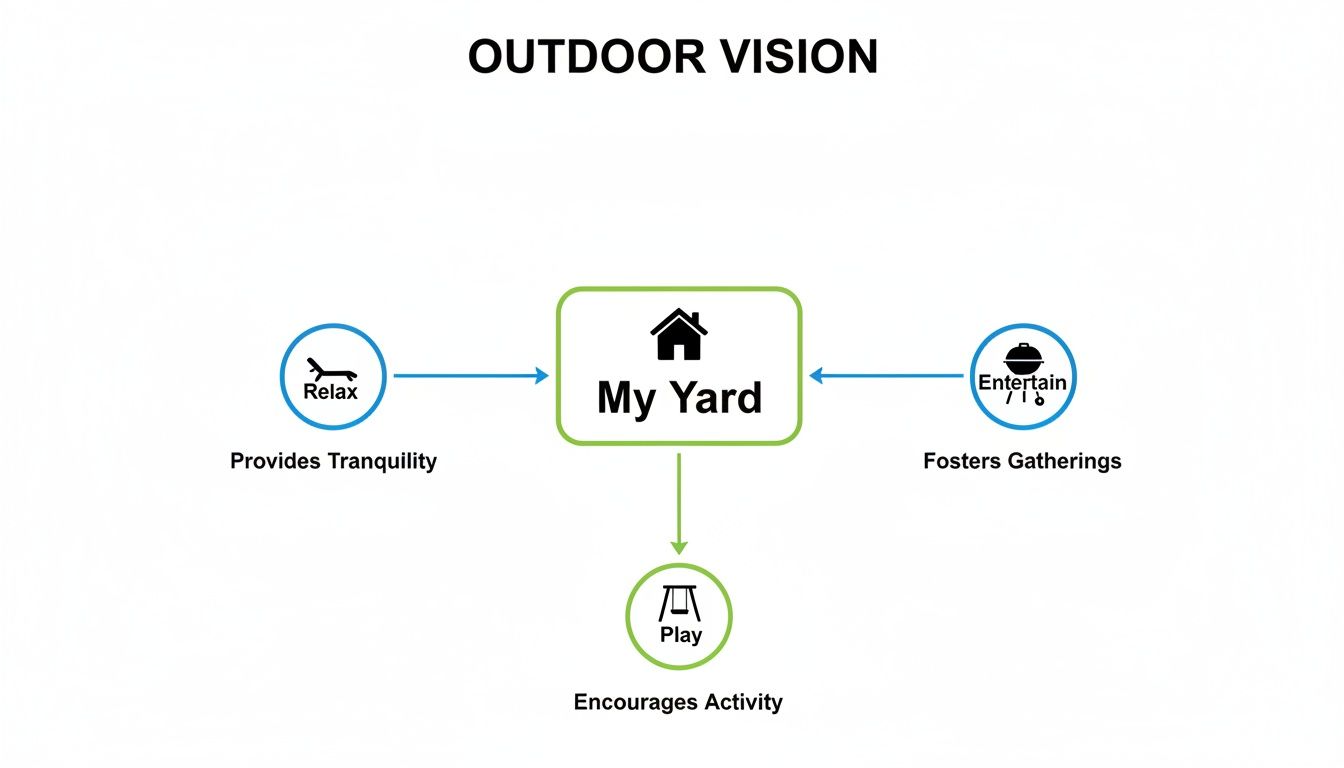
Every element, from the turf you choose to the shade you build, should connect to your goals and respect our local climate. The table below breaks down key planning elements for a successful South Bay yard.
Key Considerations for South Bay Outdoor Living Design
| Design Element | South Bay Challenge | Recommended Solution & Benefit |
|---|---|---|
| Plant Selection | Long, dry summers and intense heat waves stress non-adapted plants. | Prioritize California natives and Mediterranean plants that thrive on low water, reducing maintenance and bills. |
| Soil Health | Heavy clay soil drains poorly, leading to root rot and weak plant growth. | Amend soil with organic compost and choose plants suited for clay. This improves drainage and nutrient availability. |
| Water Management | Water restrictions are common, and runoff from storms pollutes waterways. | Install a drip irrigation system with a smart controller. Design with swales to capture and absorb rainwater. |
| Shade & Cooling | Unshaded patios and windows can become unusable and drive up A/C costs. | Strategically plant deciduous shade trees or install pergolas to create cool zones and reduce home energy use. |
| Storm Resilience | Atmospheric rivers bring high winds and heavy rain, posing a risk to trees and property. | Engage a professional for proactive tree pruning to thin the canopy and remove weak limbs, preventing storm damage. |
Thinking through these elements from the beginning ensures your space is beautiful, practical, and sustainable.
Strategic Tree Placement for Cooling and Safety
Trees are your landscape's natural air conditioners. Placing a shade tree correctly can cool a patio and lower summer energy bills. A deciduous tree shading a west-facing window provides a dense canopy in summer but lets warm sun through in winter.
But trees need professional care to be assets, not liabilities. With atmospheric rivers becoming regular events, storm preparedness is a serious responsibility for every homeowner. Proactive tree care is a smart investment in your home's safety.
Safety Note: Professional pruning is more than cosmetic. It strategically removes weak, damaged, or overgrown branches that are most likely to snap during high winds and heavy rain. Hiring a licensed and insured San Jose tree service is the only way to ensure this work is done correctly and safely. For more detail, read our guide on how San Jose homes can prepare for drought and storms.
Balancing Hardscapes and Softscapes for Functionality
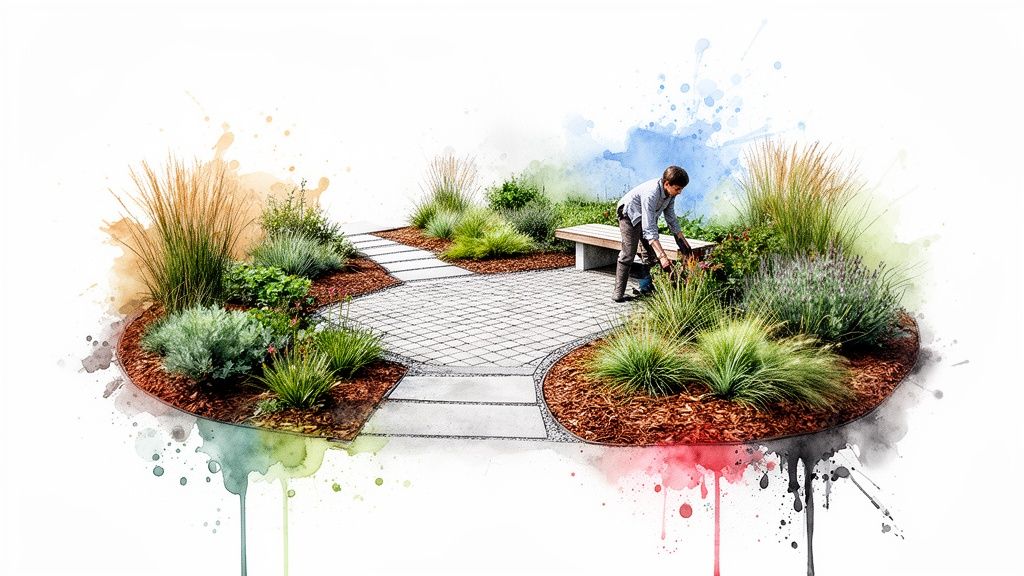
A great outdoor living space balances the interplay between two elements: hardscapes and softscapes.
Hardscapes are the structural elements: patios, walkways, retaining walls, and decks. Softscapes are the living parts: plants, trees, and garden beds. Getting this balance right is what turns a yard into a personal oasis.
Choosing the Right Hardscape Materials
In the South Bay, materials must perform under intense sun and winter rain.
Practical options for our climate include:
- Permeable Pavers: These allow rainwater to seep into the ground, reducing runoff and recharging groundwater.
- Natural Stone: Materials like flagstone or slate offer a classic, organic feel and are incredibly durable.
- Decomposed Granite (DG): This affordable option provides a casual, rustic look for paths or secondary seating areas.
Homeowners are increasingly seeing the value in these upgrades. The global outdoor living market trends from Coherent Market Insights show significant growth, with North America making up a dominant 45% of that market. This shows that backyards here in the South Bay are becoming more valuable than ever.
The Critical Role of Soil and Softscapes
Beautiful hardscaping fails if the surrounding plants are struggling. Proper soil preparation is non-negotiable, especially with our region's dense clay soil.
A licensed landscape design contractor knows a thriving garden starts underground. They will amend heavy clay with organic compost to improve drainage and nutrient levels, giving your plants a strong foundation. This step is critical for a sustainable landscape design that is resilient during heat waves and requires less long-term maintenance. As water conservation efforts intensify, understanding how new water rules will redefine landscape installation is crucial.
Professional Integration for a Seamless Result
Making the transition from hardscape to softscape feel natural requires an expert touch. A patio must be graded correctly to direct water away from your house, while a walkway should meander invitingly through the garden.
This is why hiring a licensed C-27 landscaping contractor is so important. They manage both sides—from pouring a pergola foundation to preparing soil for native wildflowers—ensuring every element works together for a professional and durable outdoor space.
Trees: The Backbone of Your Outdoor Oasis
In any South Bay yard, mature trees are often your most valuable living assets. They provide shade, beauty, and a connection to nature. However, a tree needs professional care to be a safe part of your outdoor living space.
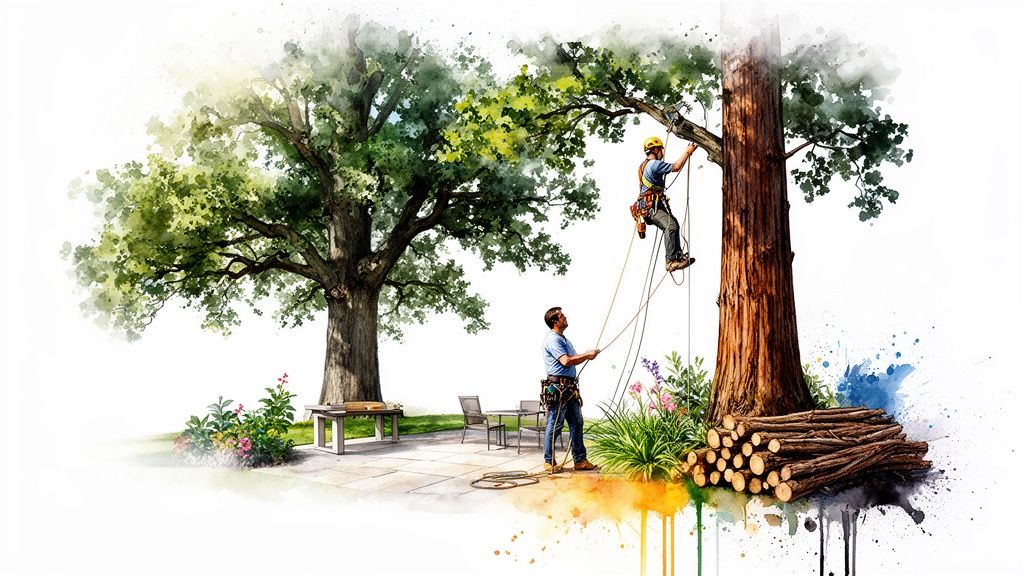
Strategic, professional pruning by a certified arborist is one of the best investments you can make. It's about much more than just lopping off branches.
More Than Just a Haircut: Enhancing Beauty and Function
Proper pruning is part art, part science. A skilled arborist can selectively thin a dense canopy to open up a view or allow more sunlight to reach the garden and lawn below.
This delicate process encourages healthier, more vigorous growth. The result is a yard that feels brighter, more spacious, and more inviting. If you're starting fresh, you can even choose the right tree for your yard to perfectly complement your vision.
Safety First: Why Professional Tree Care is Non-Negotiable
Safety is even more important than aesthetics. With the intense atmospheric rivers we've seen in the South Bay, managing the risk of falling limbs is a critical part of homeownership.
A certified arborist is trained to identify and remove weak, dead, or poorly attached branches—the ones most likely to snap in high winds. This proactive care protects your home and family while making the tree stronger.
Safety Note: Never attempt complex tree work yourself. It is incredibly dangerous. Licensed tree removal contractors have the specialized training, safety equipment, and crucial insurance to handle these jobs without risk to people or property.
When Tree Removal is the Only Option
Sometimes, a tree must be removed. This necessary decision is often made for these reasons:
- Safety Hazards: The tree is dead, dying, or structurally unsound.
- Disease or Pests: An infestation or disease is beyond saving.
- Construction Conflicts: The tree is in the way of a planned deck, patio, or home addition.
In these cases, hiring a licensed and insured professional is non-negotiable. Safely removing a large tree in a residential space demands precision and expertise.
The Advantage of an All-in-One Expert
Juggling different contractors for tree work and landscaping is a headache. Hiring a company that holds both a C-61/D-49 tree service license and a C-27 landscaping license is a game-changer.
This dual licensure means one qualified team sees the entire project. A team like San Jose Tree Service & Landscaping (CSLB #985639) can artfully prune a mature oak for a new patio and then build that patio, ensuring every phase is perfectly integrated. This unified approach delivers higher safety standards, smoother project management, and a beautifully cohesive outdoor living space.
Choosing Furnishings to Complete Your Space
With your landscape's foundation in place, it's time for the final touches that transform a yard into an outdoor living room. Furnishings, lighting, and amenities are critical pieces that dictate how you will use and enjoy the space.
The right furniture gives your space a purpose. A dining table signals "this is where we eat," while comfy armchairs around a fire pit create a conversation spot. Choose pieces that feel like an extension of your indoor style, blurring the line between inside and out.
Investing in Durability for the California Climate
Our intense California sun is the ultimate test for outdoor furniture. Investing in high-quality, weather-resistant materials will save you money and headaches down the road.
Look for materials with a proven track record for resilience:
- Teak and Acacia: These hardwoods have high oil content, making them naturally resistant to rot and pests.
- Powder-Coated Aluminum: This workhorse material is lightweight, rust-proof, and available in many styles.
- All-Weather Wicker (Resin): Get the classic woven look without the downsides of natural wicker, like splintering or mildew.
Homeowners everywhere are prioritizing comfortable, long-lasting outdoor setups, fueling a growing global market for quality outdoor furniture.
Lighting and Amenities for Year-Round Enjoyment
Good lighting separates a daytime-only space from one you can enjoy anytime. Low-voltage landscape lighting can safely illuminate walkways, while string lights create a warm, inviting vibe.
For a covered patio or pergola, a ceiling fan is a game-changer on hot afternoons. You can explore guides on the best outdoor ceiling fans for great options. Finally, add a central feature like a sleek gas fire pit for warmth or a small fountain for soothing ambient sound. You can see how these elements come together in our San Jose landscaping project gallery.
Budgeting Your Project and Hiring a Professional
You have a vision. Now, turning that dream into reality comes down to a realistic budget and the right team. This is an investment, not just an expense—good landscaping boosts your home's resale value.
Setting a Realistic Budget
The final price depends on the scope of your plans. Break down your project into a few key areas:
- Hardscaping Costs: Usually the largest part of the budget, this includes patios, walkways, retaining walls, and decks.
- Softscaping and Planting: This covers trees, plants, sod, mulch, and essential soil amendments.
- Professional Services: This is the cost for design, installation labor, and specialized jobs like tree pruning.
- Amenities and Furnishings: Save room for lighting, furniture, a fire pit, or a smart irrigation system.
The Dangers of DIY and the Value of a Pro
While planting flowers is a great weekend project, some jobs require a professional. Complex hardscaping and especially any tree work are not meant for DIY.
Safety Note: Trying to prune or remove a tree yourself is incredibly dangerous and can lead to serious injury or property damage.
Hiring a licensed and insured company is your guarantee that the project will be done safely, correctly, and to local San Jose code. Choosing a BBB Accredited since 2013 company like San Jose Tree Service & Landscaping provides peace of mind, showing a decade-plus track record of ethical business and customer satisfaction.
When you hire a company holding both a C-27 landscaping license and a C-61/D-49 tree service license (CSLB #985639), you get one expert team to handle everything. This integrated approach saves you from juggling contractors and ensures a seamless, cohesive result from a single team accountable for the entire project.
Conclusion: Creating Your Perfect South Bay Oasis
Transforming your yard into a functional and beautiful outdoor living space is a significant investment in your home and quality of life. By defining a clear vision, designing for the South Bay climate with drought-tolerant landscaping in California, and balancing hardscapes with softscapes, you create a sustainable retreat. Prioritizing safety with professional tree care from licensed tree removal contractors ensures your oasis is secure for years to come.
Ready to turn your yard into the oasis you’ve been picturing? Contact San Jose Tree Service & Landscaping today for a proper consultation and a detailed estimate. Let our licensed, insured, and BBB-accredited team bring your vision to life safely and beautifully.
Find out more at https://sanjosetreemaintenance.com.
Frequently Asked Questions about South Bay Landscaping
1. How much should I budget for a landscape project in San Jose?
A simple planting refresh can be a few thousand dollars, but a full backyard remodel with a patio, new plants, and irrigation often ranges from $20,000 to $75,000+. The best first step is a detailed, professional estimate tailored to your specific vision and property.
2. What plants thrive in our heavy clay soil without constant watering?
California natives like Ceanothus (California Lilac), Manzanita, and various Sages (Salvias) are excellent choices. They are adapted to our clay soil and dry summers, making them perfect for a beautiful, water-wise garden once established.
3. Do I really need a permit for my deck or patio in San Jose?
Often, yes. The City of San Jose typically requires permits for structures like decks over 30 inches high, large retaining walls, or projects with significant electrical or plumbing work. A licensed contractor will handle the permitting process to ensure your project is safe and up to code.
4. Can I trim my own trees to save money?
We strongly advise against DIY tree trimming. It is extremely dangerous without proper training and safety equipment. A professional arborist not only works safely but also knows how to prune a tree to enhance its health and structure, preventing future hazards.
5. Is it better to hire separate tree and landscaping companies?
It's far more efficient to hire one expert team that holds licenses for both. A company with both C-27 (Landscaping) and C-61/D-49 (Tree Service) licenses, like our team, ensures seamless project coordination, higher safety standards, and a cohesive final result.