 Skip to content

Direct Answer: Land clearing covers everything from brush and weed removal for fire compliance to invasive plant extraction and full lot preparation, each type carries different risks for mature trees and soil structure.
I get calls that start like this: ‘We need the weeds cleared, but I don’t want to lose my big oak.’ It comes up almost every time someone describes an overgrown property in Morgan Hill, San Martin, or out toward the rural stretches of the South Valley. The tree is the anchor of the yard. Everything else can go, but not that.
The problem is that ‘clearing the yard’ means very different things depending on what’s actually growing there, how close it is to the tree roots, and whether you’re trying to pass a fire compliance inspection or prep a lot for new construction. Lumping it all together as ‘weed pulling’ is how mature trees get hurt and how homeowners end up surprised by what the job actually involves.
I want to walk through the three main types of clearing work we see on larger South Bay and Santa Clara Valley lots, what each one requires, when timing matters, and how the presence of mature trees changes the whole approach.
Brush and Weed Removal for Fire Compliance, What the Deadline Actually Means
For most homeowners on larger lots in foothill communities like Los Gatos and Saratoga, or on rural parcels in San Martin and Gilroy, fire abatement is the driver. The Santa Clara County Fire Department typically requires defensible space clearance to be completed before June 1 each year, and properties get inspected after that date.
What that means in practice:
- Dry grasses and brush cut to 4 inches or less within 30 feet of structures
- Dead branches cleared from the understory of trees within the Zone 1 footprint
- Ladder fuels, shrubs and brush that would carry a ground fire up into the canopy, removed or reduced
- Combustible debris, wood piles, and dead leaves cleared from around the home’s perimeter
This is where timing creates real pressure. If you call in mid-May, there’s a short window to schedule, complete, and document the work before the inspection cycle starts. We see a second rush in early fall, after the first light rains bring back regrowth from summer-cut brush, homeowners want that knocked back before the next inspection cycle catches them short.
For the fire abatement work itself, the tree concern is usually deadwood removal and low branch pruning. Both can be done without harming the tree if the cuts are made correctly. For more on what separates a real arborist-guided approach from a crew just clearing fast, see what a certified arborist does that a tree crew doesn’t.
Invasive Plant Removal, Ivy, Bamboo, and Poison Oak Near Tree Root Zones
This is the clearing work that most directly puts mature trees at risk, and it’s the one people underestimate the most.
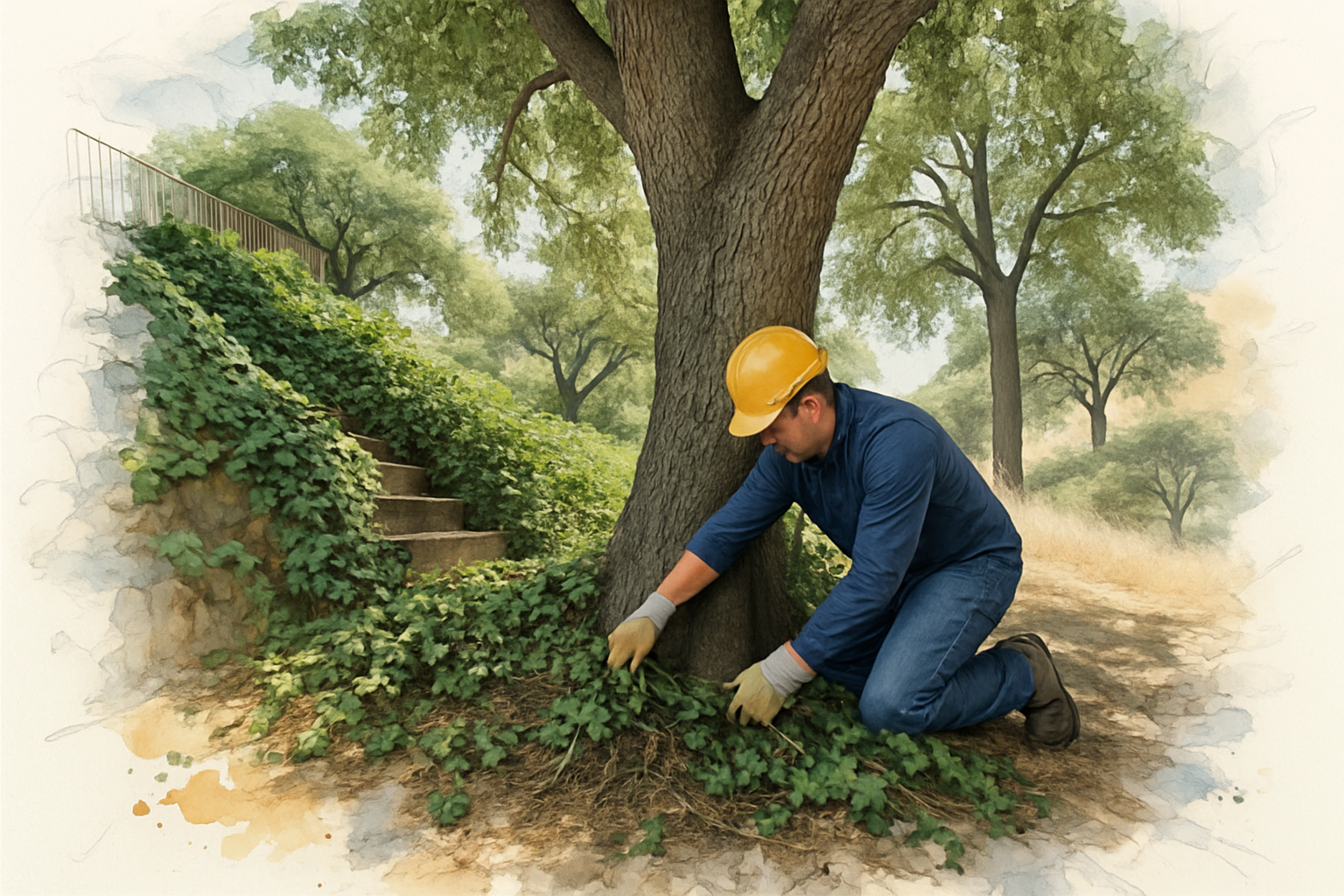
English ivy is the most common offender on older residential lots in Willow Glen and Almaden Valley. It looks harmless climbing up a hillside, but once it reaches the trunk and starts ascending into the canopy, it adds significant weight, traps moisture against the bark, and can eventually girdle a tree. Removing it sounds simple. But pulling established ivy off a root zone without understanding which roots are close to the surface takes care, aggressive digging or mechanical equipment near a large oak’s drip line can cause more damage than the ivy itself.
Bamboo is a different problem. Several callers over the past year described bamboo spreading from neighboring properties onto their own lots, with rhizomes running 15 to 20 feet underground before surfacing. Cutting the canes doesn’t stop it. The rhizome network has to be tracked and removed, which is labor-intensive and requires knowing where those runners are relative to other plants and hardscape.
Poison oak is the third one I see regularly on foothill lots. It’s native, it resprouts aggressively after cutting, and touching it without the right protective gear creates a health hazard for the crew. We handle this as part of multi-service calls, one homeowner will call about poison oak removal, weed clearing, and tree trimming all in the same conversation. That’s actually the most efficient way to scope it: one assessment covers all three instead of coordinating separate vendors.
For properties where invasive plants are growing inside the root zone of trees you want to keep, read how landscape design works when you have mature trees to protect, it covers the root zone considerations in more depth.
Three Types of Land Clearing, What Each One Involves
Not every clearing job is the same scope or the same risk to your trees. Here’s a quick breakdown of what distinguishes each type.
| Clearing Type | Primary Goal | Tree Risk Level | Timing Driver |
|---|---|---|---|
| Brush and weed removal | Fire compliance / defensible space | Low to moderate (ladder fuels near canopy) | Before June 1 inspection deadline |
| Invasive plant removal (ivy, bamboo, poison oak) | Protect root zones and structures | Moderate to high (root zone work required) | Year-round, but fall regrowth adds urgency |
| Full lot / construction prep clearing | Grade and prep for new build or major install | High (equipment near roots, soil compaction) | Project-timeline driven |
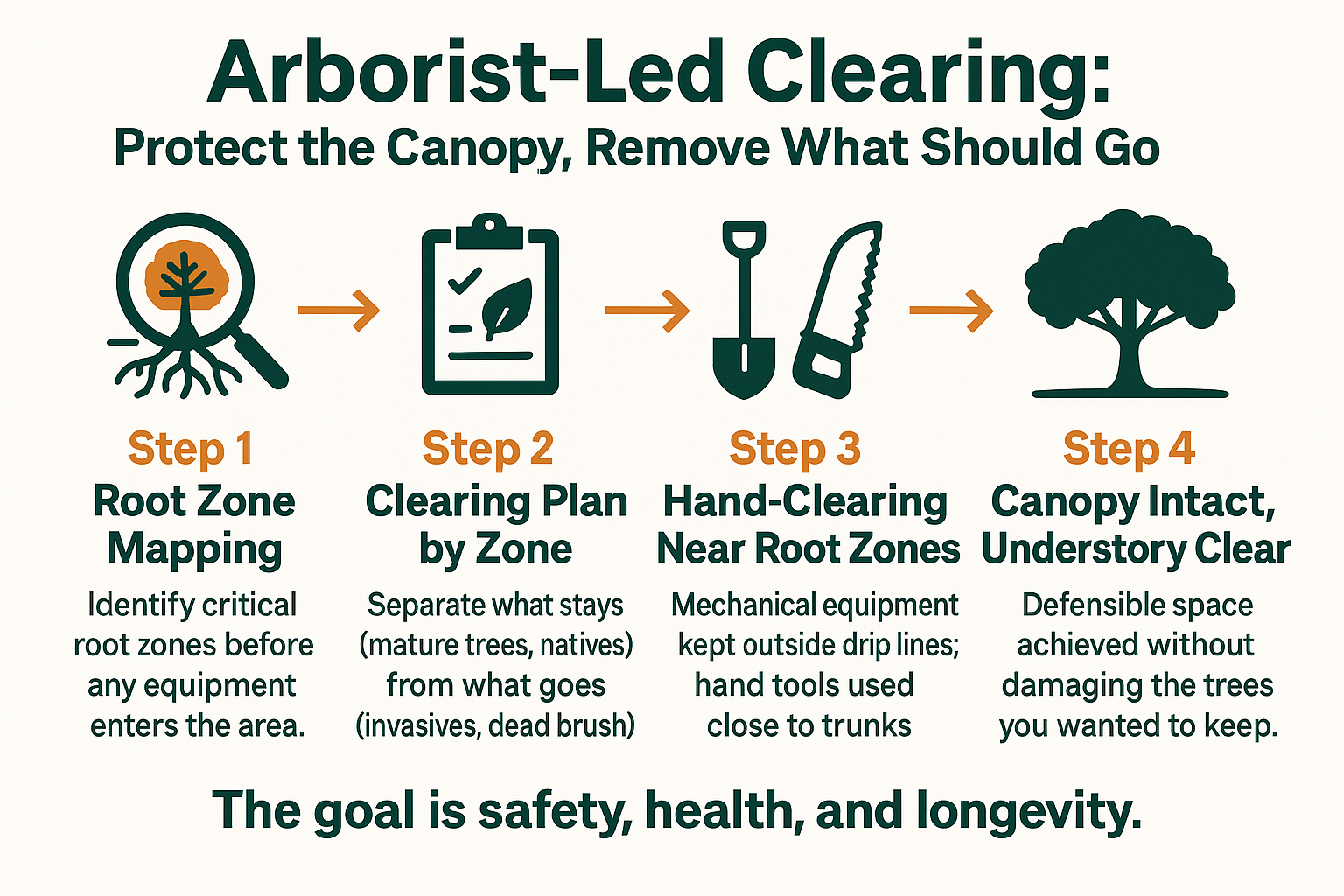
The ‘Preserve the Canopy’ Principle, How Arborist-Led Clearing Works
This flow shows how an arborist assessment shapes clearing decisions differently than a standard crew walkthrough.
Why the ‘Just Clear Everything’ Approach Costs More in the Long Run
I understand the instinct. When a lot is overgrown, the temptation is to get in there and take it all out fast. But on properties with mature trees, fast clearing without a plan is how you end up with a tree that looks fine in October and starts showing stress by the following spring.
The most common damage I see from aggressive clearing:
- Soil compaction from heavy equipment driven over root zones, roots need oxygen exchange, and compacted soil cuts that off
- Bark damage from weed trimmers and blades run too close to the trunk base
- Root severance from grading or trenching within the drip line
- Improper cuts on low branches removed for fire clearance, flush cuts or stubs that leave entry points for disease
The California Oak Woodlands Conservation Program notes that valley oaks and blue oaks are particularly sensitive to soil disturbance within their root zones. Mature oaks on South Valley properties, especially those in San Martin and out toward Gilroy, carry real ecological and property value, they’re often the reason someone bought that lot in the first place.
An arborist-led assessment before clearing starts means those decisions are made with tree biology in mind. One longtime customer put it well in a review: the crew ‘protects what should be protected and removes what should go.’ That’s the standard we hold the work to.
What to Expect When You Call to Scope a Clearing Project
Several callers describe the same situation: they have poison oak on one side of the yard, a bamboo problem along the back fence, some dead lower branches on a large tree, and they want it all handled together. They’re not sure if that’s one job or three vendors.
For most properties of that type, it’s one call. We assess the full scope, what needs to come out, what needs to be done by hand versus machine, what the tree root considerations are, and whether any protected trees on the property require permit review before work begins. For background on when a permit is required in San Jose, this page on what San Jose requires before a tree comes down is a good starting point.
On pricing: clearing costs vary widely depending on lot size, density of growth, species involved (bamboo and poison oak both take longer than standard brush), and proximity of work to root zones. Many South Bay homeowners with larger lots find that clearing projects fall somewhere in a range that reflects several days of crew time, but the only way to get a number that means anything is an actual site assessment. We offer a free photo-based assessment as a first step, it helps us scope the job before anyone drives out.
Fall is also worth planning ahead for. After the first rains in October, brush that was cut in spring regrows quickly, and homeowners who want to stay ahead of the next inspection cycle often schedule fall clearing in September before that growth gets a foothold.
Frequently Asked Questions About Land Clearing and Property Clearing
Can I clear brush for fire compliance without hurting my oak trees?
Yes, in most cases. The key is keeping mechanical equipment outside the drip line and doing hand clearing close to the trunk. Low branch removal for ladder fuel reduction should use proper pruning cuts, not flush cuts or stubs. A quick arborist review before the crew starts makes a real difference on properties with large, established oaks.
How do I get rid of bamboo that’s spreading from my neighbor’s yard?
Cutting the canes back is a temporary fix, the rhizomes will resprout. Full removal requires tracking and extracting the underground runner network, which can extend 10 to 20 feet beyond the visible canes. It’s labor-intensive, and the approach depends on how close the rhizomes are to other plants or structures.
Is poison oak removal something a tree service handles, or do I need a separate contractor?
We handle poison oak removal as part of clearing and trimming projects. It requires protective gear and proper disposal, it shouldn’t be burned or composted. If you have poison oak alongside other clearing work, we can scope it all in one visit rather than coordinating two separate crews.
What’s the difference between clearing for fire compliance and clearing to prep a lot for landscaping?
Fire compliance clearing focuses on removing flammable material, dry brush, dead wood, and ladder fuels, within specific distance zones from your home. It doesn’t typically involve grading, soil work, or removal of healthy vegetation outside the fire zone. Lot prep for landscaping or construction is a deeper scope: it may involve grading, stump removal, and decisions about which plants stay in the new design. The tree risk considerations are also higher because equipment gets closer to root zones. See how landscape design works when you have mature trees to protect for more on that side of the work.
When is the best time of year to schedule land clearing in the South Bay?
For fire compliance, before June 1 is the hard deadline for most Santa Clara County properties. For invasive plant work and general clearing, late winter through early spring is ideal, growth is slower and the ground is workable. Fall clearing in September is also valuable: it addresses regrowth from summer-cut brush before the next inspection cycle and before winter rains lock in a second flush of growth.
Do I need a permit to clear land or remove trees as part of a clearing project?
It depends on what’s being removed. In San Jose, certain trees are protected by the City’s tree ordinance, and removal requires a permit regardless of whether it’s part of a clearing project or a standalone job. Brush and invasive plants typically don’t require permits. But if your clearing project involves removing any large native or heritage trees, that’s a conversation worth having before work starts. This page covers what San Jose requires before a tree comes down.
Ready to Talk Through What Your Property Actually Needs?
If you have an overgrown lot in Morgan Hill, San Martin, Almaden Valley, or anywhere across the South Bay, San Jose Tree Service & Landscaping can walk through the full scope with you, clearing, tree work, invasive plant removal, and any compliance questions, in a single conversation. Reach us at (408) 422-1313 or send photos of your property to get a preliminary read on what the job involves before committing to anything. You can also visit sanjosetreemaintenance.com to learn more about how we work.
