 Skip to content

When it comes to protecting your San Jose property from storm damage, the best defense is a good offense. This guide explains how to shift from emergency cleanup to proactive tree care, spotting and fixing hidden weaknesses before the wind and rain arrive.
Why Proactive Tree Care Is Your Best Storm Defense in San Jose
Here in San Jose, we’re seeing more intense atmospheric rivers and unpredictable weather. Simply hoping for the best when a storm is in the forecast is no longer a viable strategy for homeowners.
As licensed arborists, we know that most “sudden” tree failures are preventable. They are often caused by pre-existing issues like prior drought stress, weak branch unions, or our notorious compacted clay soil—problems that can be addressed long before a storm hits.
The True Cost of Waiting
A common misstep is assuming a tree that looks healthy is structurally sound. Unfortunately, many catastrophic failures happen because underlying issues—internal decay, a compromised root system, or poorly attached branches—went completely unnoticed.
When a big storm rolls through, these hidden problems become critical failure points. The reality is that preventive care is far more effective and less costly than emergency response.
This simple flowchart breaks down the core of a smart, proactive tree care plan.
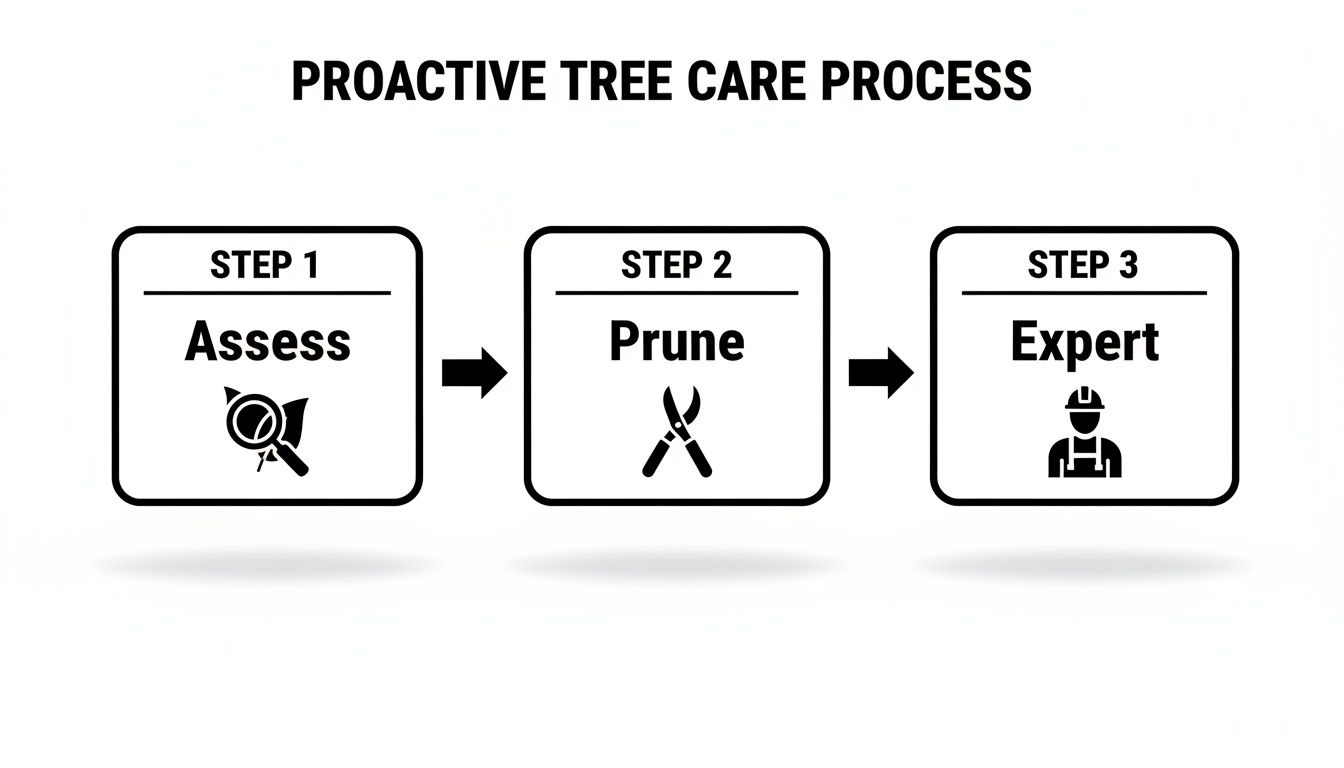
As you can see, a professional approach moves logically from a thorough assessment to targeted, corrective action. Having an expert guide the process is what ensures the work is both safe and effective.
An arborist-guided risk assessment can identify problems that are invisible to the untrained eye, giving you the power to act before a limb falls on your roof or car.
The impact of storm damage goes far beyond the initial repair bill. You can read about the hidden costs and stresses of delayed insurance claims to see why avoiding the situation altogether is the smartest move.
Conducting Your Own Pre-Storm Tree Inspection
You don’t need to be a certified arborist to spot the most obvious red flags. A simple walk around your property with a critical eye can reveal which trees might be a problem when the next big storm hits San Jose.
For a good self-assessment, break it down into three zones: the canopy (branches and leaves), the trunk, and the base where the tree meets the ground.
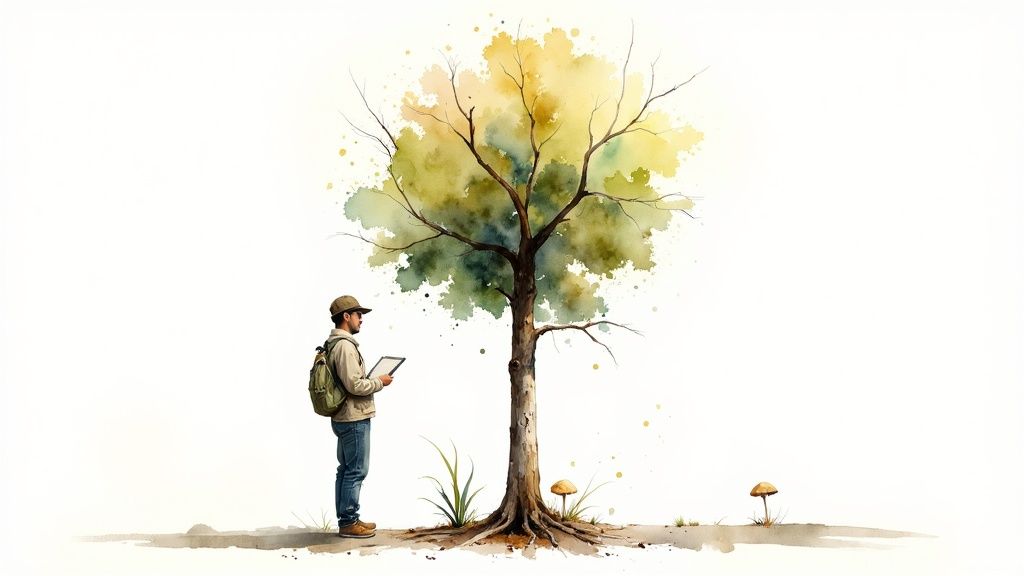
This approach ensures you don’t miss any important clues. Start by standing back to get the big picture, then get up close to check each zone carefully.
What to Look for in the Canopy
The canopy is where the wind does its damage, so it’s a common point of failure. Look up and scan the branches for these classic issues.
- Dead or Broken Branches: These are the first to snap in high winds and are immediate hazards.
- Hanging Limbs: A broken branch caught in other limbs is a ticking time bomb.
- Weak Branch Unions: A tight, ‘V-shaped’ union is structurally weak and more likely to split than a broader, ‘U-shaped’ one.
- Cracks in Major Limbs: Any visible crack running along a large branch is a serious flaw that needs a professional opinion.
Spotting these problems is the first step. For more on seasonal risks, check out our guide on how to prevent tree failure this winter.
Inspecting the Trunk for Hidden Dangers
The trunk is the tree’s backbone. Internal problems can secretly weaken it, turning the whole tree into a risk even if the leaves look green.
A leaning trunk isn’t automatically a problem, but a sudden lean or a lean accompanied by heaving soil at the base is a massive red flag signaling root failure.
Pro Tip: Don’t be fooled by a healthy-looking canopy. One of the biggest missteps homeowners make is assuming green leaves mean a strong tree. We have seen countless trees that look great up top but are hollowed out by internal decay.
Keep an eye out for other signs of trunk trouble:
- Deep Cracks or Splits: These can compromise the tree’s entire structure.
- Cavities or Hollows: Big holes are obvious signs of decay and a weak spot.
- Fungal Growth: Mushrooms growing on the trunk are a tell-tale sign of internal rot.
Checking the Base and Root Zone
A tree is only as stable as its foundation. The root system holds it all together, but issues underground are tough to spot.
Look for these key indicators of root problems:
- Heaving Soil: Mounded or cracked soil on one side of the tree means the roots are pulling out of the ground. This is an urgent risk.
- Exposed or Damaged Roots: Major roots that have been cut or are decaying can seriously destabilize a tree.
- Mushrooms at the Base: Fungi near the trunk often mean the root system is rotting below the surface.
If your walk-around uncovers any of these issues, it’s time to get an expert opinion from a licensed arborist.
How Strategic Pruning Can Save Your Trees (and Your Home)
When it comes to preventing tree damage, nothing beats professional, strategic pruning. This isn’t just lopping off branches; it’s a science aimed at reducing the incredible forces that high winds exert on a tree.
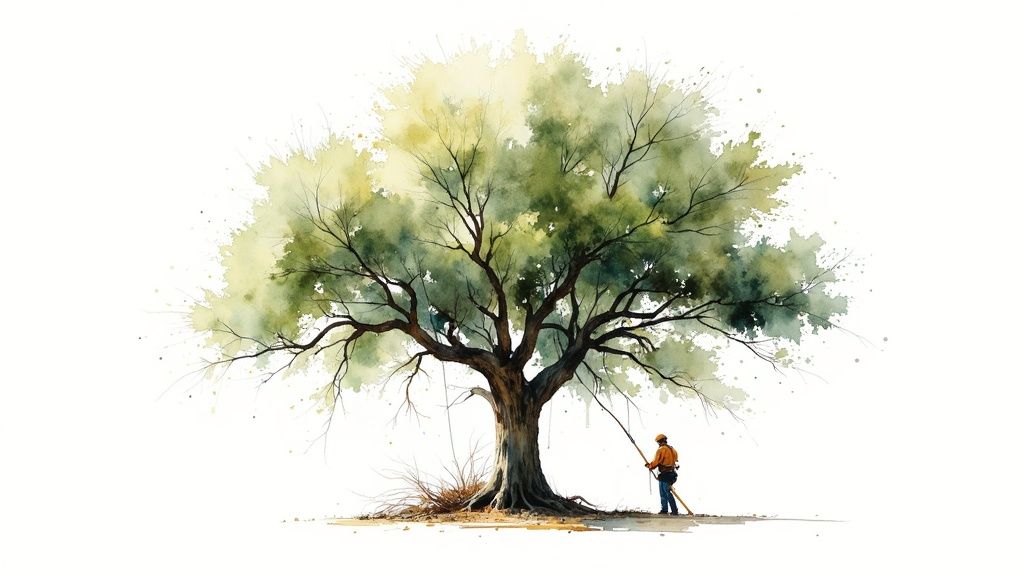
Harmful, outdated practices like “topping” create weak, unstable regrowth that is far more dangerous in a storm. That’s why this work must be done by a licensed and insured arborist who understands tree biology. At San Jose Tree Service & Landscaping (CSLB #985639), we follow industry best practices to the letter.
Thinning the Canopy to Let the Wind Through
A primary goal of storm-prep pruning is to reduce the “sail effect.” A dense canopy catches the wind’s full force, putting immense strain on the trunk and roots.
A technique called crown thinning is a game-changer. By selectively removing branches, we open channels for wind to pass through harmlessly, lowering the odds of uprooting or snapping. You can read more about how storms impact Bay Area trees and see why this is such a pressing local issue.
Expert Insight: Think of crown thinning as making a tree more transparent to the wind, not smaller. A properly thinned tree doesn’t fight the gusts—it lets them pass through, keeping it stable during the worst San Jose storms.
Taking Out the Trouble Spots: Hazardous and Overextended Limbs
Smart pruning is about surgically removing the most immediate threats. Our certified specialists prioritize the following during pre-storm service.
- Deadwood Removal: This is non-negotiable. Dead branches are brittle and practically guaranteed to come down in high winds.
- Crown Raising: We carefully remove lower branches that are hanging too low, are too heavy, or are reaching over structures like your roof.
- Structural Correction: Our team is trained to spot and remove branches with weak attachments or those that are crossing and rubbing against each other.
To dig deeper, you can learn more about the science of tree pruning in our introductory guide.
Beyond Pruning: When to Support a Tree vs. When to Say Goodbye
Strategic pruning does wonders, but some trees have deeper issues. For beloved heritage trees, advanced support systems can add years of life, but we also must know when a tree has become a liability.
Knowing when to brace and when to remove is one of the most critical decisions a San Jose homeowner can make.
Giving a Tree a Helping Hand: Cabling and Bracing
Cabling and bracing is an engineered support system for trees with specific structural flaws. This is not a DIY project; it requires a certified arborist who understands tree biomechanics.
- Cabling: We install high-strength steel cables high in the canopy to connect major limbs, limiting their movement during a storm.
- Bracing: We install solid steel rods through weak branch unions or split trunks to provide rigid support.
These systems can be lifesavers for mature oaks or other significant trees, but they require regular professional inspection to ensure they remain effective.
The Tough Call: When Removal Is the Only Safe Option
No one wants to remove a mature tree, but when it poses a clear danger to your home or family, safety must come first.
If you see any of these red flags, it’s time to seriously consider removal.
Critical Signs It’s Time for Removal:
- Hollowed Out or Rotted Trunk: If more than one-third of the trunk’s circumference is gone due to decay, the tree is living on borrowed time. We use specialized tools for decay detection services to assess internal health.
- Failing Root System: Is the ground around the base heaving up? A tree without a solid anchor is waiting for a wet, windy day to fall.
- A Sudden or Worsening Lean: A tree that suddenly starts leaning—or an old lean that’s getting worse—is an emergency in the making.
- Split Trunk or Major Canopy Loss: If a storm has already split the main trunk or ripped out a massive section of the canopy, the tree may be too far gone to ever be safe again.
In San Jose, some trees are protected and require a permit for removal. As licensed tree removal contractors (CSLB #985639), we handle the entire process safely and legally.
Building a Long-Term, Storm-Ready South Bay Landscape
True storm readiness involves creating a resilient ecosystem across your entire property. A storm-ready yard is one where everything—from soil to plant selection—works together to handle the wild weather San Jose gets.
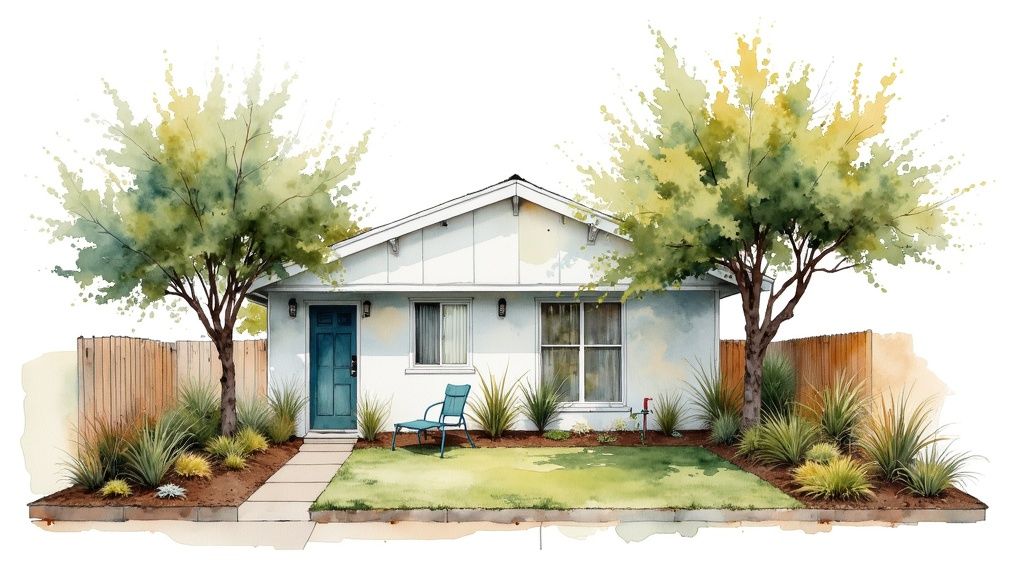
It’s about moving beyond reactive fixes and focusing on a landscape that’s naturally durable from the ground up.
Choosing the Right Plants for the Right Place
Smart plant selection is the first step. Not all trees are suited for the South Bay’s microclimates and heavy clay soil.
- Drought-Tolerant Natives: Plants like Coast Live Oaks have deep root systems adapted to our wet winters and dry summers, making them more stable.
- Climate-Appropriate Species: Choosing plants that thrive in a Mediterranean climate means they won’t be constantly stressed by heat or water shortages.
- Proper Spacing: Giving each plant adequate space allows it to build a strong root system and a stable structure.
If you’re adding new trees, getting the selection right is half the battle. Learn more in our guide on how to choose the right tree for your San Jose yard.
Investing in a climate-resilient landscape is a practical strategy. Research shows that “98% of homeowners believe landscaping increases property value,” and a storm-ready yard delivers a huge return by preventing damage.
Building a Strong Foundation with Healthy Soil and Roots
A tree is only as stable as its roots. Here in San Jose, our heavy clay can become concrete in a drought or loose soup during an atmospheric river.
Watering deeply but infrequently trains roots to grow downward, creating a stronger anchor. You can also improve soil structure with organic compost to aid drainage and prevent the waterlogged conditions that lead to root rot.
Don’t Forget Simple Yard Prep
Finally, a truly resilient landscape accounts for everything else in your yard. Fierce winds can turn everyday items into dangerous projectiles.
Pre-Storm Yard Checklist:
- Secure or store patio furniture, umbrellas, and grills.
- Move potted plants and garden decor inside.
- Tuck away loose tools, toys, or recycling bins.
This holistic approach transforms your landscape from a potential liability into a robust, beautiful, and much safer part of your home.
Conclusion: Take Action Before the Storm
Being proactive is the key to protecting your trees and home. By assessing your trees and investing in smart, professional pruning now, you stay ahead of the problem. This is a strategic move that’s far safer and more budget-friendly than cleaning up after a tree comes down.
Don’t let the next storm warning be your first reminder. When you’re ready to bring in a professional, knowing what to look for before hiring a tree service in San Jose is crucial. For a complete picture of home safety, this comprehensive guide on natural disaster preparedness can also help you cover all your bases.
Let’s get your property ready before the storm clouds gather. We invite you to contact San Jose Tree Service & Landscaping for a professional, no-obligation risk assessment. As a licensed (CSLB #985639), BBB-accredited, and community-focused team, we are here to help you protect your corner of the South Bay.
Frequently Asked Questions About Prepping Trees for Storms
How often should I have my trees inspected by an arborist?
For most San Jose properties, an annual inspection in late summer or early fall is ideal. This timing allows for corrective action before winter storms arrive.
Are some trees in San Jose more prone to storm damage?
Yes, certain species like Eucalyptus, Monterey Pine, and some Acacias have brittle wood or shallow roots that make them higher risk. An arborist can identify problem trees on your property.
Can I prune my own trees to save money?
For safety, any work requiring a ladder or cutting branches thicker than your wrist should be left to a licensed and insured professional. Improper cuts can damage the tree, and working at heights is extremely dangerous without proper training and equipment.
What’s the biggest mistake homeowners make with tree safety?
Assuming a tree is healthy just because its leaves are green is a common misstep. Internal decay, weak branch unions, and compromised root systems are often invisible to the untrained eye but pose significant risks.
What should I do first if a tree falls on my property?
Your first priority is safety. Stay far away from the tree, especially if it is near power lines, and call 911 immediately. Only after professionals declare the area safe should you contact a reputable tree service for removal.