 Skip to content

If you've got a leftover stump in the yard, tree stump removal usually comes down to three options: grinding, full extraction, or letting it decay. For most San Jose properties, grinding is the practical choice because it removes the hazard, limits yard disturbance, and works better in tight suburban spaces. If the tree itself still needs to come down, start with a tree removal contractor who can assess both steps together.
A lot of homeowners end up here after the main tree work is done and the yard still doesn't feel finished. The stump is in the way, it looks rough, and in San Jose neighborhoods with smaller lots, clay soil, and buried utilities, tree stump removal needs a little more thought than the average online guide admits.
Quick Answer
Introduction
There are a few ways to deal with a stump, but they're not equal. Grinding is usually the modern residential standard, full extraction is sometimes necessary, and chemical decay is slow and often a poor fit if you want the space usable any time soon. If you want a broader arborist view of what should be considered before any work starts, this local arborist perspective is worth reading.
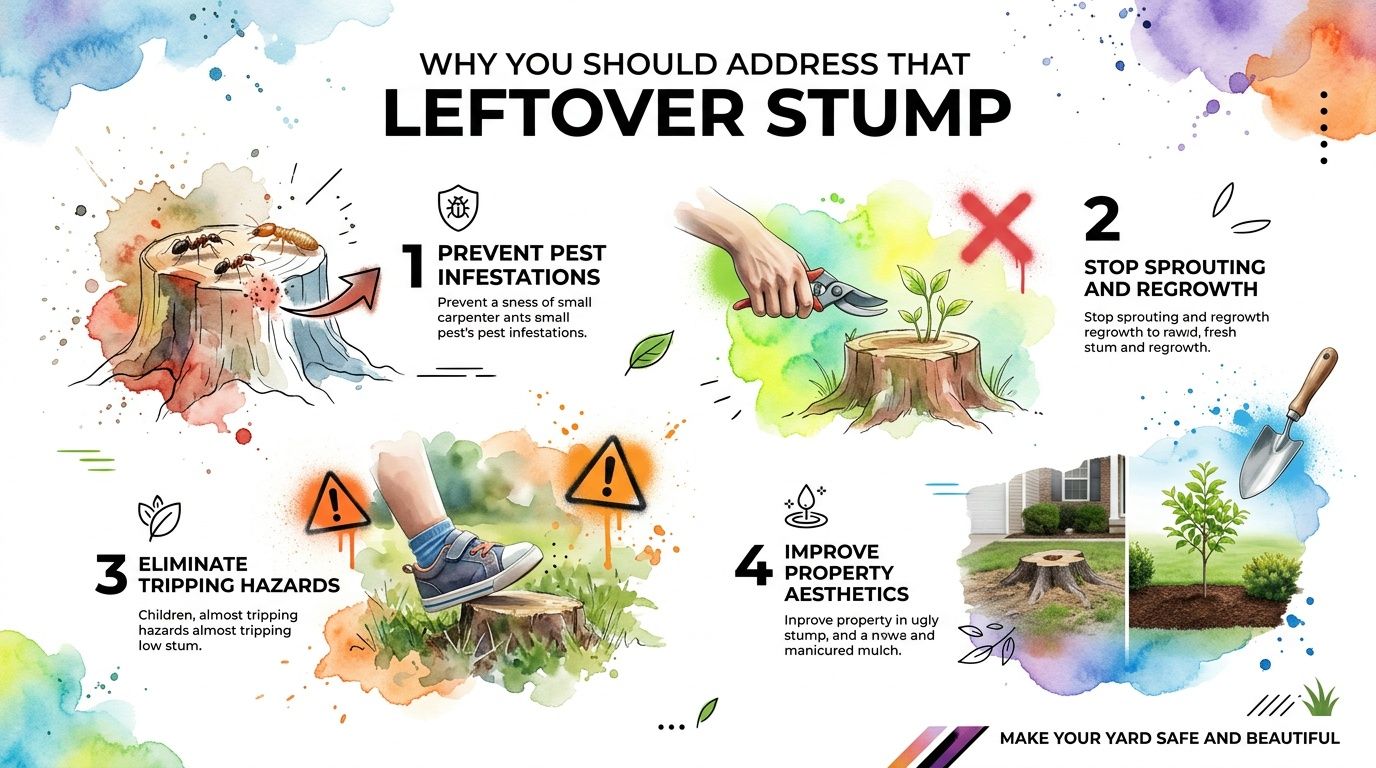
Why You Should Address That Leftover Stump
A stump rarely stays a neutral part of the yard. It turns into an obstacle, collects debris, and limits what you can do with the space.
Safety comes first
The most obvious issue is the one people trip over. In a lawn, side yard, or planting bed, a low stump blends in faster than you'd think, especially once grass grows around it or leaves collect over the top.
It also gets in the way of normal maintenance. Mowers, edgers, wheelbarrows, and irrigation work all become harder when there's a solid chunk of wood fixed in the middle of the route.
Practical rule: If a stump sits where people walk, where kids play, or where you mow regularly, it's already more than a cosmetic issue.
Decay changes the site
Wood left in the ground doesn't disappear neatly. It breaks down unevenly, holds moisture differently than the surrounding soil, and can leave the area soft or irregular over time.
That matters in South Bay yards with clay-heavy soils. Clay already drains slowly. Add a decaying stump and roots, and you can end up with a patch that stays wet longer than the rest of the yard or settles in ways that make future planting awkward.
It blocks future use of the yard
Most homeowners don't call about stumps because they enjoy looking at them. They call because they want the area back. Maybe that means lawn repair, a native planting bed, irrigation changes, or being able to walk through the side yard without stepping around old roots.
A stump also makes replanting decisions harder. If you want a new tree, shrub grouping, or a cleaner outdoor layout, the leftover wood and root crown often sit right where the next project needs to go.
Some stumps also keep trying to live
Species matters. Some stumps are done once the canopy is gone. Others will keep sending up shoots from the stump edge or root flare if they're left high enough and healthy enough.
That's one reason shallow DIY cutting often disappoints. The yard looks better for a short time, but the biological part of the problem hasn't really been dealt with.
- Trip risk affects everyday use of the yard.
- Maintenance headaches show up the next time you mow or edge.
- Project limits keep you from planting or grading cleanly.
- Ongoing regrowth or decay can drag the problem out much longer than expected.
Comparing Your Tree Stump Removal Options
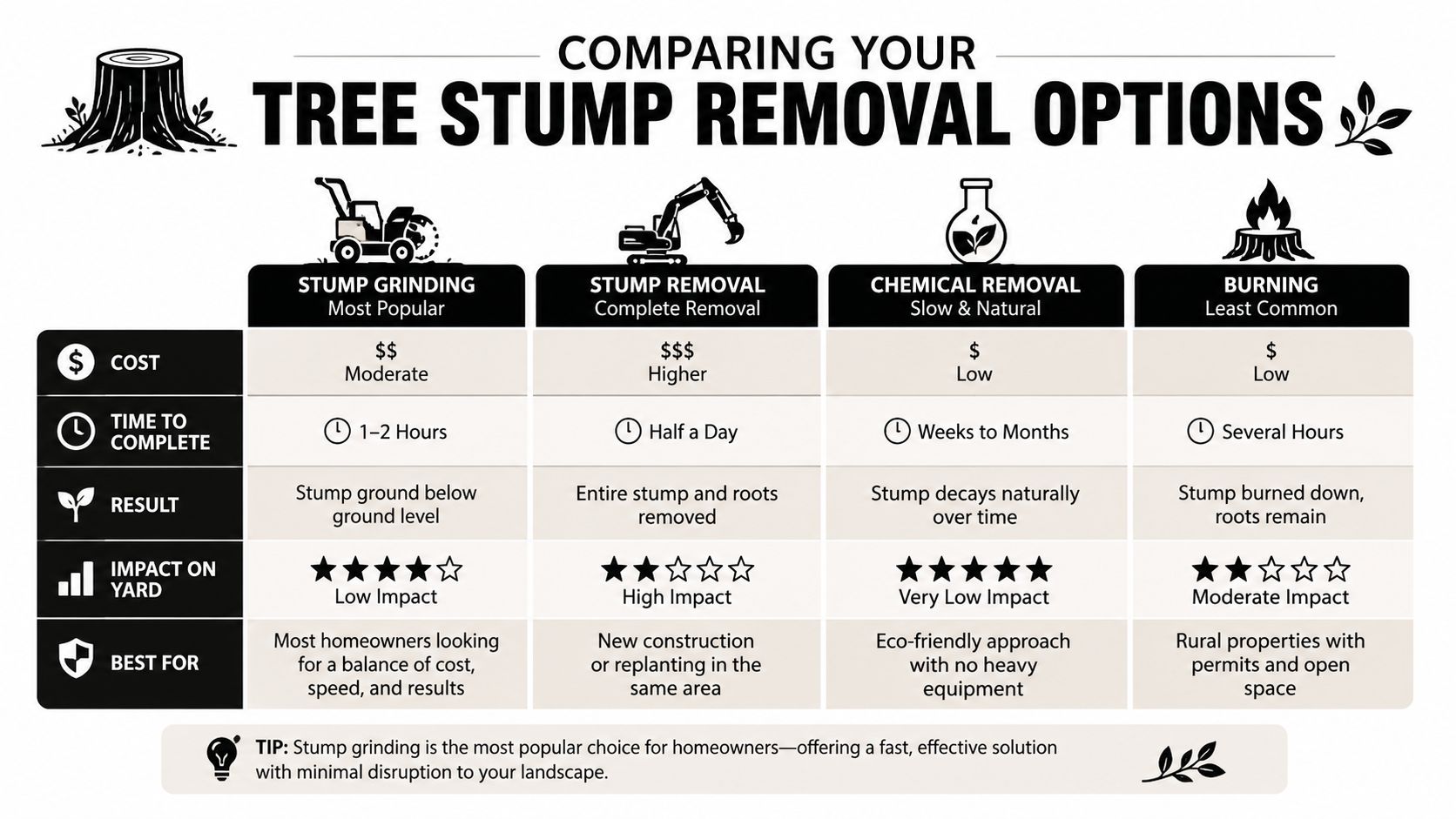
The method should match the site, not the other way around. In a wide open rural lot, one choice may make sense. In Willow Glen, Campbell, or Santa Clara, with fences, driveways, and buried lines nearby, the answer is often different.
 stump removal, including cost, time, and impact.” />
Stump grinding
Grinding removes the visible stump by cutting it down below grade with a dedicated machine. It leaves the deeper root system in place to break down naturally over time, which is exactly why it's less disruptive to an established yard.
For most residential tree stump removal jobs, this is the method that balances appearance, safety, and site protection best. It's especially useful where access is limited and where tearing up a lawn, walkway edge, or irrigation layout would create more repair work than the stump itself.
Grinding also fits how most homeowners use the space afterward. If the goal is to remove the hazard, restore the surface, and move on with planting or lawn repair, it usually gets there with the least collateral damage.
Full stump extraction
Extraction means pulling out the stump and major roots as a whole. It sounds definitive because it is. But it's also the most physically disruptive option.
The force involved can be substantial. For a 24-inch fresh oak stump, the Stump Extraction Force can be around 18.75 tons, requiring a 20+ ton excavator, according to the stump extraction engineering reference. That gives you a realistic sense of why extraction isn't a casual backyard task.
In practical terms, extraction makes sense when the entire root mass has to be removed for a specific purpose, such as certain construction conditions or a very particular regrading plan. On a typical suburban lot, it often creates a larger repair project afterward.
Chemical removal and natural rot
Chemical decay and “let it rot” approaches are the slowest path. They may reduce labor upfront, but they keep the stump in your outdoor area for a long time and don't help much if your goal is immediate yard recovery.
They're also a poor fit where you want to replant well. If soil quality and future plant performance matter, dragging out the decay process is usually not the cleanest route.
A stump that's slowly rotting is still occupying the site. If you need the yard usable, that method usually works against your timeline.
Which option fits most South Bay homes
In dense neighborhoods, the best method is usually the one that solves the problem without creating a second one. That's why grinding is the standard answer so often.
A quick way to compare the trade-offs:
| Method | Best use | Yard impact | Speed |
|---|---|---|---|
| Grinding | Most residential stumps | Lower surface disruption | Relatively fast |
| Extraction | When full root mass removal is necessary | Highest disruption | Depends on equipment and access |
| Chemical decay | When time is not a concern | Low immediate disturbance, long site occupation | Slow |
If you're deciding who should handle the work, it helps to understand the difference between a climber with a saw and someone trained to assess the whole site. This explanation of an arborist and a tree guy is useful in that context.
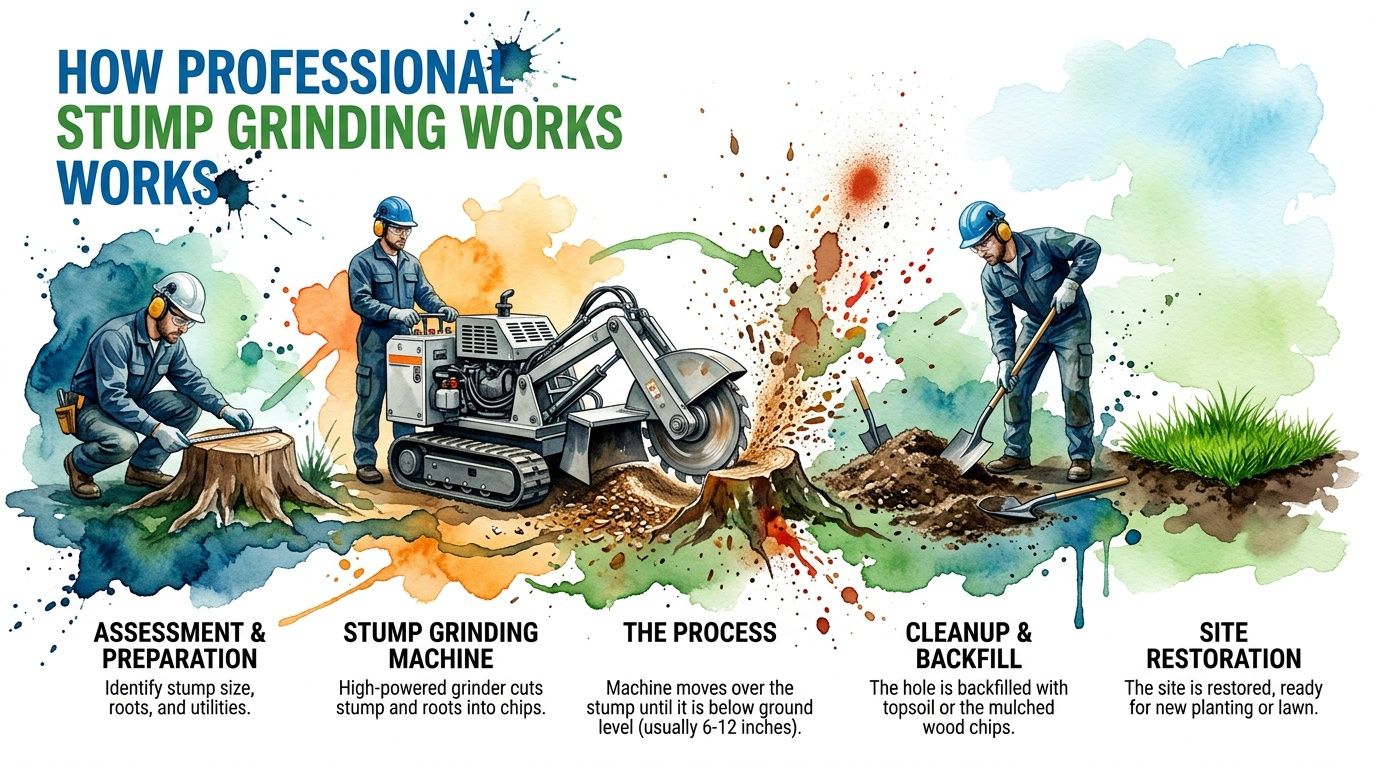
How Professional Stump Grinding Works
Grinding looks simple from the street, but the quality of the result depends on setup, depth, site protection, and cleanup. On South Bay properties, those details matter more than people think.
The machine and the cut
A professional stump grinder uses a cutting wheel with carbide teeth to chip the stump down in passes. According to this stump grinding guide, professional grinders operate at 1,000 to 2,000 RPM and typically grind 8 to 12 inches below grade, which severs 85 to 95 percent of the main lateral roots within that zone.
That depth is important. It's usually enough to remove the visible obstacle, reduce regrowth risk, and leave the area ready for surface restoration. If the plan is replanting in the same spot, the target depth may need to be discussed before work starts.
What the jobsite prep actually involves
Before the grinder starts, the area should be checked for access, nearby hardscape, irrigation components, and overhead and underground conflicts. Tight gates, decorative rock, low fences, and shallow utility lines all change how the work is approached.
On some jobs, hand prep around the root flare is the difference between a clean grind and a messy one. That's where a contractor with tree and yard maintenance experience has an advantage. One example is San Jose Tree Service & Landscaping, which handles stump grinding as part of broader tree and yard work on South Bay residential properties.
The grinder does the cutting, but the setup determines whether the job feels controlled or chaotic.
What you're left with afterward
Grinding produces a mix of wood chips and soil. Some homeowners keep part of that mulch for reuse, and others want it removed so the area can be backfilled with cleaner soil.
The final surface depends on the next use. For lawn, the finish needs to be level and soil-focused. For a future bed or drought-tolerant planting area, the material can often be managed a little differently.
Estimating Tree Stump Removal Costs and Timelines
Most stump pricing starts with one basic measurement. Diameter at the widest point. That's the industry baseline because size drives machine time, wear, and the amount of material being cut.
According to Angi's stump removal cost guide, professional stump removal is commonly priced at $2 to $5 per inch of stump diameter. That doesn't tell you your exact quote, but it does explain why a low, broad stump can cost more than a narrower one that looks similar from a distance.
What changes the quote
Two stumps with the same diameter may not be equally simple.
A few common factors shift the assessment:
- Access for machinery affects labor and equipment choice. A front-yard stump with wide access is different from one behind a narrow side gate.
- Tree species matters because wood density changes cutting time. Hard, fibrous species generally take more work than softer material.
- Method choice changes the scope. Grinding and full extraction are very different jobs.
- Site conditions such as slope, rock, edging, irrigation, and proximity to structures all add complexity.
If you've ever wondered why tree work bids vary so much from one property to the next, this overview of why tree service prices vary in San Jose explains the broader pattern well.
How long the work usually takes
Timeline depends less on the calendar and more on the site. A straightforward grind on open ground moves much faster than a stump tucked between a fence, air-conditioning unit, and raised planter.
Cleanup expectations also affect duration. If the goal is just to grind and leave the chips, the job is shorter. If the goal is to haul material, restore grade, and prep for planting, allow more time.
If you want an accurate timeline, ask for the whole sequence, not just the grinding itself. Access, protection, cutting, cleanup, and backfill all count.
Plan for the next step, not just the cut
Homeowners save themselves frustration at this stage. Don't stop at “remove stump.” Decide whether the area will become lawn, a planting bed, a new tree site, or part of a larger garden update.
That decision changes how the material should be handled after grinding. It also changes whether the site should be left slightly mounded, backfilled right away, or allowed to settle before final planting.
Safety, Permits, and San Jose Regulations
The biggest mistake in DIY stump work isn't usually the grinder itself. It's assuming the ground is clear.

Underground utilities change everything
In older San Jose neighborhoods, especially places with mature trees and long-updated yards, utility layouts aren't always obvious from the surface. Water, gas, power, irrigation, drainage, and communication lines may all be near the stump zone.
A major gap in online DIY advice is handling stumps in tight urban spaces near utilities. Professionals in San Jose must comply with the requirement to call 811 before digging, as noted in this tight-access stump removal reference. That step helps prevent strikes to gas, water, or electrical lines and avoids dangerous and expensive outcomes.
This matters even more if someone is considering full extraction or hand digging around roots. Once soil starts moving, the risk rises quickly.
Tight lot lines need a different approach
A suburban stump near a fence, patio, retaining edge, or driveway rarely allows for a one-size-fits-all method. Machine size, turning radius, debris control, and where spoil material goes all have to be considered before work begins.
That's why experienced crews walk the route first. They check gate width, slope, nearby glass, parked cars, irrigation valves, and whether a grinder can enter without damaging surrounding surfaces.
Permits and local rules can apply
Tree-related rules in San Jose can involve more than just the stump itself. The original tree, location, protected status, and neighboring infrastructure may affect what documentation or approvals are needed.
Homeowners don't need to become code experts overnight, but they should know this much:
- Call 811 before any digging activity
- Ask whether the original removal involved permit conditions
- Confirm how access and site protection will be handled
- Use a licensed, insured contractor for higher-risk sites
A stump near utilities, foundations, or shared property lines isn't the place for trial and error.
Aftercare and Replanting in Your South Bay Garden
Once the stump is gone, the next mistake is rushing a new plant into tired soil. The ground usually needs some cleanup and rebuilding first.
Many homeowners struggle with replanting after stump removal because the site isn't properly prepared. For South Bay clay-loam soils, professionals recommend amending the area with organic compost and considering native, drought-tolerant species, according to this replanting and soil preparation guide.
Handling the leftover chips and soil
The grindings are useful in the right amount and the wrong material in the wrong place. A wood-heavy pile shouldn't become the full planting medium for a new shrub or tree.
Usually, the better approach is to remove enough of the coarse material to create a stable planting area, then blend in better topsoil and compost where needed. If drainage has been an issue in that corner of the yard already, this is a good time to think about broader Modern Yard Landscapes yard protection so the repaired area doesn't stay soggy or settle unevenly.
Replant with the site in mind
South Bay gardens do better when the replacement plant fits the water use, sun exposure, and soil conditions already present. Native and drought-tolerant choices usually make long-term maintenance easier, especially in hot sections of the yard.
If you're replacing the removed tree with something better suited to the location, this guide to good trees to plant can help narrow the options.
- For lawn areas, keep the surface level and use soil that can support turf establishment.
- For planting beds, reshape the grade and avoid burying the area under raw chips.
- For a new tree, don't plant directly into a poorly prepared grind pocket without improving the soil first.
Frequently Asked Questions About Stump Removal
Can I remove a stump myself with rented equipment?
You can try, but the difficulty is usually underestimated. The machine is only part of the job. Access, buried utilities, debris control, and choosing the right depth are what tend to trip people up.
How messy is stump grinding?
It's controlled, but it does create chips and dust around the work area. A careful setup keeps the mess localized, and cleanup can be planned around whether you want the mulch left on site or removed.
What happens to the roots after grinding?
The deeper roots usually remain in the ground and break down over time. That's normal for grinding and one reason it causes much less disruption than full extraction.
Can you grind a stump close to a fence or house?
Often, yes, but it depends on access and clearance. Tight spaces need a site-specific approach because the safe machine choice and grinding angle may be limited by nearby structures.
Do I need to be home during the work?
Not always, as long as access, scope, and cleanup expectations are clearly agreed on ahead of time. It helps if someone is available at the start in case the crew needs to confirm utilities, gate access, or the final finish level.
Will the area be ready to plant right away?
Sometimes, but not always. If the spot is going back to lawn or a bed, some soil work may still be needed after grinding so the area settles properly and supports healthy new growth.
If you want a practical opinion on your specific stump, San Jose Tree Service & Landscaping can take a look on site and talk through the options without pushing removal where it doesn't make sense. Call (408) 422-1313 or visit sanjosetreemaintenance.com to discuss your property in San Jose or the surrounding South Bay.