
Direct Answer: A visit to price known work is usually free. A visit to diagnose what is wrong with a tree, or to write a report for the city, is professional work and usually carries a fee.
A homeowner in the Cambrian area of San Jose wrote to us this summer after reading our published price list. The question was still sitting there unanswered: is there a cost just to have somebody come out and look at the tree?
That is fair, and it is the single most common thing people ask when they call. Roughly one in eight calls each month is some version of “can you come give me a free estimate.”
The honest answer is that it depends entirely on what you are asking a person to do once they arrive. Below I will draw the line between the visit that prices work you already know you want and the visit that figures out what is wrong with your tree, because those are two different jobs.
Do You Charge to Come Out and Look at My Tree?
If you already know what you want done, the visit to price it is normally free. That is a pricing visit, and it answers one question: what will this cost?
That covers most of what people call about:
- Three trees in a Willow Glen backyard that need thinning
- A hedge row that needs to come out
- Deadwood coming off a liquidambar over the driveway
- A stump left behind by someone else
- Brush and dry weeds cleared before fire season
In all of those cases, the scope is already decided. Someone measures, checks access, counts the debris, and writes a number. Nobody is being asked to diagnose anything.
Where it changes is when the question becomes “what is wrong with this tree?” That is a diagnostic visit, and it is skilled professional work rather than a sales call. Most tree companies in San Jose, Los Gatos, and Campbell price those two visits differently for exactly that reason.
If you are unsure which bucket you fall into, say out loud on the phone what you actually want to know. “I want a price to prune four trees” and “I want to know if my oak is dying” will get you two different appointments.
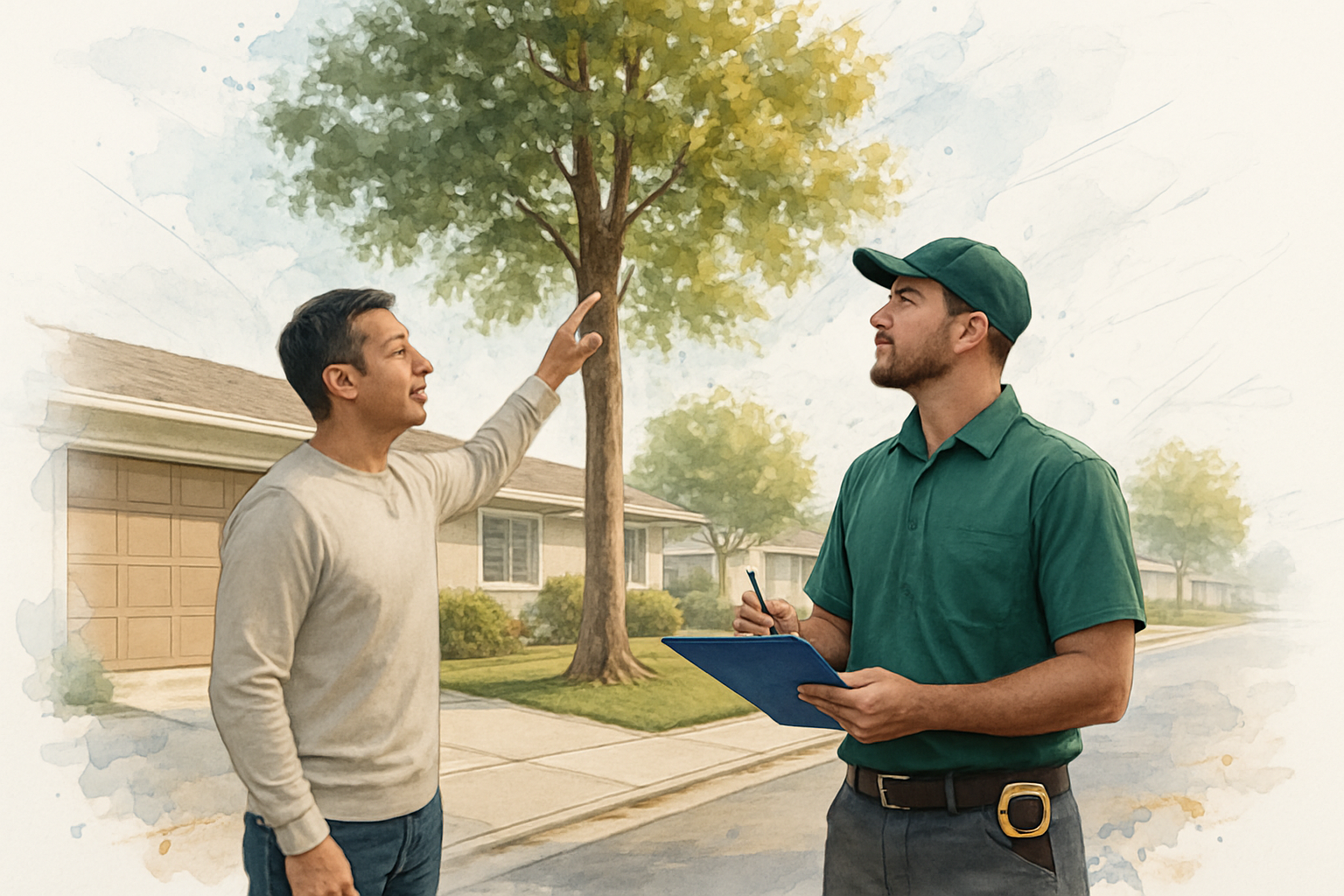
What Does a Diagnostic Consultation Actually Include?
A diagnostic visit is not somebody glancing at the canopy from the sidewalk. It is a structured evaluation of the whole tree, and it takes real time on site.
Depending on the tree and the concern, that can include:
- Root collar inspection, which often means clearing soil and mulch away from the trunk flare to see what is happening at the base
- Bark and trunk assessment for cavities, cracks, seams, and fungal fruiting bodies
- Canopy evaluation for dieback, thinning, leaf scorch, and branch attachment problems
- Soil and irrigation review, since overwatering and underwatering can look nearly identical from ten feet away
- Internal decay testing using percussion or a resistograph when the outside looks sound but the tree is behaving oddly
- Written findings and options, not just a verbal opinion at the tailgate
Costs vary quite a bit by tree count and property size, but a diagnostic consultation in the South Bay commonly lands somewhere in the low hundreds of dollars, and a formal written report runs higher. Those numbers move, so confirm the current fee with the office before you book anything.
What you are paying for is judgment. Deciding that a struggling Coast Live Oak in Almaden Valley can be saved, and knowing what to do about it, is a different service than measuring a hedge.
Three Kinds of Visits, Side by Side
Here is the simplest way I know to sort out which visit you are actually asking for.
| Type of visit | The question it answers | Typically free or fee-based |
|---|---|---|
| Pricing visit | What will this specific job cost? | Usually free |
| Photo review by email | Does this look like something obvious? | Usually free |
| Diagnostic consultation | What is wrong with this tree and what are my options? | Fee, commonly low hundreds |
| Arborist report for the city | Will a permit application be approved with documentation? | Fee, priced as professional work |
Can I Just Send Photos First?
About one in ten callers asks this, and usually the reason is sensible. People want to vet a company before they spend money on it.
Photos work fine as a first filter. Clear symptoms show up in a picture, like leaf scorch, a white powdery coating on foliage, or sticky honeydew dripping onto a patio table. You should expect an answer in a day or two, not two weeks.
What a photo cannot show you is the root collar under six inches of piled mulch, soil moisture down where the roots actually live, or decay inside a trunk that looks perfectly solid from the street. I have walked up to trees that photographed beautifully and found hollow scaffold branches.
So think of the paid visit as what you buy when the photo answer comes back as “we need to see the base of this tree in person.” I go deeper on the limits of photos in this breakdown of photo assessments versus on-site visits.
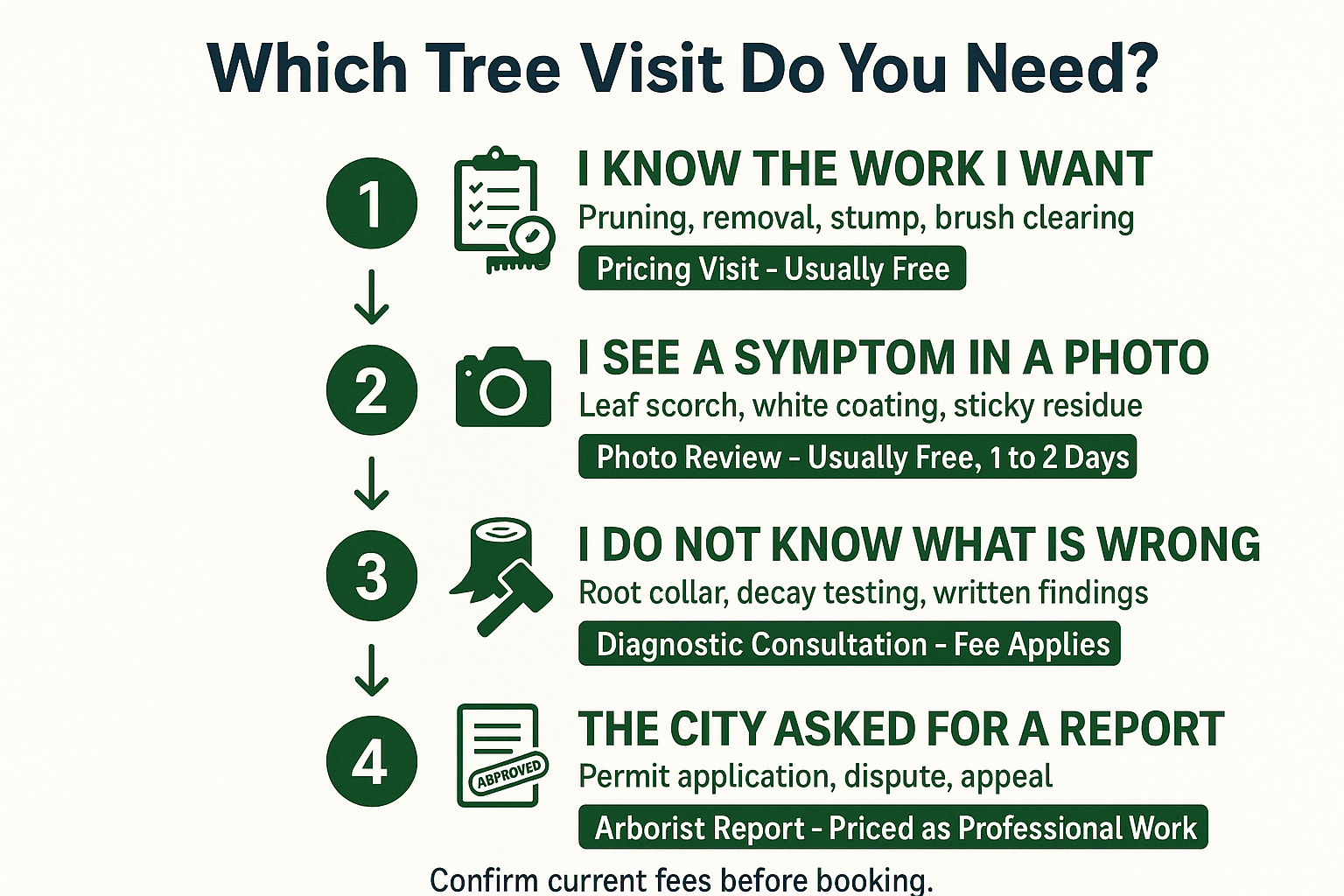
Which Visit Do You Actually Need?
This quick decision flow sorts most homeowner situations into the right kind of appointment.
Do I Have to Be Home for the Visit?
This one stalls people more than it should. One caller left a voicemail just to ask it, which tells me our own website never answered the question clearly.
Many pricing visits can happen without you there. The requirements are simple: gates unlocked, and the crew knows exactly which trees are in scope.
A diagnostic consultation is different. I would encourage you to be there, because most of the value is in the conversation and the questions you get to ask while standing under the tree.
A short prep list makes either visit go faster:
- Mark or photograph the specific trees you mean, especially on properties with a dozen candidates
- Note gate width and slope access, which matters a lot on hillside lots in Los Gatos and Saratoga
- Mention dogs ahead of time
- Point out buried irrigation lines and drip tubing near the work area
- Say whether you want chips left on site or hauled away
What If the City Told Me I Need an Arborist Report?
There is a third visit type that most homeowners do not know exists until a permit counter tells them. Callers describe it plainly: they need someone who can write a report for the city.
That is a professional deliverable, not an estimate. San Jose requires a signed certified arborist report submitted with a tree removal permit application, and that includes the over the counter same day route used when a tree presents an imminent hazard. You can read the requirements on the city’s own tree removal permit page.
The visit that produces that document gets priced as professional work, because it is. Someone is putting their credential and signature on a statement the city will rely on.
Worth knowing: a report documenting condition, species, and size is often what saves a tree rather than what condemns it. Plenty of these assessments end in a preservation plan, a cabling recommendation, or a reduced scope of pruning instead of removal. If you want the fuller picture of the permit process, start with what San Jose requires before a tree comes down and the ordinance-size tree rule.
How Long Should I Wait for the Written Estimate?
This is where homeowners actually get burned, and I will be candid about it. A recurring pattern in our own inbound calls is people checking in a week or more later with no quote in hand.
Those homeowners are almost always still willing to hire someone. They are just tired of waiting.
So ask these on the first call, with whoever you are considering:
- When will the written estimate arrive, in days, not “soon”
- Will it come by email or text
- Does the price include haul away and cleanup, or is that separate
- Is the diagnostic fee credited toward the work if you move forward
- Who is actually showing up, an arborist or a salesperson
The cleanup question matters more than people expect. A repeat customer summed up what a good experience feels like: “No hidden pricing, no surprise cleanup fees.” That was Artem G., and it is the standard worth holding any company to. If you want to understand what sits behind a pruning number in the first place, here is how tree trimming gets priced.
Frequently Asked Questions About Tree Estimates and Arborist Visits in San Jose
Is a free estimate the same thing as an arborist consultation?
No. A free estimate prices work you have already decided on. An arborist consultation diagnoses the tree, which involves a root collar inspection, decay testing when needed, and written findings. Different work, different pricing.
Will the consultation fee be applied to the job if I hire you?
Ask this directly when you call, because policies differ between companies and can differ by project type. It is a completely reasonable question and nobody should be cagey about answering it.
My neighbor’s crew trimmed my tree badly. Do I need a paid visit for that?
Probably yes. Documentation for a neighbor dispute or legal matter is a written professional opinion, not an estimate, and it needs to hold up to scrutiny. That means an on-site evaluation and a signed report.
How fast can someone come out if the city gave me a deadline?
City deadlines and hazardous trees get handled differently than routine scheduling. Call rather than submitting a web form, say the deadline out loud, and mention the words “imminent hazard” if that is genuinely the situation.
Can I get a rough price over the phone without any visit?
For simple, small jobs sometimes, but I would be careful with any firm number given sight unseen. Access, slope, drop zones, and what is under the tree change the price more than the tree itself does, and an unusually low phone quote usually means something got left out.
Still Not Sure Which Visit Fits Your Tree?
For diagnostic consultations and arborist reports, Robert Apolinar handles the site visit and writes the findings himself. He is a Board Certified Master Arborist, the highest ISA credential, so you are not getting a salesperson with a clipboard. Our license carries both tree service and landscaping classifications, we have been BBB accredited since 2013, and the review theme we are proudest of is not recommending work that does not need doing. If you want help sorting out whether your situation calls for a pricing visit, a photo review, or a full assessment, the office can walk you through it at (408) 422-1313.
