
Direct Answer: Tree trimming costs in San Jose depend on tree size, species, access, and what cleanup is included. Two quotes for ‘the same tree’ can differ by hundreds of dollars because they often describe different scopes of work.
We get calls every week from homeowners in Willow Glen, Almaden Valley, and Campbell who are comparing two quotes for tree trimming and can’t figure out why the numbers are so far apart. One quote comes in at one price. Another company comes in at a very different number. The tree looks the same to the homeowner, so something feels off.
The reason those quotes differ almost never comes down to one company being greedy and another being fair. It usually comes down to what’s actually included in the scope of work, and how much real labor, equipment, and expertise the job actually requires. Tree trimming cost in San Jose is shaped by a specific set of variables, and once you understand them, comparing quotes becomes much easier.
This article walks through the factors that actually move the price. I’m going to focus on the ones that matter most, because trying to cover every single variable at once is how readers end up more confused than when they started.
Tree Size and Species Do Most of the Work
The single biggest cost driver in any trimming job is how long it takes to do the work safely. And tree size is the most direct predictor of labor time.
A young ornamental pear in a front yard might take a crew an hour to trim and clean up. A mature coast live oak with a canopy spread of 40 feet, dense secondary branching, and decades of accumulated weight distribution is a different job entirely. We’re talking about a tree that requires careful thought about which cuts to make, in what order, and how to manage weight as each section comes down. That takes more time, and it should.
Species matters just as much as size. Here in the South Bay, we work on a lot of species that have real trimming complexity:
- Coast live oak, dense canopy, requires species-specific pruning to avoid structural problems
- Sycamore, fast-growing with aggressive branch structure; reactive growth after poor cuts is a real risk
- Liquidambar, common in Willow Glen neighborhoods, can be straightforward or complicated depending on age and condition
- Redwoods, typically tall with specific clearance needs
- Chinese pistache, popular in newer landscapes, usually more manageable
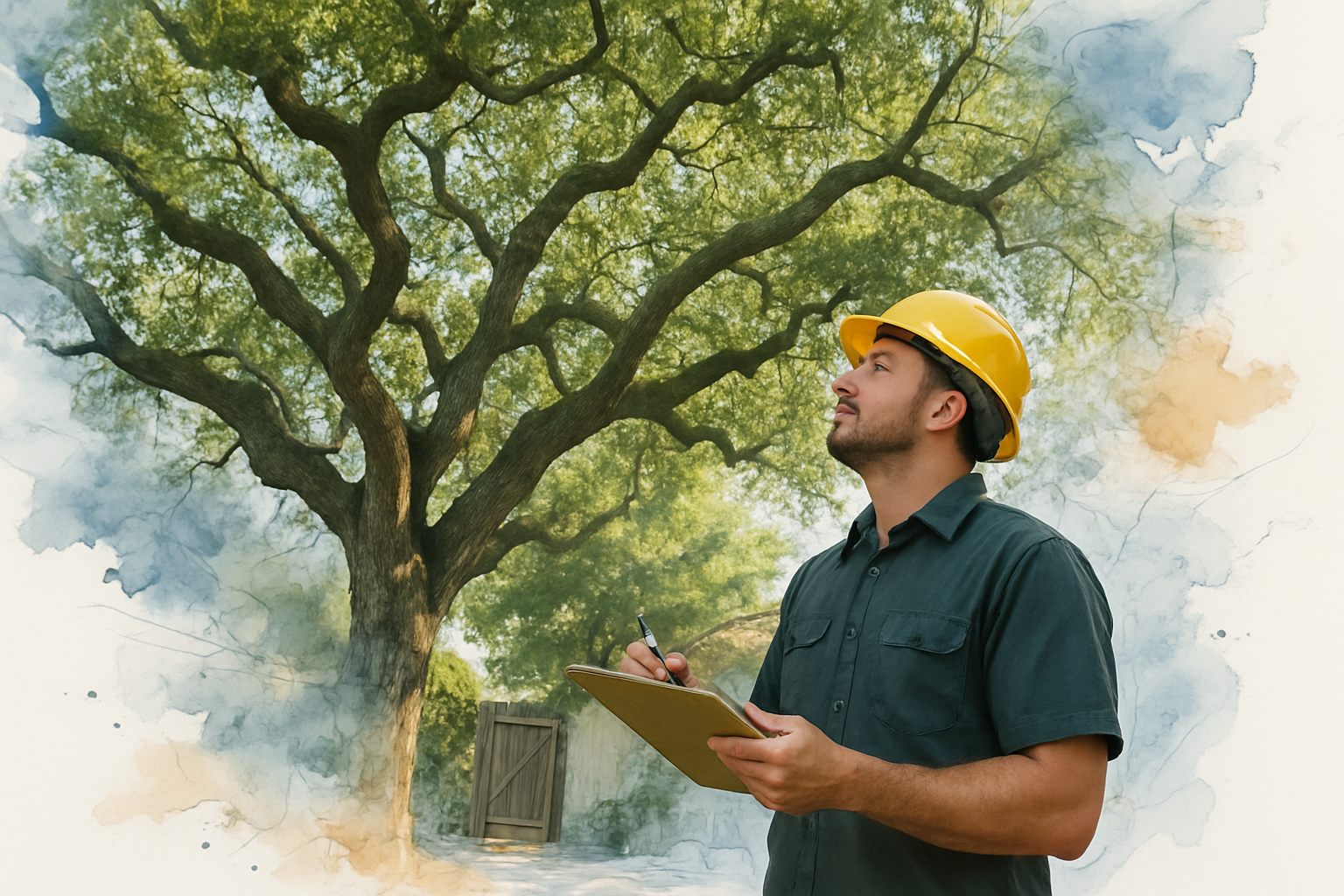
A structural prune on a mature valley oak, where a certified arborist directs every cut based on how the tree is weighted and where the growth is going, is a fundamentally different service than trimming a row of hedges along a fence line. Both are legitimate work. But they are not the same job, and they should not cost the same.
Access Changes the Price More Than Most Homeowners Expect
A tree that sits next to a driveway is a different project than the same tree tucked behind a narrow gate in a backyard that equipment can’t reach.
When our crew can pull a chipper truck to the curb and run material directly to it, the job moves faster. When a tree is in a back corner of the property with a 36-inch gate and no equipment access, everything has to be carried by hand. Branches get passed out piece by piece. Chip runs require manual transport. That adds real hours to the job.
A few access factors that regularly affect cost in San Jose neighborhoods:
- Gate width, anything narrower than about 36 inches limits what equipment can get through
- Proximity to structures, trees close to rooflines, fences, or utility lines require more careful rigging and sequenced cutting
- Slope, properties in the Almaden Valley foothills or near Los Gatos sometimes have grade changes that affect how material falls and where crews can work safely
- Overhead utilities, trees growing into or near power lines require specific clearance protocols and may limit what cuts can be made without utility involvement
None of these factors make a job impossible. But they do make it slower, and slower means higher labor cost. A good written quote will note these conditions explicitly. If it doesn’t, ask.
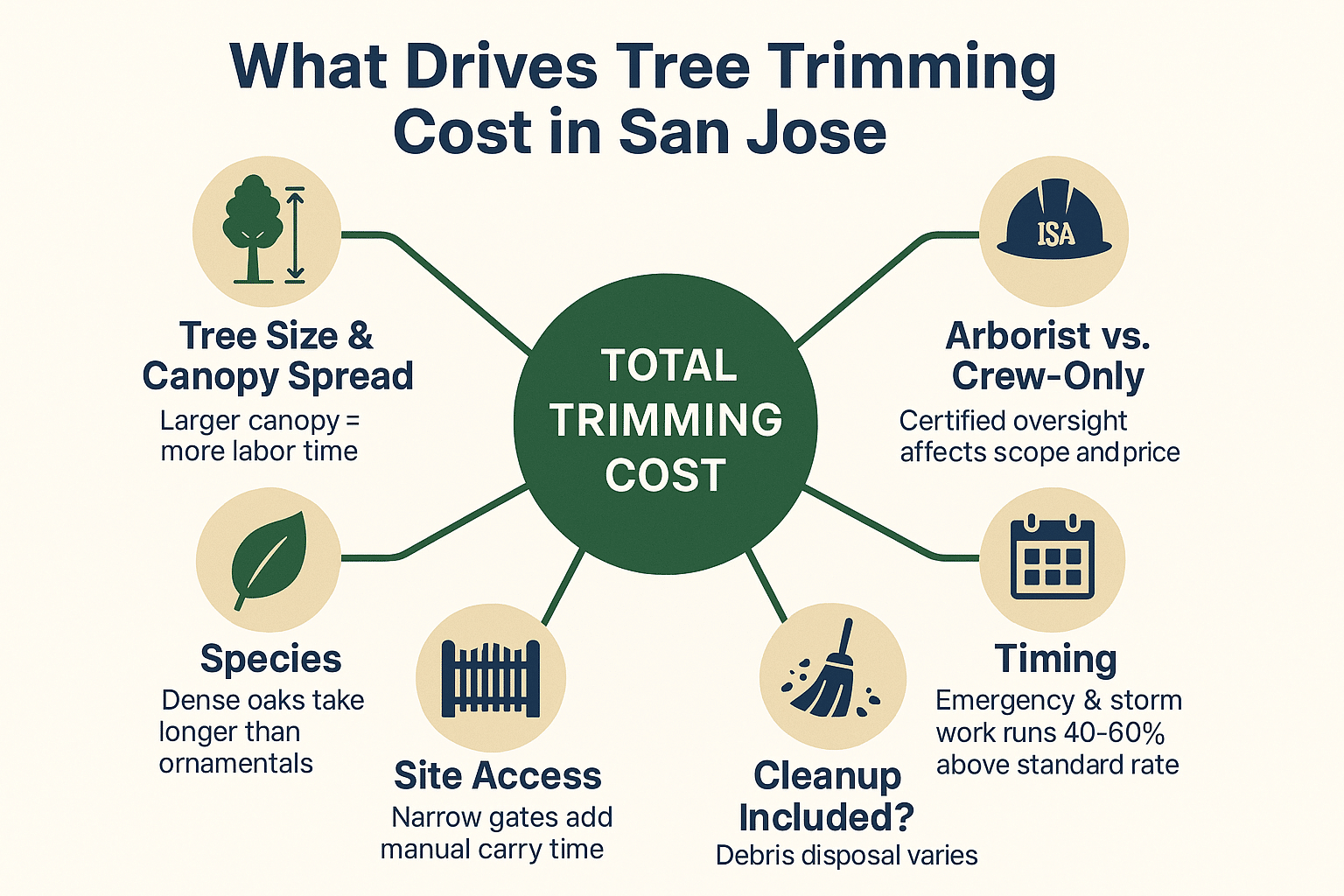
What Actually Drives Tree Trimming Cost in San Jose
The factors below explain why two quotes for the same tree can land at very different numbers. Each one adds to the total time, equipment, or expertise the job requires.
What’s Included in Cleanup, and Why It Varies
One of the most common reasons two quotes look different is that one includes full debris removal and the other doesn’t.
Some contractors quote trimming only. The green waste pile at the end of the job is yours to handle. Others include chipping, hauling, and sweeping the area clean as part of the base price. Neither approach is dishonest on its own, but when you’re comparing quotes, you need to know which one you’re looking at.
One of our longtime customers put it well in their review: “no hidden pricing, no surprise cleanup fees.” That’s exactly the kind of clarity that should come with any written quote. Before you sign off on a job, ask specifically:
- Is green waste chipped on-site?
- Is it hauled away, or left in a pile for you to manage?
- Are stump cuts and larger log sections included, or quoted separately?
When you get a written scope of work that answers these questions, you’re comparing real jobs, not just numbers.
A Quick Look at How Scope Affects What You Pay
These are not fixed price points, actual costs depend on the specific tree, site, and scope. This gives a general sense of how different types of trimming work compare in terms of complexity and labor time.
| Type of Work | Typical Complexity | Key Cost Drivers |
|---|---|---|
| Hedge or ornamental trim | Lower | Straightforward access, predictable cuts, shorter time |
| Young shade tree prune | Moderate | Species-dependent; structural cuts require some expertise |
| Mature oak or sycamore structural prune | Higher | Dense canopy, arborist direction needed, longer labor |
| Clearance prune near structures or utilities | Higher | Rigging, sequenced cuts, limited drop zones |
| Emergency storm response | Highest | After-hours, hazard conditions, compressed timelines |
The Consultation Fee vs. the Estimate, What Each One Is For
I want to address something that comes up regularly on first-time calls. Homeowners sometimes ask whether there’s a charge just to get a quote, and the answer depends on what kind of assessment the job actually needs.
For straightforward trimming on a visible, accessible tree, a basic estimate doesn’t always require a formal arborist consultation. But for a mature tree with structural questions, health concerns, or complexity near a structure, a proper on-site evaluation by a certified arborist is a different thing. It’s not a sales call. It’s a professional assessment that informs what work is actually needed, and whether trimming is even the right starting point.
If you’re not sure which situation you’re in, a good way to start is by sending photos through email. That often gives enough information to scope a straightforward job or identify whether an in-person assessment is the right next step. When does a tree problem actually require an arborist instead of just a trimmer? is a question worth understanding before you book anything.
If a company charges for an on-site assessment, that fee typically reflects a licensed arborist’s time, not just a salesperson walking around your yard. Ask what the assessment includes, what you’ll receive in writing afterward, and whether the fee applies toward the work if you proceed.
Emergency Timing Costs More, and There’s a Real Reason Why
Several customers have called us after a winter storm, relieved to reach a live person and get a crew out quickly. We’re glad to be that call. But I want to be honest about what those situations cost, because readers making decisions after a storm deserve that context.
Emergency tree work, same-day response, after-hours calls, or situations involving a storm-damaged tree that poses immediate risk, runs meaningfully higher than a scheduled maintenance trim. In the greater San Jose area, an emergency premium can range from roughly 40 to 80 percent above standard rates, depending on timing, scope, and conditions. That’s not padding. It reflects real costs: crew availability outside normal hours, the time pressure that removes scheduling flexibility, and the additional safety steps required when a tree has already partially failed.
Wet-season pruning also carries some additional considerations. California’s wet winters can make certain pruning work riskier for the tree itself, particularly for coast live oaks, which are susceptible to Sudden Oak Death, a pathogen that spreads more readily when fresh pruning wounds are exposed during wet conditions. Timing your pruning for the drier months isn’t just about scheduling convenience, for some species, it genuinely matters for tree health.
If a storm has already caused damage and you’re assessing your situation, what to do when a tree looks dangerous after a storm covers the right sequence of steps.
How to Actually Compare Two Quotes
The most useful thing I can tell you is this: a quote is only comparable to another quote if both describe the same job in writing.
When you receive a quote, the scope of work should spell out:
- Which trees are included, and any specific work on each
- What type of pruning, structural, crown reduction, deadwood removal, clearance, or some combination
- Whether an arborist will direct the work or whether it’s crew-only
- Cleanup terms, what gets chipped, hauled, or left behind
- Any exclusions, work that is specifically not included
If a quote is just a dollar amount with a handshake, you have no way to know what you’re actually comparing. And that’s usually where the sticker shock or the “why is this so much more expensive” confusion comes from.
For new homeowners who are still figuring out what their trees need, getting a written scope matters even more. You may not know enough yet about what your trees actually require to catch a vague quote for what it is.
If a tree has any health concerns mixed into the picture, it’s also worth reading through common tree pest and disease questions San Jose homeowners keep asking before you finalize a plan, because what looks like a trimming job sometimes has a health issue underneath it that changes the right approach entirely.
Frequently Asked Questions About Tree Trimming Costs in San Jose
Why did I get two very different quotes for trimming the same tree?
Almost always, it’s because the two quotes don’t describe the same work. One may include cleanup and the other doesn’t. One may involve a certified arborist directing cuts while the other is crew-only. One may account for limited backyard access and the extra time that adds. Ask both companies for a written scope of work, then compare what each actually includes, not just the bottom line.
Is there a charge just to come out and give me an estimate?
It depends on what the job needs. For a simple, visible, accessible tree, a basic estimate often doesn’t require a formal arborist consultation. For a mature tree with health questions, structural concerns, or complexity near a structure or utility line, a proper on-site assessment by a licensed arborist is a different kind of visit, and it may carry a fee. Ask upfront what the visit includes and what you’ll receive in writing. For many straightforward situations, sending photos by email is a good first step and can get the process started without a site visit.
Why does emergency tree work cost so much more?
Emergency calls require crew availability outside normal scheduling, often on short notice or after hours. They also involve compressed timelines and, when a tree has already partially failed, additional safety steps that slow the work down. In the greater San Jose area, emergency premiums typically run 40 to 80 percent above standard rates, that’s consistent with what you’d see across the South Bay market. It’s not arbitrary. It reflects what it actually costs to respond quickly and safely under pressure.
Does timing affect the cost of regular tree trimming?
Yes, in a few ways. Scheduling trimming during slower months, typically late spring through summer in the South Bay, often gives you better scheduling flexibility and consistent pricing. Wet-season trimming can also carry additional considerations for certain species. Coast live oaks, for example, are more vulnerable to Sudden Oak Death when pruning wounds are exposed during wet conditions, which is one reason many arborists recommend timing oak work for the drier months.
Is a more expensive quote automatically better work?
No. A higher price reflects greater complexity, more thorough cleanup, arborist oversight, or harder site conditions, not quality in isolation. A structural prune on a mature oak costs more than a hedge trim because it is a more involved service, not because the crew is better. The right question isn’t which quote costs more. It’s whether the scope described is actually what your tree needs. Understanding what a certified arborist does differently can help you judge what level of service your specific situation calls for.
What should a written quote include before I agree to anything?
At minimum: which trees are covered, what type of pruning is being performed on each, whether an arborist will direct the work, what cleanup is included, and any specific exclusions. If a quote doesn’t answer those questions in writing, ask before you sign anything. That’s how you avoid surprise fees and how you make sure you’re comparing apples to apples across different contractors.
Ready to Get a Quote You Can Actually Compare?
If you have a tree in the San Jose area that needs trimming and you want to understand what the work actually involves before committing to anything, we’re happy to walk you through it. San Jose Tree Service & Landscaping serves homeowners across San Jose, Campbell, Los Gatos, Saratoga, and the surrounding South Bay communities. You can reach us at (408) 422-1313 or visit sanjosetreemaintenance.com to get started, whether that means sending photos first or scheduling an on-site assessment for something more complex.
