
Direct Answer: A new homeowner tree assessment covers species ID, structural condition, disease and pest signs, irrigation reach, and any permit-relevant trees, before you commit to any pruning or removal.
Buying a home is a long list of decisions made quickly. The trees rarely make that list, until you’re standing in the backyard on move-in day, looking up at a massive oak that’s clearly been ignored for years, and wondering what you’ve actually inherited.
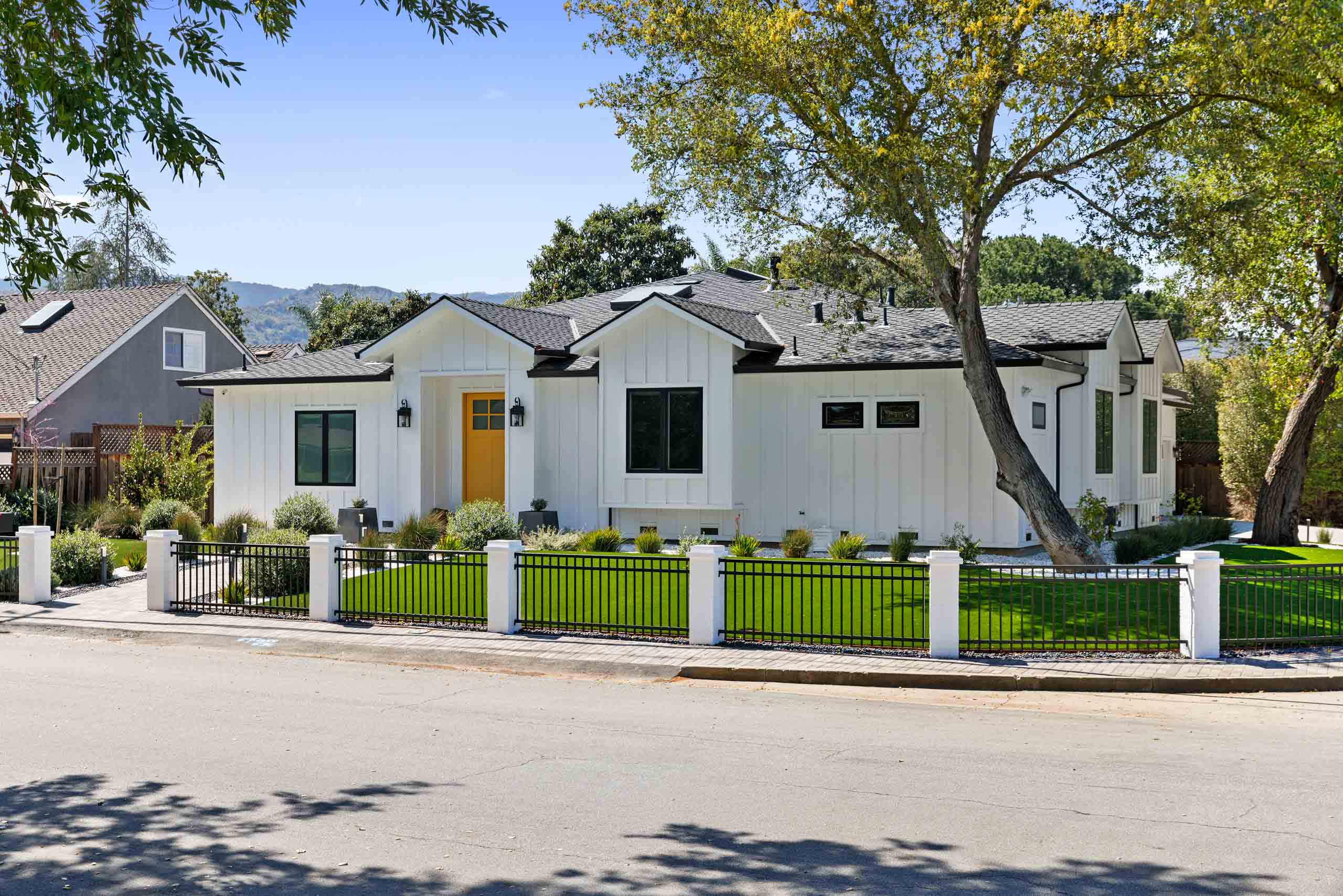
We hear this all the time. A homeowner in Sunnyvale recently reached out after buying an Eichler with mature fruit trees and an established landscape. She wanted to know what she had, what it needed, and how to set up a care routine before the growing season started. A simpler call came in the same week: someone who had just closed on a house in San Jose and said the trees needed attention, but couldn’t say what kind. That phrase, ‘the trees need attention,’ is probably the most honest thing a new buyer can say, because they’re right and they don’t yet have the information to be more specific.
This article is about getting that information. Specifically, the three things a first-look arborist assessment should answer for any new homeowner with mature trees on their property, and why getting those answers before you do anything else is the right call.
What You Cannot Tell From a Walkthrough
Real estate walkthroughs are designed to sell homes. They’re not designed to reveal tree problems.
A healthy-looking tree can have advanced internal decay at the root collar or in a major scaffold branch. A tree that looks scraggly and half-dead might be recoverable with the right pruning and some soil work. From the ground, without knowing the species, the history of care, or what’s happening below the bark, you’re guessing.
Here are the three practical unknowns that a proper first assessment should resolve:
- Which trees are protected under San Jose’s tree ordinance, and what that means for what you can legally do with them. The City of San Jose requires a permit before certain trees can be removed, based on species and trunk diameter. Inheriting a protected tree without knowing it can put a homeowner in a difficult spot if they later try to remove it without going through the right process.
- Which trees have structural defects that aren’t visible from the ground. Internal decay, included bark at major branch unions, and root damage from construction or compaction don’t show up during a walk-through. A trained eye, and in some cases a resistograph or percussion test, is what finds them.
- Whether your irrigation is actually reaching tree root zones or just wetting the surface. Most drip and sprinkler systems are set up for turf or shrubs, not for the deep, wide root zones that mature trees need. A tree can look fine for years while slowly declining from inadequate water in the root zone. Your irrigation system may be running without actually working the way you think it is.
None of these three things are visible on a walkthrough. All three can affect your safety, your legal standing, and your long-term property investment.
The Fruit Tree Problem New Buyers Don’t Expect
Mature fruit trees come up constantly in new homeowner consultations, and for good reason. They look productive and charming at purchase. But most inherited fruit trees have years, sometimes a decade, of deferred pruning behind them.
The challenge is that corrective pruning for a mature fruit tree is species-specific, and the timing and method matter a lot. Pruning a mature fig is completely different from pruning a plum. Neither follows the same logic as pruning a pine. Cut too much at the wrong time on some species and you trigger vigorous, weak regrowth. Miss the right window on others and you reduce that season’s fruit production unnecessarily.
The ISA’s tree pruning guidelines are clear that corrective work on mature specimens needs to be staged, you generally don’t restore years of neglect in a single session without stressing the tree. A consult before the first growing season gives you a clear picture of what the tree needs, in what order, and on what schedule. That’s far less costly than discovering, after the fact, that you made cuts that set the tree back by two or three years.
This is also where the difference between a certified arborist and a general tree crew matters most. A crew can make the cuts. An arborist tells you which cuts to make, and which ones to leave alone for now.
What a First-Look Tree Assessment Covers
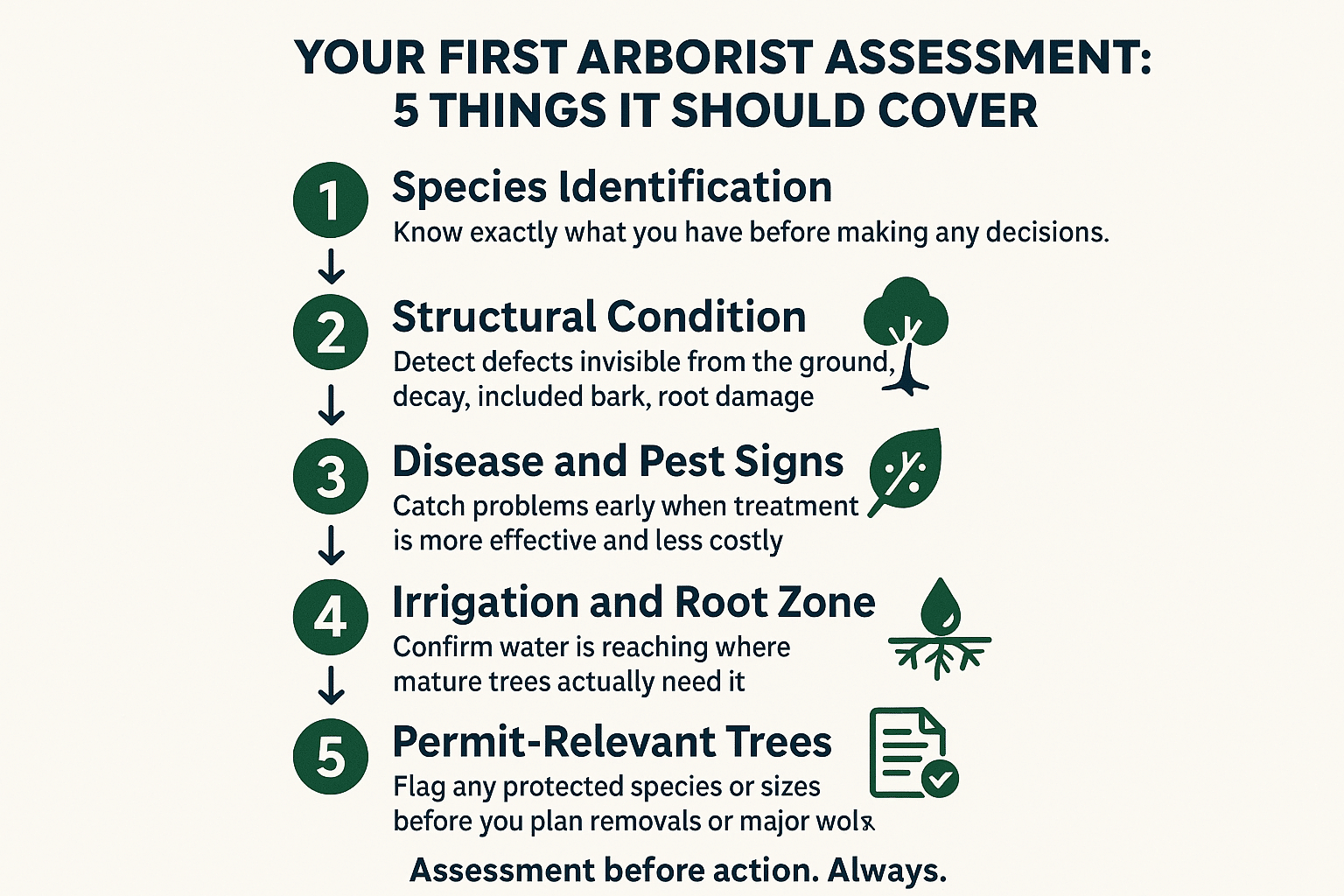
A baseline assessment for a new homeowner typically works through five distinct areas. Here’s what each one involves.
Inherited Tree Situations: What They Usually Need First
New homeowners tend to inherit a mix of tree situations. This table gives a rough sense of what each common scenario typically calls for as a first step.
| Situation | Common First Step | Why It Matters |
|---|---|---|
| Mature oak with no recent care history | Structural assessment + deadwood evaluation | Oaks in San Jose are often protected by ordinance and have specific pruning requirements |
| Mature fruit trees with dense, crossing branches | Species-specific corrective pruning plan | Method and timing vary by species; wrong cuts cause multi-year setbacks |
| Established landscaping with unknown irrigation setup | Irrigation zone audit + root zone check | Surface watering often misses where mature tree roots actually need moisture |
| Tree leaning toward the house or fence | Structural risk assessment before anything else | Lean direction, root condition, and species all affect actual risk level |
| Dead or severely declining tree | Arborist evaluation to confirm condition and permit requirements | Removal may require a permit depending on species and trunk size in San Jose |
Making a Joint Decision With a Documented Assessment
One thing that comes up in calls from new buyers, more than I expected, is the ‘I need to talk to my spouse’ pause. And that makes complete sense. A tree assessment that recommends several thousand dollars in work, or flags a tree for eventual removal, is not a decision one person should make alone at the kitchen table after a phone call.
A written consultation report, with photos and clear notes on what was found and what the options are, gives both buyers a shared reference point. You can review it together, ask follow-up questions, and decide on timing without pressure.
This is one of the practical reasons we think a documented first-look assessment is worth doing early, even before you’ve settled on exactly what work you want done. It takes ‘the trees need attention’ and turns it into a concrete, prioritized list, which makes every conversation after that easier, including the one with your partner.
For buyers who are also planning any landscape changes, it’s worth noting that how landscape design works around mature trees is a whole separate consideration, some trees need to be accounted for in any design plan before the first shovel goes in.
A Note on Protected Trees and San Jose’s Ordinance
San Jose has a tree protection ordinance, and it applies to more trees than most new homeowners realize. Protected status is based on a combination of species and trunk diameter, and it affects what work you can legally perform, including removal, without a permit.
The ordinance covers common species including coast live oaks, valley oaks, and certain other native and heritage trees. A tree that measures above the threshold diameter at breast height triggers the permit requirement regardless of its condition. Getting the full picture on what San Jose requires before a tree comes down is important reading for any new buyer.
I’ve seen homeowners have to pause construction projects, fence installations, and landscaping work because a tree they assumed was theirs to manage freely turned out to be subject to the ordinance. Finding out during an assessment, rather than after you’ve already committed to a plan, saves real time and real money.
Frequently Asked Questions About New Homeowner Tree Assessments in San Jose
How soon after buying should I get an arborist assessment?
Before the first growing season on the property is the right target. For most San Jose homeowners, that means getting the assessment done in late winter or early spring. You want the information before you make any pruning, planting, or irrigation decisions, not after.
Does a tree assessment cost the same as a full arborist report?
Not necessarily. A consultation or diagnostic visit to evaluate what you have and give you a clear picture of the trees’ condition is generally less involved than a formal arborist report prepared for a permit application or legal matter. The right scope depends on what you need it for. For a new homeowner baseline, a consultation is usually the right starting point, a formal report becomes relevant if a permit is required for removal or if you’re involved in a legal or insurance situation.
My fruit trees look fine. Do I still need an assessment before pruning?
Yes, especially for mature specimens. A tree can look productive and healthy while carrying structural problems or years of deferred pruning that need to be addressed in a specific sequence. Pruning timing and method vary by species, and a mistake on a mature tree can take two to three growing seasons to recover from. A consult first is far less costly than correcting a pruning error after the fact.
How do I find out if the trees on my new property are protected under San Jose’s ordinance?
An arborist can flag protected trees during the assessment, it requires knowing the species and measuring trunk diameter. The City of San Jose’s tree protection ordinance sets the thresholds, and an arborist familiar with the local requirements will know which trees hit those thresholds and what that means for your options.
Can I get a written summary of the assessment to share with my partner or co-buyer?
Yes, and it’s worth requesting one explicitly when you schedule. A photo-documented assessment with a written summary of what was found and what the options are gives both decision-makers a shared reference point. It removes the guesswork from a significant property decision.
What if some of my trees also look like they might have a disease or pest problem?
That’s exactly the kind of thing a diagnostic visit is designed to catch. Yellowing, unusual leaf drop, weeping cankers, or bark discoloration can all point to conditions that are treatable when caught early. The approach to tree pest and disease diagnosis starts with identifying what’s actually happening before any treatment is recommended.
Ready to Know What You Actually Have?
If you’ve recently bought a home in San Jose, Willow Glen, Almaden Valley, or anywhere in the South Bay with mature trees you didn’t choose and can’t yet evaluate, San Jose Tree Service & Landscaping can walk the property with you and give you a clear, honest picture of what’s there. Robert Apolinar, a Board-Certified Master Arborist, leads every consultation personally. You can reach the team at (408) 422-1313 or visit sanjosetreemaintenance.com to request an assessment.
