 Skip to content

Direct Answer: An irrigation system that runs on schedule isn’t necessarily watering correctly. Clogged heads, pressure problems, and poor zone coverage can quietly starve plants or drown roots — even when the timer shows green.
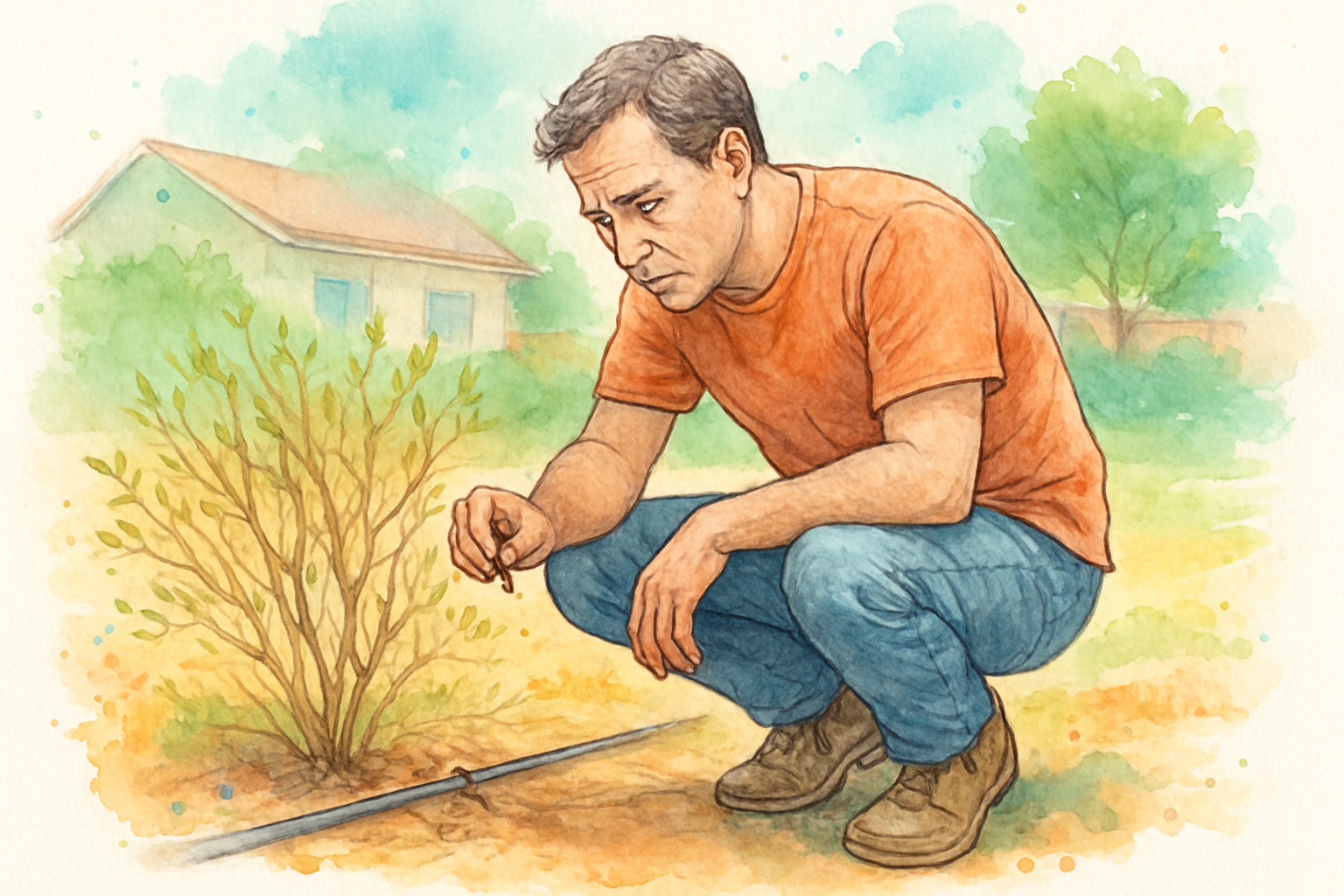
Your irrigation controller is set, the zones run on schedule, and you can hear the system clicking on every morning before you leave for work. So why does the lawn look patchy, the new shrubs keep wilting, and the soil feel bone-dry two inches down?
This is one of the most common frustrations we hear from homeowners across Willow Glen, Almaden Valley, and Los Gatos — especially heading into Silicon Valley’s long dry stretch from May through October. The system appears to be working. But appearances and actual delivery of water are two very different things.
This article walks through the most common reasons a functioning irrigation system fails to actually water effectively — what to look for, what it costs to fix, and how to know when you need a professional eye on the problem.
The Difference Between ‘Running’ and ‘Working’
An irrigation system has two jobs: run on schedule and deliver the right amount of water to the right places. Most homeowners only ever confirm the first job is happening.
The second job is harder to check. Water moves underground through pipes, splits across zones, and exits through heads or emitters that can clog, tilt, wear out, or get buried over time. None of that is visible from inside the house.
Here’s what a system that’s running but not working actually looks like in practice:
- Dry spots in the lawn that reappear a day or two after watering
- Wilting plants in beds that are supposedly on a drip zone
- Soggy patches in one area while another area looks parched
- Runoff hitting the sidewalk or driveway instead of soaking into the soil
- Mushroom or fungal growth near emitters that may be over-saturating the soil
- Higher water bills with no visible explanation
Any one of these is a signal. Two or more together almost always means something in the system needs adjustment — or repair.
In San Jose, where the Valley Water district has been pushing tiered conservation pricing since 2022, a system running inefficiently can add $40–$90 per month to your water bill without you realizing it.
The Three Problems That Cause Most Irrigation Failures
After years of working on landscape systems across San Jose, Campbell, and Saratoga, we see the same root causes come up again and again. The problems aren’t exotic — but they’re easy to miss if you don’t know what to look for.
1. Clogged or Damaged Heads and Emitters
Drip emitters — the small plastic pieces that release water at the root zone — clog with mineral deposits and debris over time. In areas with hard water (which describes most of the South Bay), this can happen within a single season. A clogged emitter delivers zero water even while the zone is actively running. You won’t see it fail. You’ll just see the plant struggling.
Pop-up spray heads crack, tilt, or wear out. A head that’s supposed to pop up four inches but only clears two inches stays partially blocked by grass and waters an arc of nothing.
2. Pressure Problems
Too much pressure causes misting — water atomizes into a fine fog that evaporates before it reaches the soil. Too little pressure means heads don’t fully extend or rotate. Both waste water and result in uneven coverage.
The typical residential system in San Jose runs best between 30–45 PSI. A pressure regulator that’s worn or incorrectly set can push that well above 60 PSI — and you’d have no idea without a gauge on the line.
3. Zone Design That No Longer Fits the Landscape
This is the most overlooked problem. Irrigation systems are designed for a landscape at a specific point in time. As trees mature, shrubs fill in, and new plants are added, the original zone layout stops making sense. A drip zone designed for two-gallon plants now serves five-gallon shrubs that need twice the water — running the same schedule.
For homeowners in established neighborhoods like Almaden Valley, where mature landscaping is common, this mismatch between system design and current plant load is often the real reason plants struggle despite consistent watering. A good landscape contractor can walk the zones with you and identify exactly where the design no longer matches the plant reality.
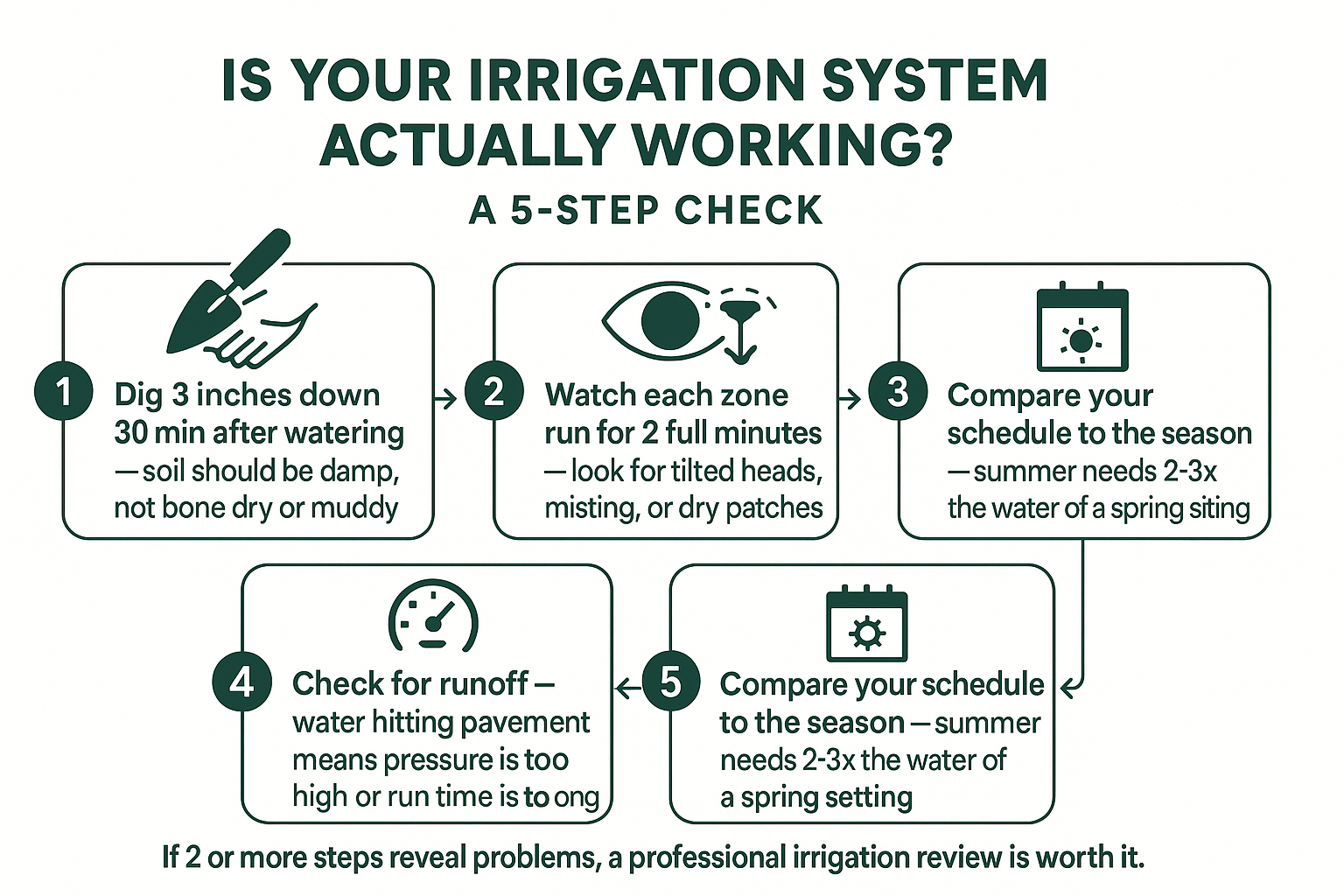
How to Do a Basic Irrigation Check Yourself
Before calling anyone, these five steps will tell you a lot about what your system is actually doing.
What a Professional Irrigation Review Actually Covers
A professional irrigation audit isn’t just someone walking around with a clipboard. Done right, it’s a zone-by-zone evaluation of what the system is delivering versus what your plants actually need.
Here’s what a thorough review should include:
- Running each zone individually and observing head coverage, arc patterns, and pressure
- Testing soil moisture at root depth 30 minutes after each zone runs
- Identifying clogged, broken, or misaligned heads and emitters
- Checking the controller programming against current seasonal water requirements
- Assessing whether zone groupings make sense given plant types (turf, shrubs, drip)
- Looking for signs of overwatering that may be affecting nearby trees
That last point matters more than most homeowners realize. Chronic overwatering near the root zone of established trees — especially oaks and other native species common in Saratoga and Los Gatos — can promote fungal disease and root rot. If you’ve noticed unusual changes in your trees alongside landscape problems, it’s worth having someone look at the full picture. You can read more about when tree problems warrant a closer look in this guide: when a tree problem requires more than a trimmer.
A professional audit typically runs $150–$350 in the San Jose area, depending on system size and complexity. For a system covering front and back yard with multiple zones, expect the higher end of that range. Repairs identified during the audit are quoted separately.
Common Irrigation Problems: What to Look For and What It Costs to Fix
These are the repair scenarios we see most often — along with realistic cost ranges for the San Jose and South Bay area.
| Problem | Signs You’ll See | Typical Repair Cost |
|---|---|---|
| Clogged drip emitters | Plants wilting despite scheduled watering | $75–$150 to flush and replace emitters on 1–2 zones |
| Broken or tilted pop-up head | Dry patches, water spraying sideways | $50–$120 per head replaced |
| Pressure regulator failure | Misting, runoff, uneven coverage | $100–$250 to replace regulator |
| Damaged lateral line (underground pipe) | Soggy patches, low pressure in a zone | $200–$600 depending on depth and access |
| Controller programming outdated | Over or under-watering across seasons | $75–$150 for reprogramming and seasonal adjustment |
| Zone redesign needed | Consistent plant stress despite repairs | $400–$1,200+ for zone reconfiguration |
Seasonal Timing Is Where Most Homeowners Go Wrong
Even a perfectly functioning irrigation system can fail if the schedule hasn’t been adjusted for the season. Silicon Valley’s climate moves through several distinct phases — and a single irrigation schedule set in April will significantly over-water in March and under-water in August.
A general guide for San Jose’s climate:
- Winter (Dec–Feb): Most established landscapes need little to no supplemental irrigation. Rain typically handles it. Running a system on a summer schedule in January is one of the fastest ways to promote root fungus.
- Spring (Mar–May): Moderate watering, roughly 50–60% of peak summer output. Plants are actively growing but temperatures are mild.
- Summer (Jun–Sep): Peak demand. Drip zones for established shrubs may need to run 3–4 times per week. Lawn zones often need 20–30 minutes per zone, 3 days a week minimum.
- Fall (Oct–Nov): Taper back gradually as temperatures drop. A common mistake is continuing summer schedules into October.
Many modern controllers have weather-based adjustments — but only if they’re programmed correctly. An ET (evapotranspiration) controller that’s connected to local weather data can automatically scale run times based on temperature and humidity. If your controller is more than 8–10 years old, it almost certainly doesn’t have this capability, and seasonal manual adjustments are the only way to keep up.
For homeowners who are also reworking their landscape during this process, this resource on what sets true landscaping experts apart is a good read before you hire anyone.
Drought-Tolerant Landscapes Still Need a Working Irrigation System
A common misconception we run into — especially after homeowners have made the switch to drought-tolerant or native plants — is that a low-water landscape doesn’t really need a well-functioning irrigation system.
But drought-tolerant doesn’t mean zero water, especially in the first two to three years after installation. Native plants like ceanothus, salvia, and toyon need consistent deep watering to establish root systems. The irrigation system during that establishment phase is just as important as in a traditional landscape — maybe more so, because the plants are often more sensitive to irregular watering.
And drip systems designed for native or xeriscape plantings are even more dependent on emitter health than spray systems. Because the output per emitter is lower to begin with — typically 0.5–1 gallon per hour versus 1–2 gallons per minute for a spray head — a single clogged emitter represents a much larger percentage of what that plant was supposed to receive.
If you’re planning a drought-tolerant redesign and want to understand how irrigation fits into the full picture, see this overview of landscape design and installation services for context on how irrigation gets integrated from the start.
Frequently Asked Questions About Irrigation System Performance
How often should I have my irrigation system professionally checked?
Once a year is a reasonable baseline — ideally in spring before the dry season starts. If you’ve had any landscaping changes, added plants, or noticed any of the warning signs in this article, check it sooner. A quick annual review catches small problems before they become expensive ones.
My water bill jumped last month but I haven’t changed anything. Could it be the irrigation?
Yes, and this is actually one of the most common causes of unexplained bill increases. A single cracked lateral line or stuck valve can leak hundreds of gallons per day while the controller still shows the system as normal. If your bill jumped $30 or more with no obvious explanation, turn off the irrigation main and see if your meter still moves. If it does, you have a leak somewhere else. If it stops, the irrigation system is likely the source.
Can I just add more drip emitters if a plant keeps struggling?
Sometimes, but adding emitters isn’t always the right answer. If the zone is already running at the right pressure and schedule, more emitters may just mean lower pressure across all of them — which helps nobody. The better question is whether the existing emitters are actually delivering water, and whether the run time is appropriate for the plant’s current size and the season.
My landscape was installed two years ago and some plants are thriving while others look stressed. Why?
This usually comes down to one of two things: zone grouping or microclimate. Plants with very different water needs — say, a California lilac next to a rose — shouldn’t be on the same drip zone. And a spot that gets afternoon reflected heat off a wall or fence will dry out much faster than an adjacent area in shade. A walkthrough of each zone with someone who knows plant water requirements can usually identify the problem quickly.
Is it worth upgrading to a smart irrigation controller?
For most San Jose homeowners with more than two or three zones, yes. A weather-based smart controller like the Rachio 3 or Hunter Hydrawise costs $150–$250 installed and can reduce water use by 20–40% by automatically adjusting to local conditions. Valley Water has also offered rebates on smart controllers in past years — worth checking their website before you buy.
Could overwatering from my irrigation system be hurting my trees?
It can, particularly for native oaks and other species that don’t tolerate wet roots during summer. Chronic overwatering near the root crown promotes fungal disease and can weaken the root structure over time. If trees near irrigated areas are showing signs of stress — unusual leaf drop, canopy thinning, bark discoloration — it’s worth having an arborist look at them alongside any irrigation adjustments you’re making.
Want a Second Set of Eyes on Your Irrigation System?
San Jose Tree Service & Landscaping holds a C-27 landscaping contractor license and works with homeowners across San Jose, Campbell, Los Gatos, and Saratoga on irrigation audits, system repairs, and full landscape installations. If your plants are struggling and you’re not sure whether the irrigation system is part of the problem, we’re happy to take a look. Reach us at (408) 422-1313 or visit sanjosetreemaintenance.com.
