
Direct Answer: A licensed San Jose landscape contractor handles design, plant installation, irrigation, hardscaping, and ongoing maintenance — all under one CSLB-licensed contractor rather than multiple separate crews.
Most homeowners in San Jose hire a landscaper expecting one thing and end up with another. Maybe the design looked good on paper but fell apart in the dry season. Maybe someone installed an irrigation system that nobody ever set up correctly. Or the project finished and suddenly there was no one to call for follow-up care.
Good landscape contractor services are not just about making a yard look nice for a few weeks. They cover the full arc — how the space is planned, how it gets built, what species go in the ground, and how it holds up over years of Silicon Valley summers and the occasional winter storm.
This guide walks you through what a qualified San Jose landscape contractor actually does, what the different phases of work involve, what it typically costs in this market, and how to tell whether the contractor you’re considering has the right credentials to do the job legally and well.
What a Landscape Contractor License Actually Covers
In California, the contractor license that covers landscape work is the C-27 classification, issued by the Contractors State License Board (CSLB). This is not the same as a general landscape maintenance worker — a C-27 license means the contractor is legally authorized to perform design, grading, drainage, planting, and irrigation work above certain dollar thresholds.
Any project in California valued at $500 or more in combined labor and materials requires a licensed contractor. That covers the vast majority of real landscape projects in San Jose, where even a basic front yard renovation typically runs $5,000 to $15,000.
If you’re unsure whether a contractor you’re considering is actually licensed, you can verify directly at the CSLB license lookup tool using their name or license number. You can also read how to know if a landscape contractor in San Jose is licensed and qualified for a full breakdown of what to check before you sign anything.
A contractor who holds both a C-27 landscaping license and a C-61/D-49 tree service classification — as San Jose Tree Service & Landscaping does — can legally handle tree work and landscape work under the same contract. That matters if your project involves removing an old tree before installing new plantings, or if your landscape plan needs to work around mature oaks.
The Three Phases of a Landscape Project — and What Each One Involves
Most residential landscape projects follow three distinct phases. Understanding each one helps you ask better questions and avoid the gaps where projects tend to go sideways.
Phase 1: Design
This is where the plan gets built. A good landscape designer walks the property, notes sun exposure, drainage patterns, soil conditions, and any existing trees or structures. In neighborhoods like Willow Glen and Almaden Valley, mature trees often dictate what can go where — root pruning considerations come into play before a shovel ever hits the ground.
Design fees in San Jose typically run $500 to $2,500 depending on property size and complexity. Some contractors fold the design fee into the installation cost if you hire them for both.
Phase 2: Installation
This covers grading, soil prep, hardscape elements, planting, and irrigation. In San Jose, the Santa Clara Valley Water District offers rebates up to $2 per square foot for converting turf to drought-tolerant landscaping — a detail worth confirming before your contractor finalizes the plan.
Phase 3: Ongoing Maintenance
A finished landscape is not a finished project. Plants need seasonal care, irrigation systems need adjustment as weather changes, and trees need periodic attention to stay healthy and safe. Skipping this phase is why so many otherwise good installations deteriorate within two or three years.
If you’re wondering how landscaping affects your home’s long-term value, the short answer is: maintained landscapes hold their value; neglected ones subtract from it.
Drought-Tolerant Design: Why It Matters More in Silicon Valley Now
Water restrictions have become a fact of life across Santa Clara County. San Jose Water Company and San Jose Municipal Water both impose tiered pricing and seasonal restrictions that can make a traditional lawn expensive to maintain — and a liability during drought years.
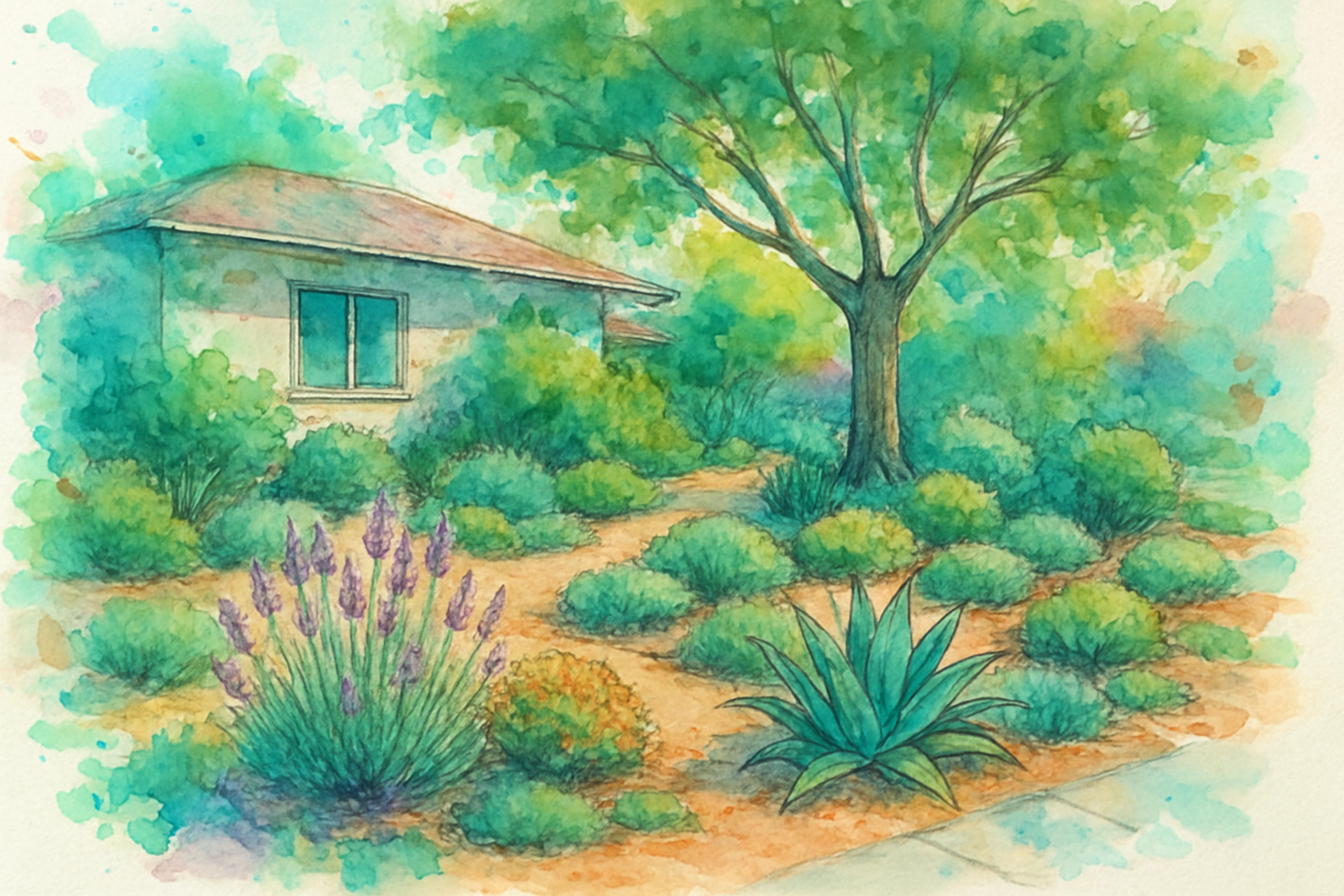
Drought-tolerant landscape design is not about making a yard look sparse or neglected. Done right, it means selecting plants that thrive in the 14 to 17 inches of annual rainfall San Jose typically sees, reducing irrigation demand by 40 to 60 percent compared to conventional turf lawns, and creating something that actually looks better in August than a brown lawn does.
Common approaches include:
– Native California plants like toyon, coffeeberry, and native bunch grasses
– Mediterranean species like lavender, rosemary, and Italian cypress
– Decomposed granite or mulch pathways in place of concrete or turf
– Drip irrigation systems that deliver water directly to root zones
– Permeable hardscaping to manage runoff without traditional drainage infrastructure
For foothill communities like Saratoga and Los Gatos, fire-resistant plant selection adds another layer to the conversation. Low-moisture plants that don’t accumulate dry debris are preferred near structures in high fire-hazard severity zones.
You can see how this played out in a real project in this Saratoga landscape makeover where a homeowner moved from a high-water traditional design to a low-maintenance, drought-tolerant plan that actually looked more intentional than what it replaced.
Hardscape: What It Includes and What It Costs in San Jose
Hardscape refers to any non-plant element in a landscape — patios, walkways, driveways, retaining walls, and outdoor living features. It is often the most expensive part of a landscape project, and the part most likely to require permits.
In San Jose, building permits are required for retaining walls over 30 inches in height, certain patio covers, and any grading that moves more than 50 cubic yards of soil. Your contractor should know which elements need permits and pull them before work begins. If they say permits aren’t necessary when they clearly are, that is a red flag.
Typical hardscape cost ranges for San Jose residential projects:
– Concrete patio: $8 to $18 per square foot installed
– Paving stone or interlocking pavers: $18 to $30 per square foot — see this San Jose paving stone guide for what affects that range
– Decomposed granite pathways: $4 to $8 per square foot
– Retaining walls (concrete block): $25 to $50 per square foot
– Outdoor kitchens: $10,000 to $35,000+ depending on appliances and materials
Outdoor living additions — like covered patios, fire pits, and kitchen areas — have become one of the most requested elements in South Bay projects over the last several years. If that is part of your thinking, these outdoor patio kitchen ideas show what is possible in the local market.
San Jose Landscape Project Cost Ranges by Scope
These are realistic cost ranges for residential landscape work in San Jose and surrounding South Bay communities as of 2025-2026. Costs vary based on site conditions, materials, and project complexity.
| Project Type | Typical Range | Key Variables |
|---|---|---|
| Front yard redesign (turf removal + replant) | $5,000 – $15,000 | Square footage, soil prep, irrigation |
| Backyard landscape installation | $12,000 – $40,000+ | Hardscape ratio, grading, drainage |
| Drip irrigation system installation | $2,500 – $8,000 | Zone count, existing infrastructure |
| Paving stone driveway | $15,000 – $35,000 | Size, pattern, base preparation |
| Retaining wall (simple) | $4,000 – $12,000 | Height, length, material |
| Outdoor kitchen + patio cover | $18,000 – $50,000+ | Appliances, structural requirements |
| Ongoing maintenance (monthly) | $200 – $600/month | Property size, service scope |
How a Residential Landscape Project Moves from Plan to Finished Property
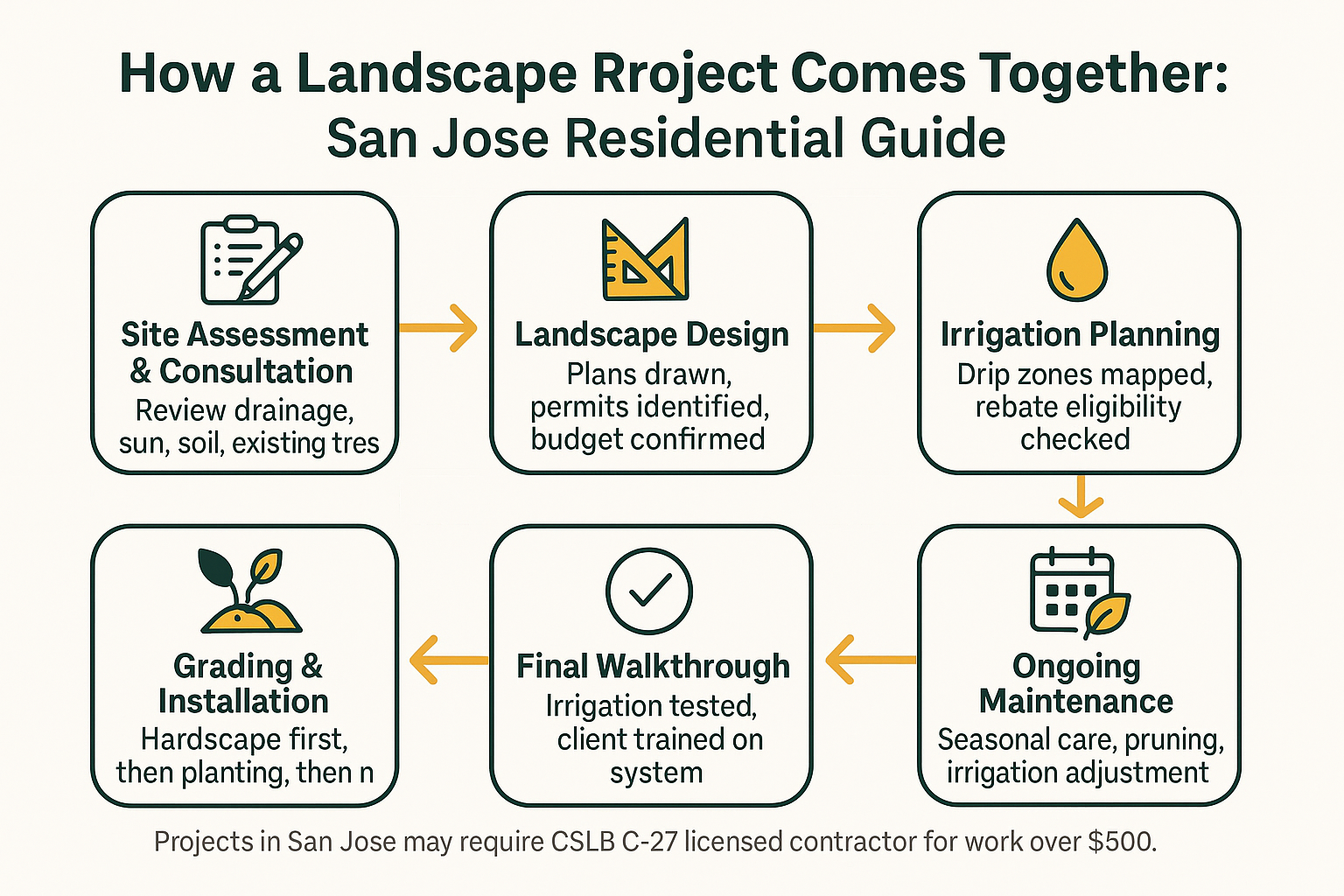
This infographic shows the typical sequence of a San Jose residential landscape project, from first consultation through long-term maintenance.
When Trees and Landscaping Overlap — and Why That Matters
One place homeowners get stuck is when a landscape project intersects with existing trees. You might want to install a patio, but there is a mature oak in the way. Or you are redesigning the front yard and the roots from a large tree are already affecting where you can put irrigation or hardscape.
This is where having a contractor who holds both a C-27 landscaping license and a C-61/D-49 tree service classification makes the conversation much simpler. The arborist side of the equation can assess whether a tree can stay, how close hardscape can come to the root zone, and what the tree’s condition is before you build around it.
A certified arborist consultation before any landscape installation near mature trees is not an optional extra — it is the kind of step that prevents expensive mistakes. Tree roots extend well beyond the canopy edge, and damage done during installation can show up as tree decline two or three years later when the connection is harder to prove.
In established neighborhoods like Willow Glen and Almaden Valley, where 40- and 50-year-old trees are common on residential lots, getting this sequencing right protects both the investment you are about to make and the trees that have been growing since before you moved in.
Ongoing Landscape Maintenance: What It Actually Covers
A lot of homeowners think of maintenance as just mowing and blowing. In reality, a good ongoing maintenance program is what keeps a landscape looking like it did on installation day — and what keeps small problems from becoming expensive ones.
Regular landscape maintenance in San Jose typically includes:
– Seasonal pruning of ornamental shrubs and flowering plants
– Irrigation system checks and seasonal adjustments — critical in the transition from dry season to wet
– Weed control in planting beds and along hardscape edges
– Mulch replenishment to retain soil moisture and suppress weeds
– Fertilization and soil amendment as needed based on plant performance
– Tree monitoring to catch early signs of disease, root conflict, or structural issues
– Drainage checks before and after the rainy season
Monthly maintenance contracts in San Jose typically run $200 to $600 per month for a standard residential property, depending on lot size, plant complexity, and the scope of what’s included. That is significantly less than the cost of replanting after a preventable failure.
For a real example of how a maintenance relationship develops after a full installation, this Almaden Valley renovation project shows how ongoing care became part of the homeowner’s plan from day one — and why that made a difference.
How to Evaluate a Landscape Contractor Before You Hire
The San Jose market has no shortage of people calling themselves landscapers. Sorting the licensed, insured professionals from the unlicensed operations is a step worth taking before any money changes hands.
Here is what to verify before signing a contract:
- CSLB license number — look it up at cslb.ca.gov and confirm it is active and in the right classification (C-27 for landscaping)
- General liability insurance — ask for a certificate of insurance naming you as additional insured
- Workers’ compensation coverage — if they have employees and cannot show this, you may be liable for injuries on your property
- BBB accreditation or verified reviews — not the only measure of quality, but a signal of accountability
- Written contract with itemized scope — a reputable contractor does not work from verbal agreements on jobs over a few hundred dollars
- Permit knowledge — ask directly which elements of your project require permits and who will pull them
And ask whether the contractor has experience working with mature trees on the property. If a landscape project will involve any work near established trees — grading, irrigation trenching, planting close to the root zone — the contractor’s answer to that question tells you a lot.
Frequently Asked Questions About San Jose Landscape Contractor Services
Do I need a permit for a new patio or retaining wall in San Jose?
It depends on size and type. In San Jose, retaining walls over 30 inches in height and patio covers with a roof structure typically require a building permit. Flat patios at grade usually do not. Your contractor should know which elements trigger permit requirements and pull the permits before work starts — never after.
What is the difference between a landscaper and a licensed landscape contractor?
A landscaper is a general term — it could describe anyone with a mower. A licensed landscape contractor holds a CSLB C-27 classification, which authorizes them to legally perform grading, drainage, irrigation, and planting work on projects valued at $500 or more. Unlicensed work over that threshold is illegal in California and leaves you without protection if something goes wrong.
How long does a typical landscape installation take in San Jose?
A front yard redesign on a standard San Jose residential lot usually takes 1 to 3 weeks from start to finish, depending on the complexity of hardscape and whether permits are needed. Larger backyard projects with outdoor living elements can run 4 to 8 weeks. Permit delays — which are common in San Jose — can add time to either end of that estimate.
Can I get rebates for removing my lawn and replanting with drought-tolerant plants?
Yes. The Santa Clara Valley Water District has offered rebates of up to $2 per square foot for qualifying turf-to-landscape conversions. San Jose Water Company has run similar programs. The programs have eligibility rules and tend to change year to year, so confirm current availability directly with the water district or your contractor before committing to a design based on the rebate.
What happens to existing trees when I redo my landscaping?
Existing trees need to be assessed before installation begins — not after. Root zones extend well beyond the canopy, and grading, irrigation trenching, or compaction from equipment can damage roots without any visible signs for years. A contractor with tree service expertise, or one who coordinates with a certified arborist, can identify those conflicts before they become costly problems.
Ready to Talk Through What Your Property Actually Needs?
If you are a homeowner in San Jose, Willow Glen, Almaden Valley, Los Gatos, or Saratoga with questions about a landscape project — whether that is a full redesign, a drought-tolerant conversion, or just figuring out what to do with a yard that has gotten away from you — San Jose Tree Service & Landscaping is available to have that conversation. You can reach the team at (408) 422-1313 or visit sanjosetreemaintenance.com to learn more. They hold an active CSLB C-27 landscaping license and C-61/D-49 tree service classification, are BBB-accredited, and carry a 4.96-star average across 70 Google reviews — the kind of record that comes from doing the work right, not from aggressive marketing.
