
Direct Answer: A licensed San Jose landscape contractor designs, installs, and maintains outdoor spaces — including plants, irrigation, hardscape, and lawn alternatives — under a single CSLB-licensed contractor.
Most San Jose homeowners don’t know exactly what a landscape contractor does — or how different it is from calling a gardener. They just know their yard isn’t working. Maybe the lawn died in last summer’s heat, the irrigation is leaking, or the front yard looks nothing like the neighborhood around Willow Glen or Almaden Valley.
The answer isn’t always a quick fix. A licensed landscape contractor can take a property from bare dirt or overgrown chaos all the way through design, plant selection, irrigation installation, and ongoing seasonal care — all under one license and one point of accountability.
This guide breaks down what San Jose landscape contractor services actually include, what they cost, what the licensing requirements mean for you as a homeowner, and how to tell whether the person you’re hiring is qualified to do the work right.
What a Licensed Landscape Contractor Is — and Isn’t
In California, a landscape contractor holds a C-27 license issued by the Contractors State License Board (CSLB). That license allows them to install, construct, and maintain landscaping — including irrigation systems, grading, planting, and some hardscape work.
This is different from a gardener or lawn maintenance worker. A gardener mows, trims, and blows. A licensed C-27 contractor can design a full planting plan, pull permits, install a drip irrigation system, and legally grade your yard for drainage.
It’s also different from a general contractor. A landscape contractor’s scope is specifically outdoor — plants, soil, irrigation, turf, ground cover, and related hardscape. If you want to know whether the person you’re hiring is actually licensed, you can verify any contractor on the CSLB license lookup before signing anything.
For homeowners in San Jose, this distinction matters. Santa Clara County had over 1,200 unlicensed contractor complaints filed with CSLB in a recent two-year period. Hiring someone without verifying their license puts your project — and your property — at real risk.
The Full Scope of Landscape Contractor Services in San Jose
A licensed landscape contractor in San Jose can handle far more than planting flowers. Here’s what falls within the scope of a proper C-27 license:
- Landscape design and installation — from concept through planting
- Drought-tolerant and native plant selection — critical in Silicon Valley’s dry summers
- Irrigation system installation and repair — drip lines, spray heads, smart controllers
- Xeriscaping and lawn alternative projects — replacing water-hungry turf with gravel, decomposed granite, or native ground cover
- Outdoor living integration — patios, pathways, and gathering areas connected to the planted landscape
- Landscape maintenance — seasonal pruning, fertilizing, mulching, and plant health monitoring
- Tree preservation planning — especially relevant in neighborhoods like Almaden Valley where mature valley oaks and bay laurels are common
Many homeowners are surprised to learn that a qualified contractor can also help with outdoor patio kitchens and living spaces — connecting hardscape features directly into a planted landscape plan rather than treating them as separate projects.
The goal is a yard that works as a whole system — not a collection of disconnected fixes.
Landscape Design: What the Process Actually Looks Like
A lot of homeowners picture “landscape design” as someone handing them a pretty drawing. The real process is more involved — and more useful.
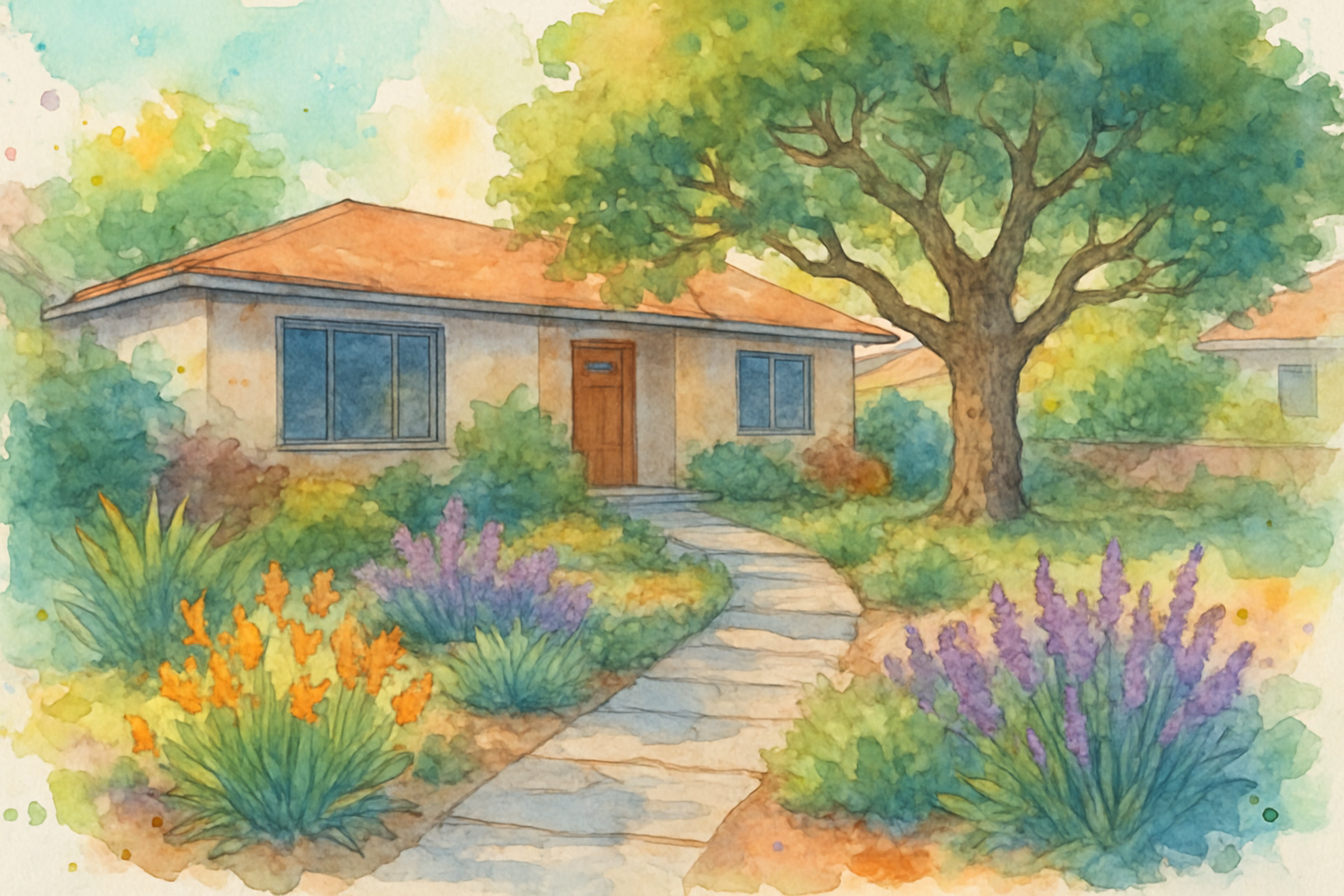
A good design phase starts with a site assessment. That means looking at sun exposure, soil type, existing drainage patterns, mature trees, and what’s already growing. In neighborhoods like Los Gatos and Saratoga, where properties back up to foothill terrain, slope stability and fire-resistant planting choices become part of the conversation early.
From there, a contractor puts together a planting plan — which species go where, at what spacing, with what soil prep. This is also when irrigation zones get mapped. A drip system for native plants is set up completely differently than spray irrigation for a lawn.
If you’re replacing a damaged or dying yard entirely, the design phase may also include decisions about ground cover, decomposed granite, pavers, or other non-plant surfaces. Projects like the Willow Glen outdoor space renovation show how design, installation, and tree work can all come together when the right planning happens upfront.
Expect the design phase alone to take 2–4 weeks depending on property size and scope.
Installation: What Happens After the Design Is Approved
Once the plan is set, installation moves in a specific order. Skipping steps — or doing them out of sequence — is one of the most common reasons landscaping projects fail within the first two years.
A proper installation sequence looks like this:
1. Site prep and grading — clearing debris, adjusting grade for drainage
2. Soil amendment — adding compost, mulch, or amendment based on soil test results
3. Irrigation rough-in — laying mainlines and lateral lines before planting begins
4. Planting — trees and large shrubs go in first, then mid-size plants, then ground cover
5. Irrigation finish and testing — connecting heads, setting zones, running a full test cycle
6. Mulching — protecting soil moisture and suppressing weeds at every plant base
7. Cleanup and walkthrough — final review with the homeowner, documentation of what was planted and where
If the project includes hardscape elements — a paver pathway, a fire pit patio, or a retaining wall — those typically happen before planting, not after. You can see how a Los Gatos backyard transformation handled this sequencing from a construction zone to a finished outdoor living space.
Installation timelines vary, but a full front yard project in San Jose typically runs 1–2 weeks of active work.
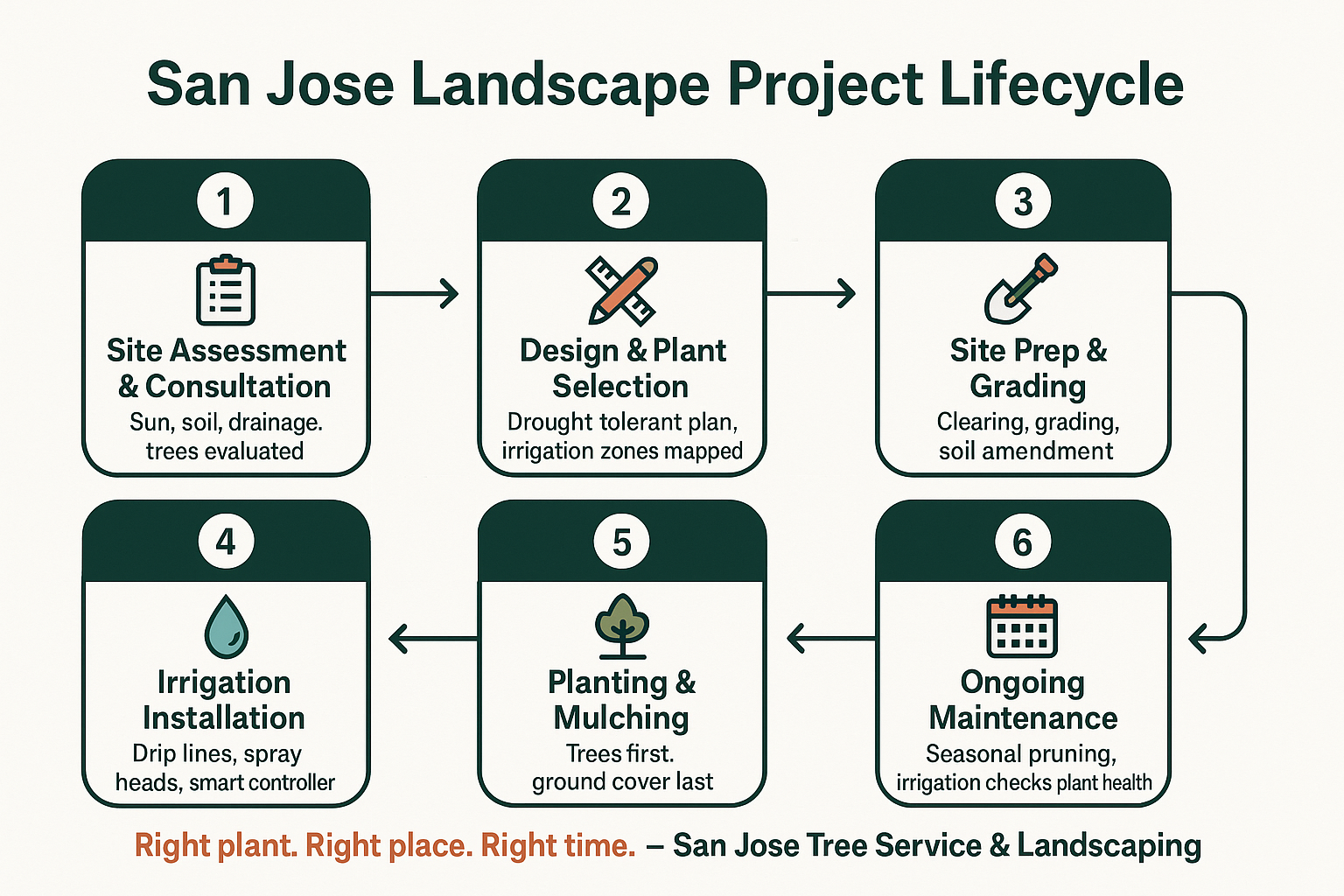
The Landscape Project Lifecycle: From First Call to Long-Term Care
This infographic maps the typical stages of a San Jose landscape project — from initial consultation through ongoing seasonal maintenance.
Drought-Tolerant Landscaping: Why San Jose Homeowners Are Making the Switch
Santa Clara Valley Water District has offered rebates of up to $2 per square foot for turf replacement with drought-tolerant alternatives. That’s real money on a typical 500–1,000 square foot lawn conversion project.
But the cost savings from water bills are even more significant over time. A traditional lawn in San Jose can use 40–50 gallons of water per square foot per year. Native and drought-adapted plants can cut that number by 50–70% once established.
Common choices for South Bay properties include California fescue, manzanita, salvia, rockrose, and ornamental grasses. In yards with mature trees — particularly coast live oaks — plant selection needs to account for root competition and the tree’s summer dry preference. Choosing good trees to plant in San Jose goes hand-in-hand with choosing the right plants around them.
The right combination of trees, shrubs, and ground cover creates a yard that looks full and cared for — without constant irrigation or weekly maintenance.
San Jose Landscape Service Cost Ranges (2025–2026)
Costs vary by property size, existing conditions, and materials selected. These ranges reflect typical residential projects in San Jose and surrounding communities.
| Service | Typical Cost Range | Key Variables |
|---|---|---|
| Landscape Design (residential) | $500 – $2,500 | Property size, complexity, included revisions |
| Full Front Yard Installation | $8,000 – $25,000+ | Square footage, plant selection, irrigation scope |
| Turf Removal & Replacement | $3,000 – $12,000 | Lawn size, replacement material chosen |
| Drip Irrigation Installation | $1,500 – $6,000 | Zone count, smart controller, property size |
| Ongoing Maintenance (monthly) | $150 – $450/month | Yard size, service frequency, seasonal needs |
| Paver Pathway or Patio | $4,000 – $18,000 | Square footage, paver type, site prep required |
| Xeriscape Conversion | $5,000 – $20,000 | Lawn area replaced, plant density, gravel/DG use |
Long-Term Property Care: What Maintenance Actually Covers
Installation is only the beginning. A landscape that doesn’t get consistent care will look good for a season and then start to decline — especially in San Jose’s climate, where dry summers stress new plantings and winter rains can encourage disease.
A proper maintenance program covers:
- Seasonal pruning — shaping shrubs, removing dead growth, keeping plants from crowding each other
- Irrigation checks — adjusting watering schedules by season, repairing broken heads or emitters
- Fertilizing — matching soil amendments to what plants actually need, not a generic schedule
- Weed management — hand-pulling and pre-emergent application before weeds get established
- Mulch replenishment — refreshing mulch annually to protect roots and hold soil moisture
- Plant health monitoring — catching early signs of stress, disease, or root problems before they become expensive
For properties with significant trees, maintenance also means watching for signs of trouble. If a tree starts showing yellow leaves or unusual growth patterns, that’s a signal to get a proper assessment — not something to wait on.
The homeowners who get the most out of their landscapes are the ones who treat maintenance as ongoing care, not a reaction to problems.
Permits, HOAs, and Local Rules You Should Know
San Jose has specific regulations that apply to landscape projects. Knowing them in advance saves time and money.
Tree removal on private property in San Jose may require a permit, especially for protected species like valley oaks, blue oaks, and native riparian trees. The City of San Jose’s Urban Forestry division enforces these rules — and violations can result in significant fines.
Irrigation systems connected to the municipal water supply must comply with the Bay Area’s model water efficient landscape ordinance, which sets maximum water use allowances based on property area and climate zone.
HOA requirements vary widely. In planned communities across Almaden Valley and parts of Saratoga, HOAs may have their own plant lists, color palettes, or restrictions on hardscape coverage. Always check with your HOA before beginning a design phase.
If your project involves grading of 50 cubic yards or more, a grading permit from Santa Clara County may be required. Your contractor should know this — if they don’t, that’s worth noting before you sign anything.
For properties with mature trees in the project area, getting a certified arborist involved early protects both the trees and the new landscape investment.
How to Evaluate a Landscape Contractor in San Jose
The biggest mistake homeowners make is hiring based on price alone. The second biggest is hiring someone without checking their license.
Here’s what to actually look for:
- Active CSLB C-27 license — verify it yourself at cslb.ca.gov before any conversation goes further
- Workers’ compensation and general liability insurance — ask for certificates, not just verbal confirmation
- Local portfolio — have they worked in San Jose, Willow Glen, Campbell, or similar neighborhoods? Can they show you completed projects?
- References you can actually call — not just reviews, but homeowners willing to speak with you
- Written contract — scope of work, materials list, timeline, and payment schedule all in writing
- Permit knowledge — do they know San Jose’s tree ordinance and water efficiency requirements, or do you have to explain it to them?
A contractor with both a C-27 (Landscape) and C-61/D-49 (Tree Service) license can handle tree and landscape work together — which matters on properties with mature trees, where root systems, canopy coverage, and planting zones all interact.
If a landscape project might also affect existing trees, you want someone who understands both sides — not a contractor who treats trees as obstacles to work around.
Frequently Asked Questions About San Jose Landscape Contractor Services
Do I need a permit for landscaping work in San Jose?
Most planting and irrigation work does not require a permit. But tree removal, significant grading, and some hardscape projects may trigger permit requirements with the City of San Jose or Santa Clara County. Your contractor should know which permits apply to your project before work begins.
What’s the difference between a landscape contractor and a gardener?
A gardener handles routine maintenance — mowing, trimming, cleanup. A licensed landscape contractor (C-27) can design, install, and build full landscape systems including irrigation, grading, and planting. Gardeners do not hold a contractor’s license and cannot legally do installation work.
How long does a typical landscape installation project take in San Jose?
A front yard project usually takes 1–2 weeks of active installation once design is approved. Design and planning can take 2–4 weeks before that. Larger backyard projects or those involving significant hardscape may run 4–8 weeks total.
Can a landscape contractor also handle trees on my property?
A C-27 landscape license does not cover tree work. Tree pruning, removal, and health assessments require a separate C-61/D-49 tree service license. Some contractors hold both licenses, which allows them to manage trees and landscapes together — which is especially helpful on properties with mature trees that need to be protected during installation.
Is drought-tolerant landscaping really less expensive to maintain?
Yes — once established, typically after 1–2 full growing seasons. Water bills drop significantly, and well-chosen native plants need far less fertilizing and spraying than traditional lawns. Santa Clara Valley Water District also offers rebates up to $2 per square foot for qualifying turf replacement projects, which helps offset installation costs.
Ready to Talk Through Your Property?
San Jose Tree Service & Landscaping holds both a C-27 Landscaping license and a C-61/D-49 Tree Service license — one of the few contractors in the South Bay that can manage trees and landscapes together under a single licensed contractor. If you have questions about a design project, a yard that needs restoration, or just want to know what your options are, reach out at (408) 422-1313 or visit sanjosetreemaintenance.com to learn more about what’s possible for your property.
