 Skip to content

Direct Answer: Small irrigation problems — a stuck valve, a broken head, a slow leak — compound fast. Water waste, plant loss, and soil damage make a $50 fix a $500 problem within one dry season.
Most homeowners notice the sign early — a wet patch near the sidewalk, a sprinkler head that won’t pop up, a water bill that crept up $40 last month. And most homeowners do the same thing: they file it away and plan to deal with it later.
In San Jose and the surrounding South Bay, that decision has a real price tag. Water rates through San Jose Water Company have climbed steadily, and even a single stuck-open valve can waste thousands of gallons per month before anyone realizes what’s happening.
This article looks at what actually goes wrong when irrigation problems sit untreated — and what that delay costs in dollars, in plant loss, and in the soil damage that a landscaper eventually has to correct.
The Compounding Cost of a Slow Leak
A small irrigation leak doesn’t stay small. A cracked lateral line or a worn valve seal can push out 30 to 50 gallons per hour — even when the system is off.
At San Jose Water Company’s tiered rates, residential customers in Tier 3 and Tier 4 can pay $8 to $12 per hundred cubic feet. That one slow leak can add $60 to $120 to a single month’s water bill, and most homeowners don’t catch it for two or three billing cycles.
By the time you’ve traced the spike back to the irrigation system, you’ve already spent $200 to $300 on wasted water — before a single repair has been made.
And that’s the best-case version, where the only damage is to the bill. In neighborhoods like Willow Glen and Almaden Valley, where mature landscaping and established plant beds define property character, the secondary damage is often worse:
- Root rot in trees and shrubs near the leak zone
- Crown dieback on plants that get flooded at the base but dry at the canopy
- Soil compaction and erosion along slopes or planting borders
- Fungal disease pressure that spreads from overwatered areas
If you’ve noticed signs your irrigation system isn’t actually working correctly, those symptoms are often the result of a problem that was present long before it became obvious.
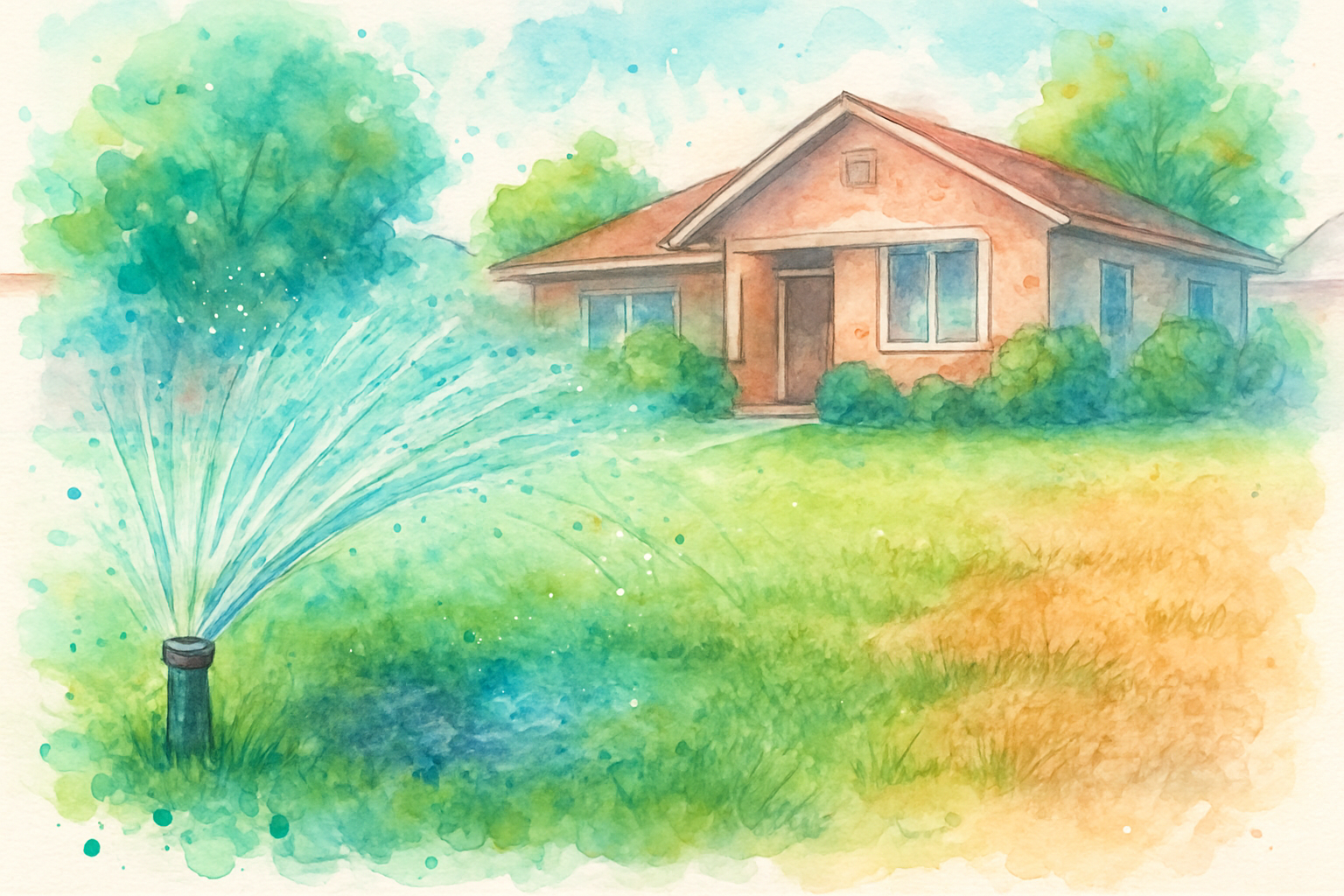
What a Broken Sprinkler Head Actually Does to Your Plants
A misaligned or broken sprinkler head looks like a minor nuisance. But the real problem is what it does to the watering pattern across your entire yard.
When one head in a zone fails or gets knocked out of position, the plants it was supposed to cover don’t get water. Meanwhile, the plants adjacent to the break often get double the intended output from neighboring heads trying to compensate.
In Silicon Valley’s dry summers — where June through October can bring almost zero rainfall — an uneven watering zone can kill established shrubs within four to six weeks. Replacing a mature Indian hawthorn or a five-year-old Japanese boxwood in Saratoga costs $80 to $200 per plant just for the material, before labor and soil prep.
A broken sprinkler head itself might cost $8 to $25 to replace. The plant bed it killed can cost $600 to $2,000 to restore, depending on what was growing there and how long the problem ran.
This is why working with a landscape contractor who understands both irrigation and plant health matters. A contractor who only fixes the head and walks away misses the plant assessment entirely.
What Waiting Costs: Irrigation Problems vs. Repair Timelines
These are real-world cost ranges based on typical South Bay residential properties. Costs go up the longer a problem runs unaddressed.
| Problem | Fix Cost if Caught Early | Cost if Left 60–90 Days |
|---|---|---|
| Broken sprinkler head | $25–$75 (parts + 30 min labor) | $600–$2,000 (head + dead plant replacement) |
| Stuck-open valve | $100–$250 (valve replacement) | $300–$600 (repair + water bill overage) |
| Cracked lateral line | $150–$400 (dig and repipe) | $400–$900 (repair + soil restoration) |
| Clogged drip emitter | $15–$40 (emitter swap) | $200–$800 (replace dead shrubs or groundcover) |
| Controller programming error | $0–$75 (reprogramming) | $500–$3,000+ (overwatered root zones, tree damage) |
When Irrigation Errors Reach Your Trees
This is the part most homeowners don’t think about until it’s serious.
Trees in residential landscapes are connected to the same irrigation zones as lawns and shrubs — but they don’t need the same watering schedule. Turf might need water two or three times a week during summer. A mature oak or a valley oak in Almaden Valley does better with deep, infrequent watering — or none at all during the dry season if it’s established.
When an irrigation controller is mis-programmed, or when a valve sticks open and floods a zone repeatedly, tree root zones can stay saturated for weeks. That kind of prolonged moisture around the root crown triggers Phytophthora root rot — a soil-borne pathogen that can kill a tree slowly over one to three years.
By the time the tree shows visible decline — thin canopy, early leaf drop, branch dieback — the root system may already be severely compromised. At that point, even a skilled arborist is working to slow the decline, not reverse it.
Tree removal in San Jose for a large, failing specimen can run $1,500 to $6,000 or more, depending on size and access. That’s not counting stump grinding or any required permits through the City of San Jose’s tree protection ordinance.
If you’ve noticed a tree declining near an irrigation zone, it’s worth getting a proper arborist assessment before assuming the tree has a disease problem. The irrigation system is often where the story actually starts.
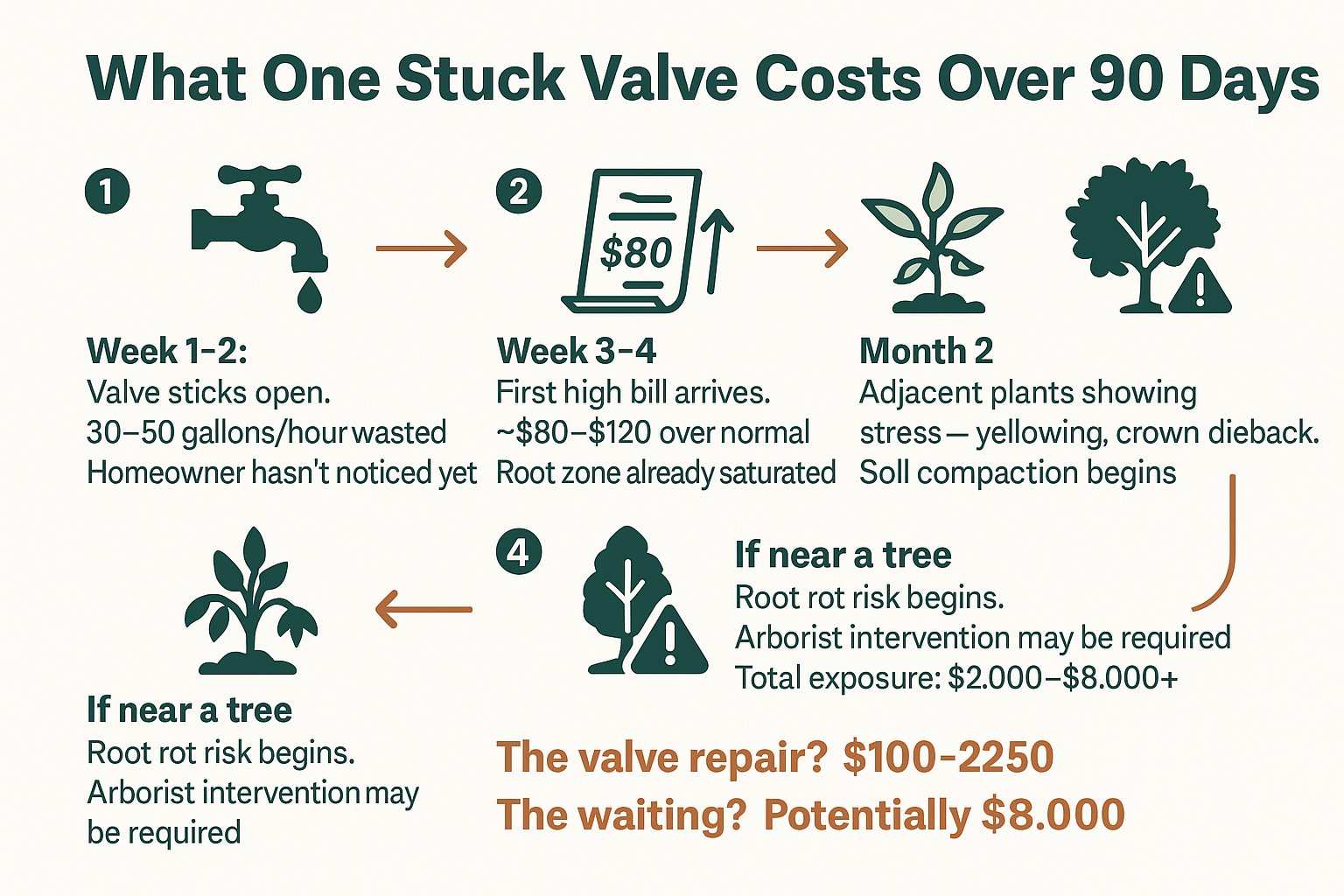
The True Cost Timeline: One Broken Valve Left Unrepaired
This infographic shows how a single stuck irrigation valve compounds in cost across a 90-day window — from water waste to plant loss to potential tree damage.
The Controller Problem Nobody Catches
Most homeowners set their irrigation controller once — usually in spring — and don’t touch it again until something breaks.
But controllers don’t automatically adjust for seasonal changes. A schedule programmed for a hot August in Los Gatos will massively overwater the same property in November, when rainfall returns and temperatures drop. And an old controller that loses its programming after a power outage may default to a daily watering cycle — running every zone every day until someone notices.
San Jose Water Company has issued conservation notices in multiple recent years, and during mandatory restriction periods, an unchecked controller running daily watering can result in fines starting at $100 per violation under Santa Clara Valley Water District rules.
Beyond the fine, the sustained overwatering changes the soil structure. Clay soils common in South Bay neighborhoods become compacted and anaerobic. That compaction doesn’t fix itself when you finally correct the schedule — it requires aeration, soil amendment, or in serious cases, regrading.
A well-designed landscape built for the Silicon Valley climate should have an irrigation schedule that changes at minimum four times per year, stepping down from peak summer output through fall and cutting back to little or no supplemental water through winter for most established zones.
Frequently Asked Questions About Irrigation Problems and Repair Costs
My water bill went up but I don’t see any wet spots. Could it still be an irrigation leak?
Yes, and this is actually the most common pattern. Subsurface lateral line cracks can push water straight down into the soil without pooling at the surface — especially in sandy or loamy soils common in parts of Saratoga and Campbell. The leak can run for weeks without any visible sign above ground. A pressure test on your system will usually locate it within an hour.
How do I know if my sprinkler problem has already damaged my plants?
Look for yellowing leaves on otherwise healthy plants, wilting in the morning before heat sets in, or early leaf drop on shrubs. In trees, watch for thin canopy, bark that looks sunken or discolored at the base, or mushrooms growing near the root zone. Those last two are signs of possible root rot and worth a professional look before you assume it’s something else.
Can a landscaper fix irrigation, or do I need a separate irrigation contractor?
A licensed landscape contractor holding a C-27 license is legally authorized to install and repair irrigation systems in California. You don’t need a separate irrigation-only contractor. What you do want to confirm is that whoever you hire has actual experience with irrigation diagnostics — not just installation. Ask specifically whether they do pressure testing and zone-by-zone audits.
Is it worth upgrading to a smart controller to prevent this?
For most South Bay homeowners with established landscaping, yes. Smart controllers that connect to local weather data can cut outdoor water use by 20 to 40 percent and automatically suspend watering after rainfall. The upfront cost runs $150 to $400 installed, but the payback period in water savings is often under two years at current San Jose Water Company rates.
My irrigation has been running wrong for months. What should I fix first — the system or the plants?
Fix the system first. There’s no point replacing plants or treating soil while the irrigation problem is still active. Once the system is corrected and running properly, give the soil two to three weeks to stabilize, then assess what actually needs replanting versus what might recover on its own. Some stressed plants rebound quickly once watering returns to normal.
Have an Irrigation Issue You’ve Been Putting Off?
San Jose Tree Service, Inc. holds an active C-27 landscaping license and works with homeowners across San Jose, Almaden Valley, Los Gatos, and Saratoga to diagnose and correct irrigation problems before they become full landscape repairs. If something in your system doesn’t look right — or your water bill has been climbing without explanation — reach out at (408) 422-1313 or visit sanjosetreemaintenance.com to ask a question or set up a time to take a look.
