 Skip to content

Direct Answer: SB 894 created the California Wildfire Resilience Loan Program, a low interest loan fund for home hardening and defensible space work. The statute takes effect January 1, 2027, but launch depends on future state budgets.
If you own a home in the Almaden Valley foothills or up off Highway 9 in Saratoga, you already know the drill. Your insurer wants clearance, the county wants the weeds down, and the quote to get it all done is not small.
So here is news worth paying attention to. In October 2026, Governor Newsom signed SB 894, the Wildfire Mitigation Affordability Act, creating the California Wildfire Resilience Loan Program for home hardening and defensible space work.
I want to walk through what that law actually does, what it does not do yet, and what the work costs in the meantime so you can plan around it instead of guessing.
What the California defensible space loan program under SB 894 actually created
SB 894 was authored by Sen. Ben Allen, D-Pacific Palisades, and passed the Legislature with unanimous, bipartisan support. It sets up a state backed, low interest loan program so property owners can finance home hardening and defensible space improvements instead of paying for everything out of pocket.
The program will be run by the State Treasurer’s Office. Loans are structured as a revolving fund, similar to the state’s GoGreen financing platform, which means repayments go back into the pool to fund the next borrower rather than the whole thing running on a one time grant.
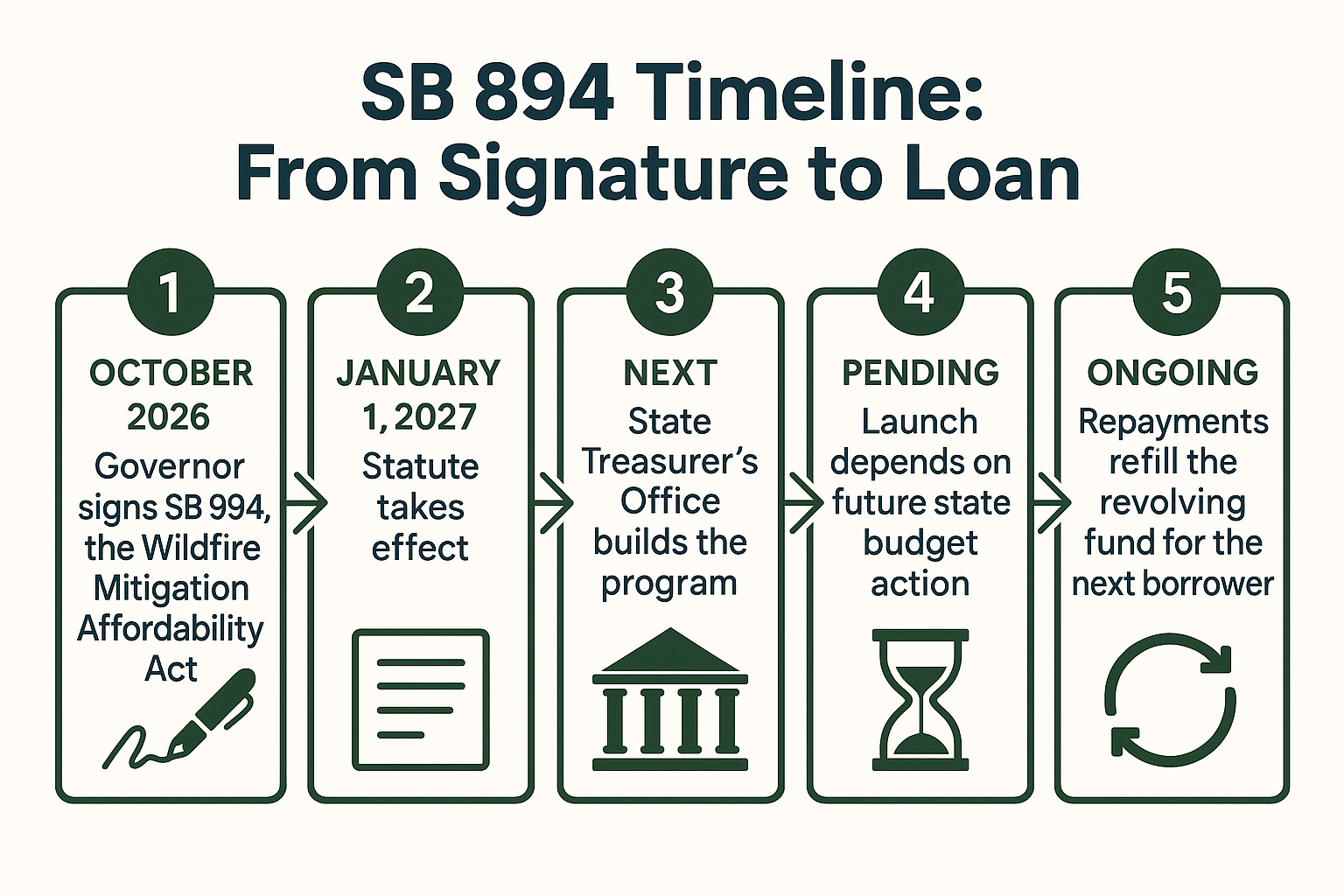
Two dates matter for planning:
- October 2026 – the bill was signed into law
- January 1, 2027 – the statute takes effect
And here is the part most coverage glosses over. SB 894 did not appropriate any funding. Its actual launch depends on future state budget action, so the loan window opening is not the same thing as the law taking effect.
I would treat this as a real option on the horizon, not a reason to pause work you already need done. More detail on the program is in our write up on the new state loan program for home hardening and defensible space.
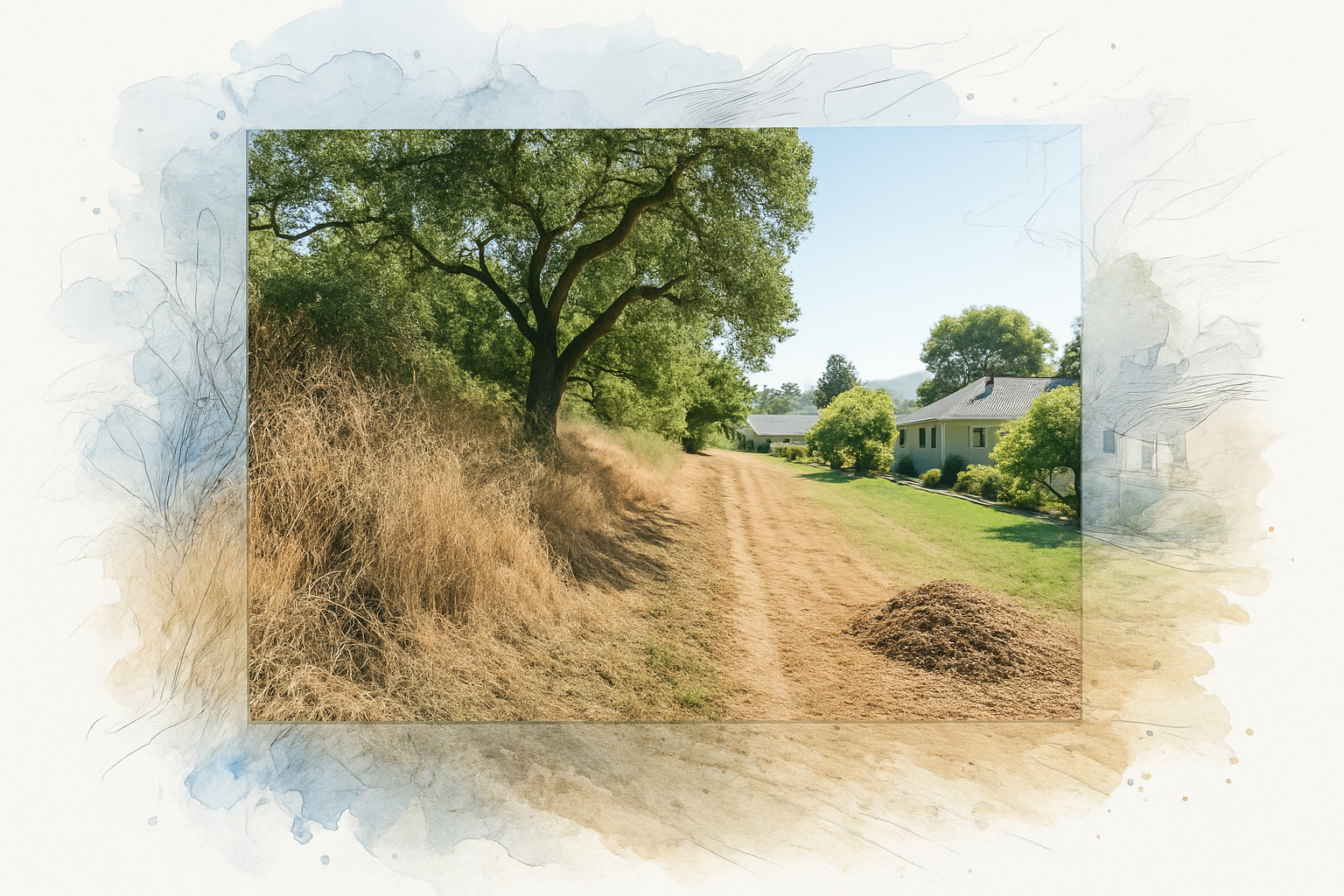
Who this is likely to help in Santa Clara County
The people I expect to benefit most are the ones already getting letters they did not ask for. Insurance non renewal notices, county abatement notices, and HOA clearance requests all tend to land in the same households.
Based on how the program is described, it is aimed at property owners, which in our service area means:
- Homeowners in fire prone foothill pockets around Saratoga, Los Gatos, and the upper edges of Almaden Valley
- HOAs managing shared slopes, private roads, and common area greenbelts
- Small commercial property owners with real acreage behind the building
A few years back, a cash flow problem was the only thing standing between a homeowner and the work. I have had people tell me flat out that they wanted the brush gone before the rains, but the budget was going to the roof that year.
Below market financing changes that math. Spreading a brush clearing and limbing project across monthly payments is a very different conversation than writing one check in August.
One caution. Nothing about this program changes permit rules. San Jose still regulates street trees in the park strip, and pruning counts, not just removal. Saratoga has its own framework, which I covered in our piece on Saratoga’s updated tree rules and the five foot zone.
What Defensible Space Work Involves and What Drives the Price
Costs vary a lot property to property, so I am not going to pretend there is one number. What I can do is show you what each type of work involves and what actually moves the quote up or down.
| Type of work | What it usually involves | What drives the cost |
|---|---|---|
| Brush and fuel reduction | Cutting and hauling dry grass, broom, and dead understory | Lot size, slope steepness, truck access, haul distance |
| Tree limbing and ladder fuel removal | Raising low limbs, pulling deadwood, separating canopies | Tree height, species, proximity to the roof and power lines |
| Hazardous tree removal | Taking down a dead or structurally failed tree near a structure | Rigging difficulty, equipment needed, permit requirements |
| Fire wise landscape changes | Replacing flammable plantings near the house, adjusting irrigation and hardscape | Square footage, plant selection, condition of existing irrigation |
| Zone 0 clearing | Clearing combustible material in the first five feet around the structure | How much is there now, fencing, bark mulch, stored items |
What this work tends to run, and why cheap bids worry me
Pricing moves with terrain more than anything else. A flat quarter acre in Willow Glen with a driveway the chipper can back into is a different job than a 30 degree slope above a creek in Los Gatos with a hundred feet of hand carry.
Generally speaking, homeowners in our area see brush and fuel reduction land anywhere from several hundred dollars on a small, accessible lot to several thousand on steep acreage. Limbing mature oaks for ladder fuel clearance often falls somewhere in the middle. Those are ballpark market figures, not a quote, and the only way to get a real number is to have someone walk the property.
When a bid comes in far under everyone else, something usually got left out. The common omissions I see:
- Debris disposal priced separately or skipped entirely
- No workers compensation or liability coverage behind the crew
- No license verification, which you can check yourself on the CSLB site
- Topping sold as fire safety, which creates weak regrowth instead of a safer tree
If you want the state standard for what defensible space is supposed to look like, CAL FIRE’s defensible space guidance lays out the zones plainly. The first five feet is the part most people have never been told about, and the rule for that zone is still in progress, which I explained in our update on Zone 0’s legal status.
SB 894 Timeline at a Glance
Here is the sequence from signature to the first loan, including the step that is still outstanding.
What I would do between now and 2027
Waiting on a loan program that is not funded yet is a risky plan if you have a deadline in front of you. Santa Clara County enforces its own vegetation height standard, and if you ignore a notice the county can send its own contractor and attach the bill to your property tax statement. We broke the numbers down in our post on what missing the weed abatement deadline costs.
My practical order of operations:
- Get an assessment first. Know what actually needs to come out, what needs limbing, and what is fine as is. Proper assessment before action saves money more often than it adds cost.
- Handle anything with a deadline now. County notices, insurance clearance requirements, and dead trees leaning toward a structure do not wait for a budget cycle.
- Stage the rest. Fire wise planting changes, irrigation upgrades, and larger landscape work are the pieces that could reasonably wait for financing.
- Keep your documentation. Photos, scope of work, and a written report make your case with an insurer and would likely help with any loan application.
One more thing. Removal is not the default answer to fire risk. A properly limbed, well spaced mature oak is an asset, and the goal is safety, health, and longevity.
Frequently Asked Questions About the SB 894 Loan Program
When can I actually apply for one of these loans?
No application date has been announced. The statute takes effect January 1, 2027, but because SB 894 did not appropriate money, the program’s launch depends on future state budget action. Watch the State Treasurer’s Office for program details.
What kind of work would the loan cover?
The program is written for home hardening and defensible space improvements, which includes vegetation clearance and fuel reduction. Specific eligible costs have not been published yet, so I would not assume any particular item qualifies until the Treasurer’s Office spells it out.
Does an HOA qualify, or is it homeowners only?
The bill is described as helping property owners, and coverage has referenced both homeowners and businesses. HOAs with common area slopes should be watching this closely, though the eligibility rules will be set when the program is built out.
Can I get an idea of cost without paying for a site visit?
Yes. A lot of people prefer to send photos first for a rough estimate before committing to an on site visit, and that works fine for straightforward brush and pruning questions. For a tree you are worried about structurally, photos only go so far and an on site arborist consultation is the better call.
Will doing this work help with my insurance?
Many carriers in the foothills now ask for documented clearance, and homeowners tell us it comes up during renewal. I cannot promise what any specific insurer will do, but having photos and a written scope of the work completed gives you something concrete to hand them.
Planning defensible space work in San Jose or the foothills?
If you are trying to figure out what your property actually needs before any loan program opens, a walkthrough with an arborist is the honest starting point. We work throughout San Jose, Los Gatos, Saratoga, and Campbell, and we are glad to talk through what is urgent and what can wait. Reach us at (408) 422-1313 or sanjosetreemaintenance.com when you are ready.
