
Direct Answer: Valley Water’s landscape conversion rebate pays $2 per square foot, up to $3,000, but your application must be approved and a pre-inspection completed before any work begins, or you forfeit the rebate.
A lot of homeowners in San Jose and Almaden Valley know the rebate exists. They’ve heard the number, up to $3,000, and figured they’d pull out the lawn, put in some drought-tolerant plants, and collect a check. What they don’t realize until it’s too late is that the program has a strict sequence, and doing the work before you apply doesn’t just slow things down. It disqualifies you entirely.
I’ve talked with homeowners in the 95124 and 95130 zip codes who were genuinely surprised when they found out the application had to be approved, and a pre-inspection completed, before a single plant was pulled. The rebate isn’t a reimbursement for work you’ve already done. It’s a program with a defined process, and the process matters.
This article walks through what the program actually requires, what qualifies and what doesn’t, and how to think about the landscape plan itself so the conversion holds up when Valley Water sends someone to inspect it.
The Sequence Valley Water Requires, And Why It Disqualifies Most DIY Attempts
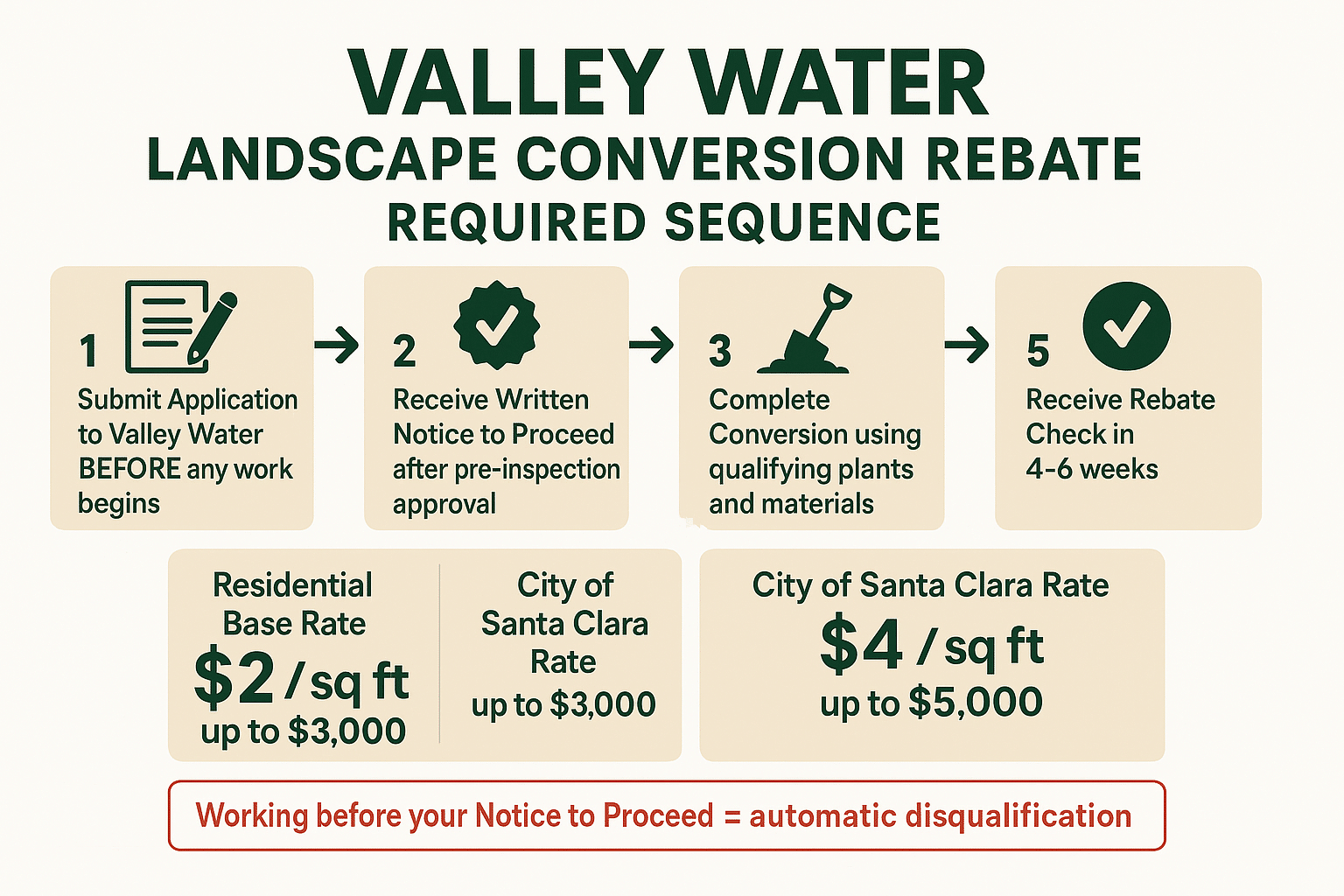
The Valley Water Landscape Conversion Rebate program pays Santa Clara County residents $2 per square foot to convert high-water-use turf to low-water landscaping, up to $3,000 for residential properties. The City of Santa Clara runs a separate program that goes further, $4 per square foot for the first 1,000 square feet, up to $5,000. For multifamily and commercial properties, the rebate cap reaches $100,000, which is why this program matters well beyond individual homeowners.
But the sequence is non-negotiable. Here is what it looks like in order:
- Step 1: Submit your application to Valley Water before touching anything
- Step 2: Receive a written Notice to Proceed confirming your pre-inspection is complete and work can begin
- Step 3: Complete the conversion using qualifying materials and plants
- Step 4: Submit post-installation photos for review
- Step 5: Receive your rebate check, typically within four to six weeks
Skipping or reversing any of these steps ends your eligibility. Valley Water issued 149 rebates totaling nearly $490,000 in just the January through March 2026 quarter, converting over 210,000 square feet of lawn across Santa Clara County. That is real money flowing through the program right now, but only to homeowners who followed the sequence.
The homeowners who get burned are the ones who hire a landscaper in the spring, do the work while the weather is good, and then apply afterward thinking the rebate is retroactive. It is not. Apply first, wait for the Notice to Proceed, then start digging.
What Qualifies and What Gets Your Rebate Denied
This is where a lot of well-intentioned conversions go wrong. Homeowners assume any low-water yard will qualify. But Valley Water’s program has specific eligibility rules, and some of the most common landscaping choices will get you denied.
What is NOT eligible:
- Artificial turf or fake grass, full stop, no exceptions
- Plastic weed cloth or plastic sheeting under the plants or mulch
- Bare gravel with no plant material
- Plants that don’t meet the California-friendly or low-water-use standard
What the program is looking for:
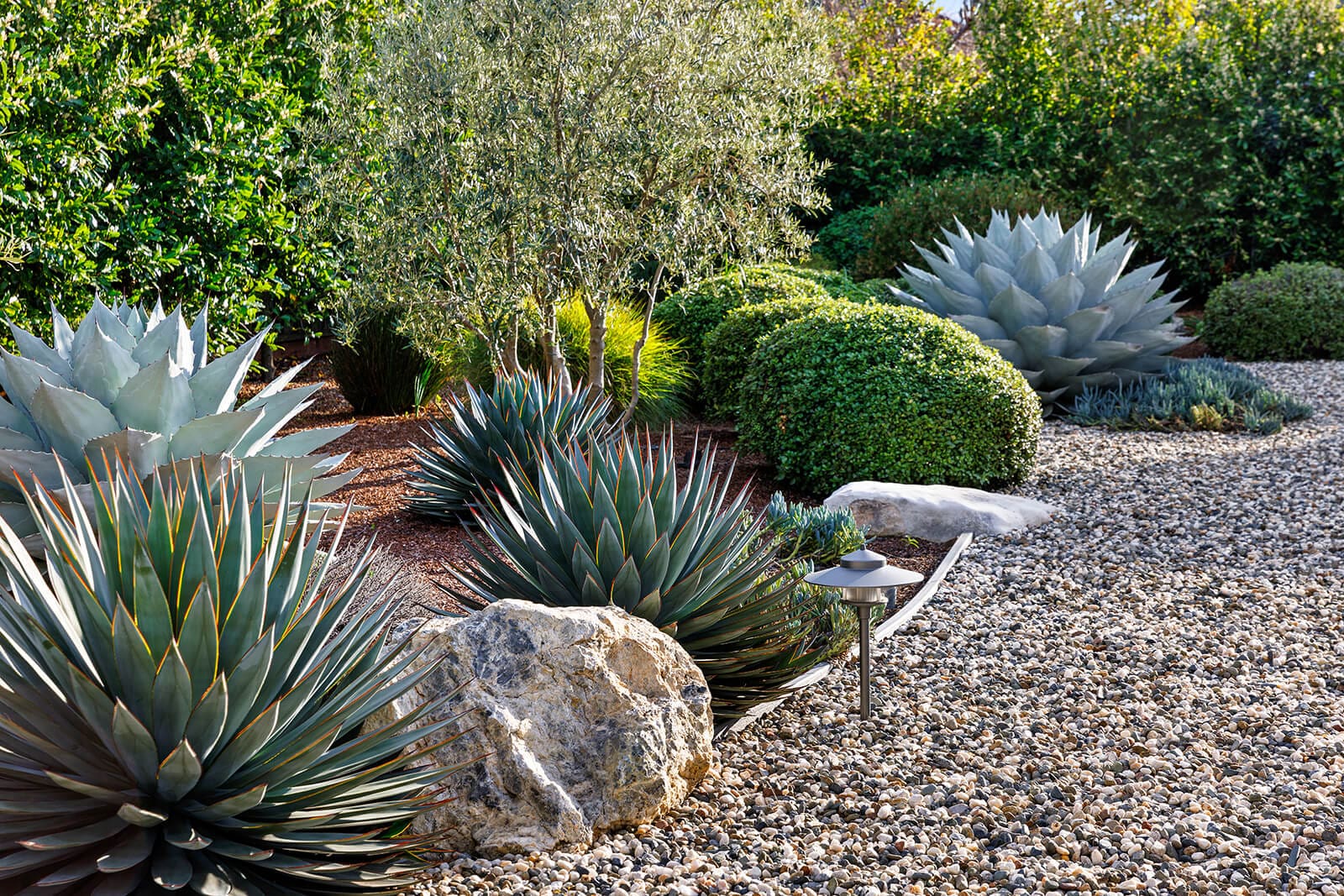
- California-native or drought-tolerant plants appropriate to our regional climate
- Natural fiber weed barriers that break down over time (jute, burlap), these are allowed
- Mulch coverage meeting minimum depth requirements
- A functioning, adjusted irrigation system that matches the new plant palette
The irrigation piece is worth slowing down on. A yard full of drought-tolerant plants connected to a timer still programmed for turf is going to over-water and stress the new plants. The point isn’t just to rip out the lawn, it’s to actually reduce water use. If your irrigation system needs to be recalibrated or redesigned to match the new plantings, that work should be part of the project plan from the start. A broken or mismatched irrigation system can quietly waste hundreds of gallons a week even when the plants theoretically need less.
I also want to flag the plant substitution issue. Valley Water reviews your plan before approving the project. If you submit a plan with specific plants and then make substitutions during installation without checking eligibility first, you risk a failed post-inspection. Putting the plan in writing before installation isn’t just good practice, it’s protection against a substitution that quietly disqualifies you.
The Valley Water Rebate Process at a Glance
This step-by-step overview shows the required sequence for the Valley Water landscape conversion rebate, from application through receiving your check.
Rebate Program Comparison: Valley Water vs. City of Santa Clara
These are the two main rebate programs available to Santa Clara County homeowners. The base rates and caps differ, so it is worth knowing which one applies to your property before you apply.
| Program | Rate Per Sq Ft | Residential Cap | Artificial Turf Eligible? | Pre-Approval Required? |
|---|---|---|---|---|
| Valley Water (Santa Clara County) | $2 | $3,000 | No | Yes, Notice to Proceed |
| City of Santa Clara (separate program) | $4 (first 1,000 sq ft) | $5,000 | No | Yes |
| Valley Water, Multifamily/Commercial | Varies | $100,000 | No | Yes, Notice to Proceed |
Why the Plant Selection Decision Is More Complicated Than It Looks
Picking drought-tolerant plants sounds simple until you are standing at a nursery looking at 40 options that all claim to be low-water. The real question isn’t just water use, it’s whether the plant works in your specific soil, sun exposure, and existing microclimate.
In Almaden Valley, for example, clay-heavy soils hold water longer than most homeowners expect. A plant that thrives in fast-draining sandy soil can rot in our clay if the irrigation isn’t adjusted to account for drainage time. I’ve seen conversions in that area where the plants looked great at installation and were struggling six months later because the soil and watering schedule weren’t matched up correctly.
Native plants are generally the safest bet for rebate eligibility and long-term performance. California native groundcovers, ornamental grasses, and low-water shrubs suited to the South Bay climate tend to establish quickly and require almost no supplemental irrigation once they root in. But the right species still depends on your specific conditions, shade coverage from existing trees, proximity to a fence or structure, and whether you have mature trees nearby whose root zones need to be respected.
If your project involves trees, especially if you are removing turf that has been covering the root zone of a mature oak or sycamore, the conversion process may affect the tree. How landscape design interacts with mature trees is something worth thinking through before the planting plan is finalized, not after.
For homeowners thinking about the broader outdoor living picture alongside their conversion, understanding what sets a real landscaping team apart from a general crew can help you ask better questions when you are vetting who does the work.
Frequently Asked Questions About the Valley Water Landscape Conversion Rebate
Can I apply for the rebate after the work is already done?
No. Valley Water’s program requires that your application be submitted and a pre-inspection completed before any work begins. Work done before you receive a written Notice to Proceed is not eligible, regardless of how good the finished yard looks.
Does artificial turf qualify for the rebate?
No. Artificial or synthetic turf is explicitly excluded from the program. Installing fake grass will result in a denial. The program is designed to reduce actual water consumption, and synthetic turf doesn’t do that.
What if I want to change some of the plants after my plan is approved?
This is a real risk. If you substitute plants during installation without confirming that the new selections still meet eligibility requirements, you could fail the post-installation inspection. The safest approach is to confirm any changes with Valley Water before making them, not after the plants are already in the ground.
Does my irrigation system need to change as part of the conversion?
Not necessarily replaced, but almost certainly adjusted. A system programmed for turf will over-water drought-tolerant plants, which stresses them and defeats the purpose of the conversion. At minimum, your irrigation schedule should be recalibrated to match the water needs of the new plant palette. In some cases, drip irrigation makes more sense than spray heads for the new layout.
How long does it take to receive the rebate check after the work is done?
Valley Water’s timeline is typically four to six weeks after your post-installation photos are submitted and reviewed. That assumes the inspection goes smoothly. Build that timeline into your expectations before you start.
Is plastic weed cloth allowed under the mulch?
No. Plastic sheeting and plastic weed barriers are excluded. Natural fiber weed barriers, jute, burlap, and similar materials that break down over time, are allowed. If you’re not sure whether a specific product qualifies, check with Valley Water before installation.
Thinking About a Lawn Conversion in San Jose or Almaden Valley?
If you are weighing a turf conversion and want to make sure the plant selection, irrigation adjustments, and overall plan hold up to Valley Water’s inspection process, we are glad to talk it through. We work with homeowners throughout San Jose, Los Gatos, Campbell, and the surrounding South Bay, and we understand the soils, microclimates, and existing trees that shape what actually works here. Reach us at (408) 422-1313 or visit sanjosetreemaintenance.com to learn more.
