 Skip to content

Direct Answer: Stump grinding chips the stump down below ground level but leaves the roots. Full stump removal takes out the entire root system. Most homeowners need grinding — full removal is only worth the extra cost and disruption in specific situations.
After a tree comes down, the stump sitting in your yard feels like unfinished business. Most homeowners assume there’s one standard way to deal with it — but there are actually two very different approaches, and choosing the wrong one can cost you more money or create more problems down the road.
Stump grinding and stump removal are not interchangeable terms. They involve different equipment, different levels of disruption to your yard, and different outcomes for what’s left underground. In San Jose neighborhoods like Willow Glen and Almaden Valley — where lots are mature and roots run deep — the difference matters more than people expect.
This article explains exactly what each method involves, what it costs locally, and which situations call for which approach. No sales pitch. Just a clear breakdown so you can make an informed decision.
What Stump Grinding Actually Does — and Doesn’t Do
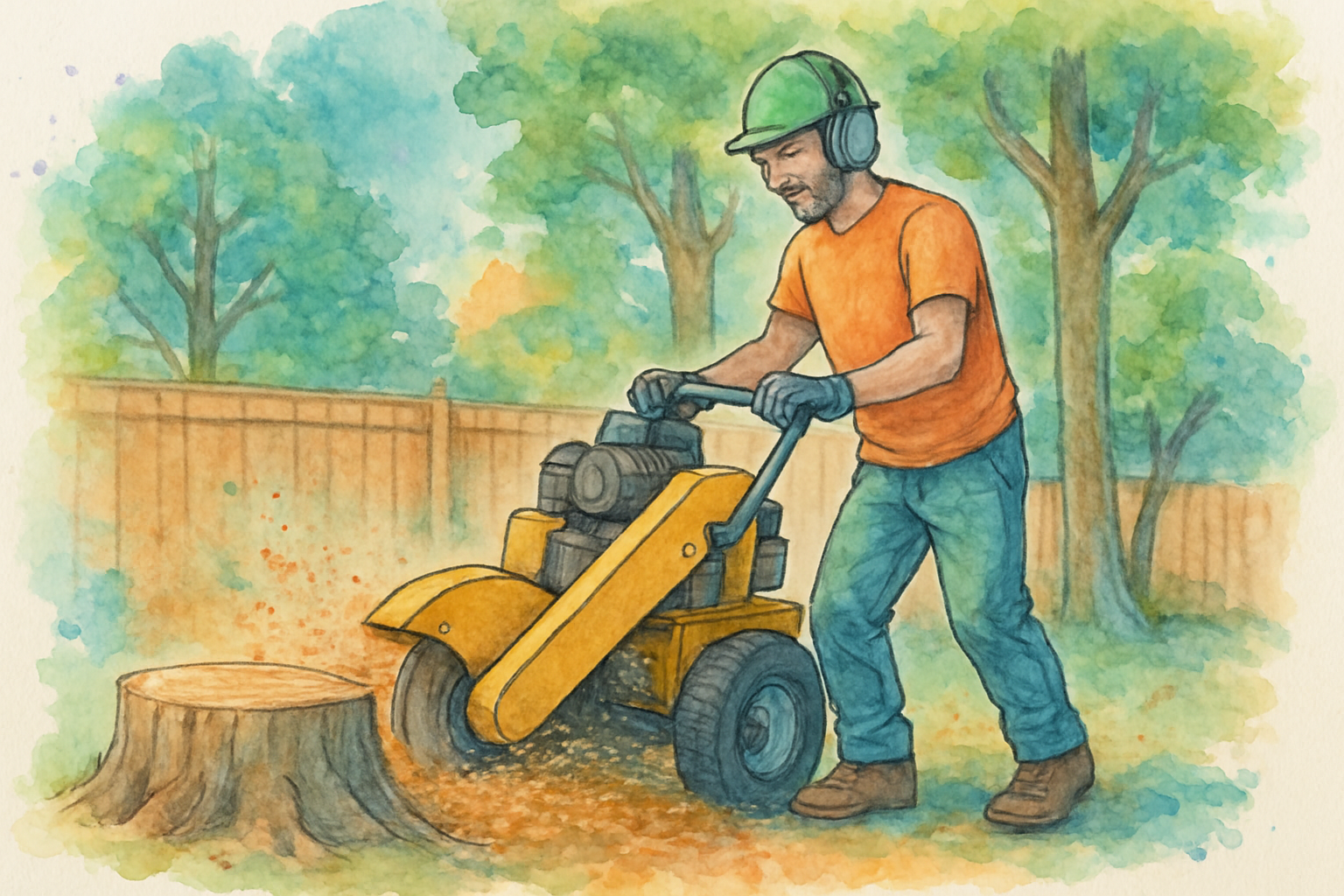
Stump grinding is by far the most common approach, and for good reason. A grinding machine — essentially a large rotating cutting wheel — chips the stump down 6 to 12 inches below grade, turning solid wood into a pile of mulch-like chips.
What you’re left with:
– The stump is gone from sight and no longer a tripping hazard
– The root system stays in the ground and decays naturally over 3 to 10 years depending on the species
– A mound of wood chips fills the hole, which you can use as mulch or have hauled away
– The area is plantable with grass or groundcover within a few months
The key limitation is that the roots remain. For most homeowners, that’s completely fine. But if those roots were growing near a foundation, a sewer line, or a hardscape area you plan to replace, it’s worth thinking through before you choose grinding over full removal.
In San Jose, stump grinding typically runs $150 to $400 for a single stump, depending on diameter and accessibility. Large stumps from valley oaks or eucalyptus trees — common in older Willow Glen and Campbell properties — can push toward the higher end of that range. If you’re curious about what happens to a stump if you just leave it, the short answer is: it eventually decays, but it can attract pests and create a tripping hazard for years in the meantime.
What Full Stump Removal Actually Involves
Full stump removal means taking out not just the visible stump, but the entire root ball underneath it. This is a significantly larger job.
Depending on the tree species and stump size, this can involve:
– An excavator or backhoe to dig around and under the root system
– Manual cutting of anchor roots before the stump can be lifted
– A hole 3 to 6 feet deep and wide that needs to be backfilled
– Disposal of a substantial amount of root material
The result is a clean slate — nothing left underground. If you’re planning to pour a concrete patio, build a retaining wall, or replant a large tree in that exact spot, full removal eliminates any future conflict with decaying root material.
The cost reflects the added labor and equipment. Full stump removal in the San Jose area commonly runs $300 to $800 or more for a mid-sized stump, and larger root systems — like those under a 30-inch coast live oak — can cost significantly more. The excavation also leaves your yard in much rougher shape than grinding does, so budget for some basic grading and topsoil work afterward.
Full removal is also the right call when roots have already caused damage to hardscape or underground utilities, because grinding won’t address what’s already spread beneath the surface. If you’ve been dealing with landscape issues tied to tree roots, the Tree Stump Removal Guide for San Jose Homeowners covers root-related considerations in more detail.
Stump Grinding vs. Full Removal: Side-by-Side Comparison
Here’s a direct comparison of both methods so you can weigh what actually matters for your property.
| Factor | Stump Grinding | Full Stump Removal |
|---|---|---|
| What’s removed | Stump (6–12″ below grade) | Stump + entire root ball |
| Roots left behind | Yes — decay naturally | No — fully excavated |
| Yard disruption | Low — small chip pile | High — large excavation hole |
| Typical San Jose cost | $150–$400 per stump | $300–$800+ per stump |
| Recovery time | Plantable in 2–3 months | Requires backfill and grading |
| Best for | Most residential situations | New construction, hardscape, replanting |
| Equipment needed | Stump grinder | Excavator or backhoe |
How to Choose: A Simple Decision Framework
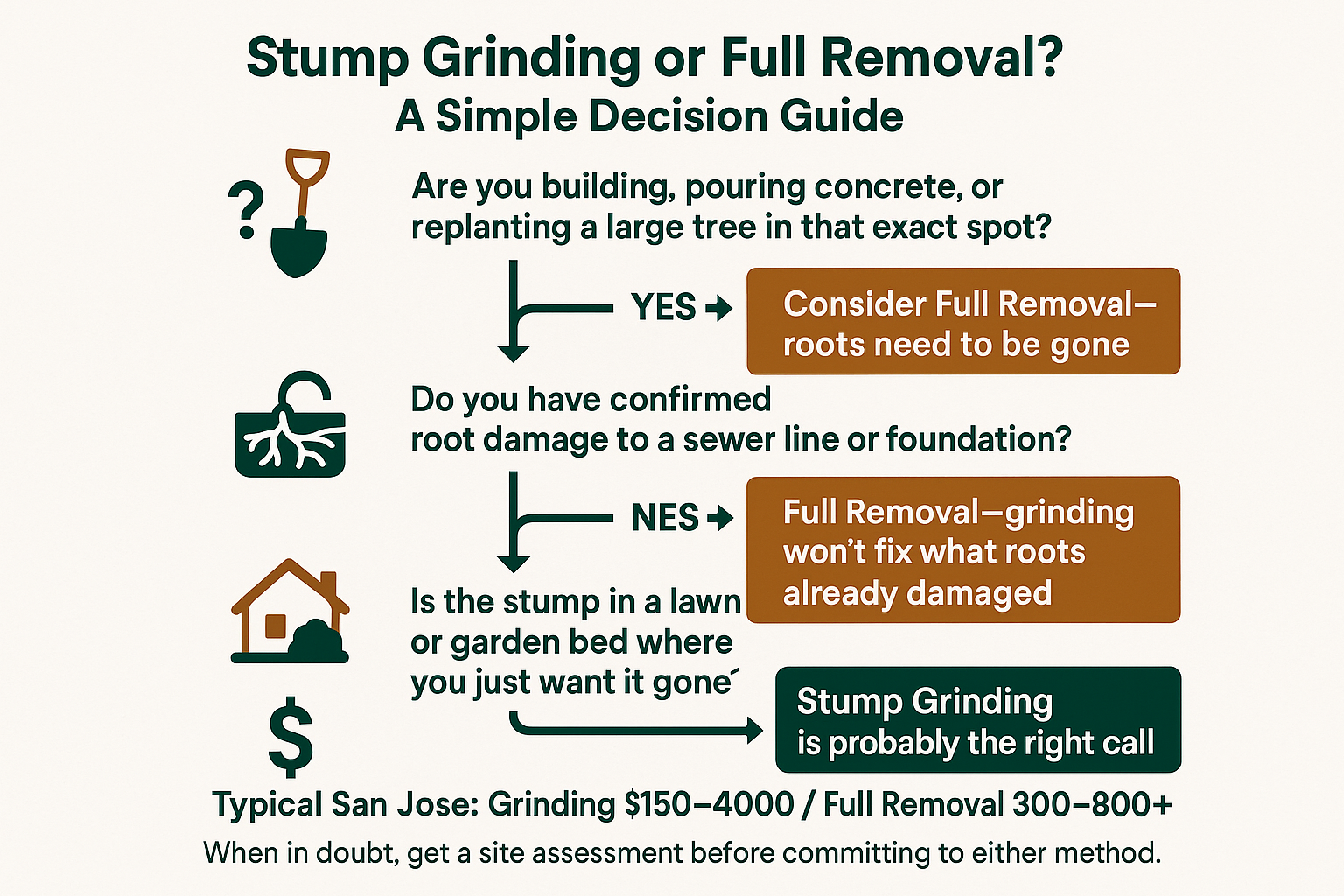
Use this decision flow to figure out which option fits your situation before you call anyone for a quote.
The Situations Where Full Removal Is Worth the Extra Cost
Most of the time, grinding is the practical choice. But there are real scenarios where paying more for full removal makes sense — and skipping it creates a bigger problem later.
You’re installing hardscape directly over the area. A grinding job leaves roots underground that will continue to decay. In tight soil like you find in older Saratoga and Los Gatos properties, that decay creates settling, and settling cracks pavers and concrete. If you’re investing in a new patio or driveway — and paving stone work in San Jose can easily run $15 to $25 per square foot — you don’t want roots rotting underneath it.
You want to replant a large tree in the same spot. A new tree planted over old root material competes with it for space and drainage as the old roots decay. Full removal gives the new planting clean soil to establish in.
The roots caused a utility or drainage problem. Grinding the stump won’t undo damage already done underground. If a large root invaded a sewer lateral — a common issue on older streets in San Jose’s Willow Glen neighborhood — you need excavation work anyway, and full removal often gets bundled in.
For a deeper look at how tree roots interact with property infrastructure over time, the certified arborist assessment guide explains what a proper site evaluation covers before any work is recommended.
A Note on Permits and HOA Rules in San Jose
This often catches homeowners off guard. In San Jose, certain trees are protected under the city’s Heritage Tree Ordinance, and removing a stump from a protected tree — or any work following a removal — can fall under permit review if the original removal required a permit.
Neighborhoods like Willow Glen and the Almaden Valley have active HOAs with landscape guidelines, some of which specify how stumps must be handled and how quickly the visible evidence of a removed tree must be addressed after work is complete.
If you’re unsure whether your removal project required a permit, or whether a permit is needed for the stump work, it’s worth checking before any equipment shows up. An arborist familiar with San Jose’s municipal code can sort this out quickly. The what does a certified arborist actually do article breaks down how that kind of permit guidance works in practice.
Frequently Asked Questions About Stump Grinding and Stump Removal
Can I plant grass over a ground stump right away?
Not immediately. After grinding, the area is filled with wood chips mixed into the soil. Wood chips pull nitrogen out of the soil as they break down, which makes it hard for grass to establish. Wait 2 to 3 months, rake out as much chip material as possible, and top-dress with clean topsoil before seeding or laying sod.
Will the roots from a ground stump keep growing after the tree is gone?
No. Once the tree is removed, the roots have no energy source and can’t grow. They decay in place over time. The decay timeline depends on the species — hardwoods like oak take longer than softwoods. This is generally not a problem unless the roots are adjacent to a structure or utility line.
How much does stump grinding cost in San Jose?
Typically $150 to $400 per stump for a standard residential job. Stump diameter is the biggest price driver — most contractors charge per inch of diameter at ground level. A 12-inch stump is a very different job than a 36-inch valley oak stump. Access also matters: if the grinder can’t get close to the stump without crossing tight gates or landscaping, expect the price to reflect that.
What happens to the wood chips after grinding?
You have two options. You can leave them in place — they’ll break down over the coming months and enrich the soil. Or you can have them hauled away for an additional fee, usually $50 to $100 for a standard load. Many homeowners in Almaden Valley and Los Gatos use the chips as mulch around garden beds, which is a practical way to reuse them.
Is stump grinding safe near a fence or retaining wall?
Generally yes, but proximity matters. A skilled operator can grind within 6 to 8 inches of a fence or wall without causing damage. If the stump is immediately against a structure, some root material may need to be left in place. Always point out any underground irrigation lines before grinding starts — those are the most common source of accidental damage during stump work. If you’ve had irrigation issues in the past, this article on why sprinkler problems get expensive when you wait is worth reading beforehand.
Do I need to be home when stump grinding is done?
Most of the time, no — as long as there’s clear access to the stump and you’ve flagged any known irrigation lines or underground features. Confirming gate codes, clearance dimensions for equipment, and any nearby plants you want protected is usually enough pre-work for a straightforward job.
Not Sure Which Option Is Right for Your Stump?
A quick site visit makes this an easy call in most cases. San Jose Tree Service & Landscaping serves homeowners across San Jose, Los Gatos, Campbell, Saratoga, and the surrounding South Bay — and a straightforward stump assessment takes about 15 minutes on-site. You can reach us at (408) 422-1313 or visit sanjosetreemaintenance.com to get a clear answer before any equipment shows up at your property.
