
Direct Answer: Weed abatement in San Jose means clearing dry vegetation from your property to reduce fire risk. Notices are enforced in summer, and ignoring them can result in fees added directly to your property tax bill.
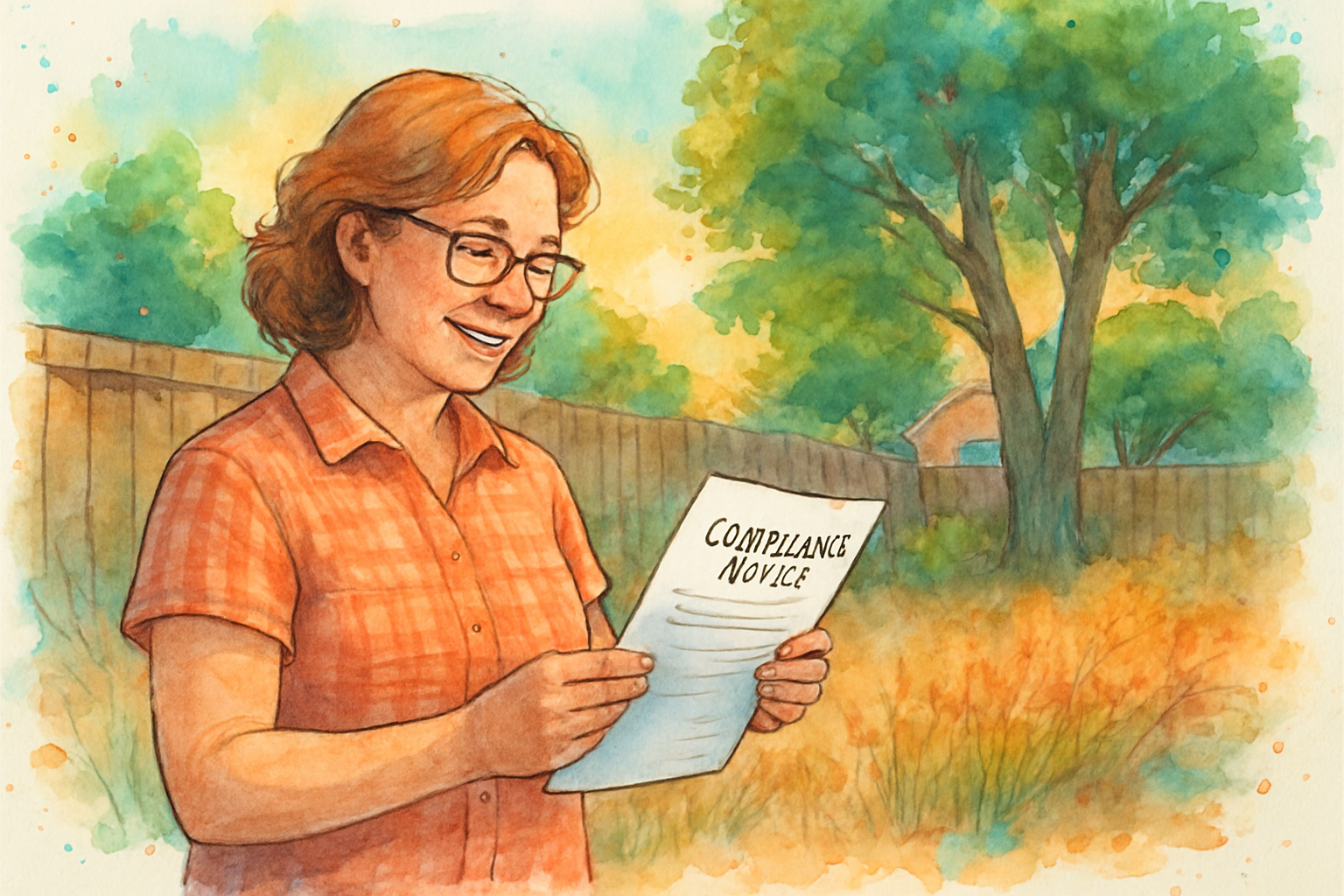
Every spring, my phone starts ringing with the same kind of call. A homeowner got a notice in the mail, they’re not sure what it means, and they’re worried about what happens if they don’t handle it in time. Weed abatement is one of those topics where the official language makes everything sound more complicated than it is — and the consequences of misunderstanding it are real.
San Jose sits in a region where dry summers turn unmaintained vegetation into a genuine fire hazard. Neighborhoods in Almaden Valley, the Cambrian foothills, and anywhere near the Los Gatos or Saratoga hillsides know this well. But the compliance questions apply across the city — not just in the high-risk zones.
Below are the questions I hear most often, answered as plainly as I can. If your situation has layers — like mature trees in the clearing zone or a notice with a hard deadline — read through to the end.
What does weed abatement actually mean?
At its simplest, weed abatement means removing or cutting down dry, dead, or overgrown vegetation that could fuel a fire. In San Jose and most of Santa Clara County, property owners are legally required to do this on their own land before the dry season sets in.
This is not about aesthetics. It is a fire safety ordinance, and it is enforced.
Typically, the requirement covers:
– Cutting grass and weeds to a specified height
– Removing dead vegetation, fallen limbs, and accumulated dry debris
– Clearing brush within a defined distance from structures
– Maintaining that clearance through the fire season
The exact language in your notice will reference either the City of San Jose, Santa Clara County, or a fire district — and which agency sent it matters for what you are required to do and by when. More on that below.
Is this the city program or the county — and does it matter?
It matters more than most people realize. San Jose has its own weed abatement enforcement program administered through the city. Santa Clara County runs a separate program for unincorporated areas. If you live inside San Jose city limits, your notice comes from the city. If you are in a county pocket or an unincorporated area near the Los Gatos or Saratoga borders, the county is the authority.
The two programs share the same general goal but may have different:
– Deadlines and inspection windows
– Required clearance distances
– Fee structures for non-compliance
– Appeal processes
Always read the notice carefully for the issuing agency’s contact information. Calling the wrong office wastes time you may not have if a deadline is close.
How tall can weeds be before I’m out of compliance?
The typical threshold cited in San Jose’s weed abatement requirements is 4 inches for cut vegetation — meaning after you clear, grass and weeds should be cut to no more than 4 inches in height. However, the specific standard in your notice may reference different measurements depending on the zone, parcel size, or proximity to structures.
Do not guess at this. Read the notice, or call the issuing agency directly. The number on the paperwork is the number that counts.
What counts as ‘the first five feet’ — and why does it matter most?
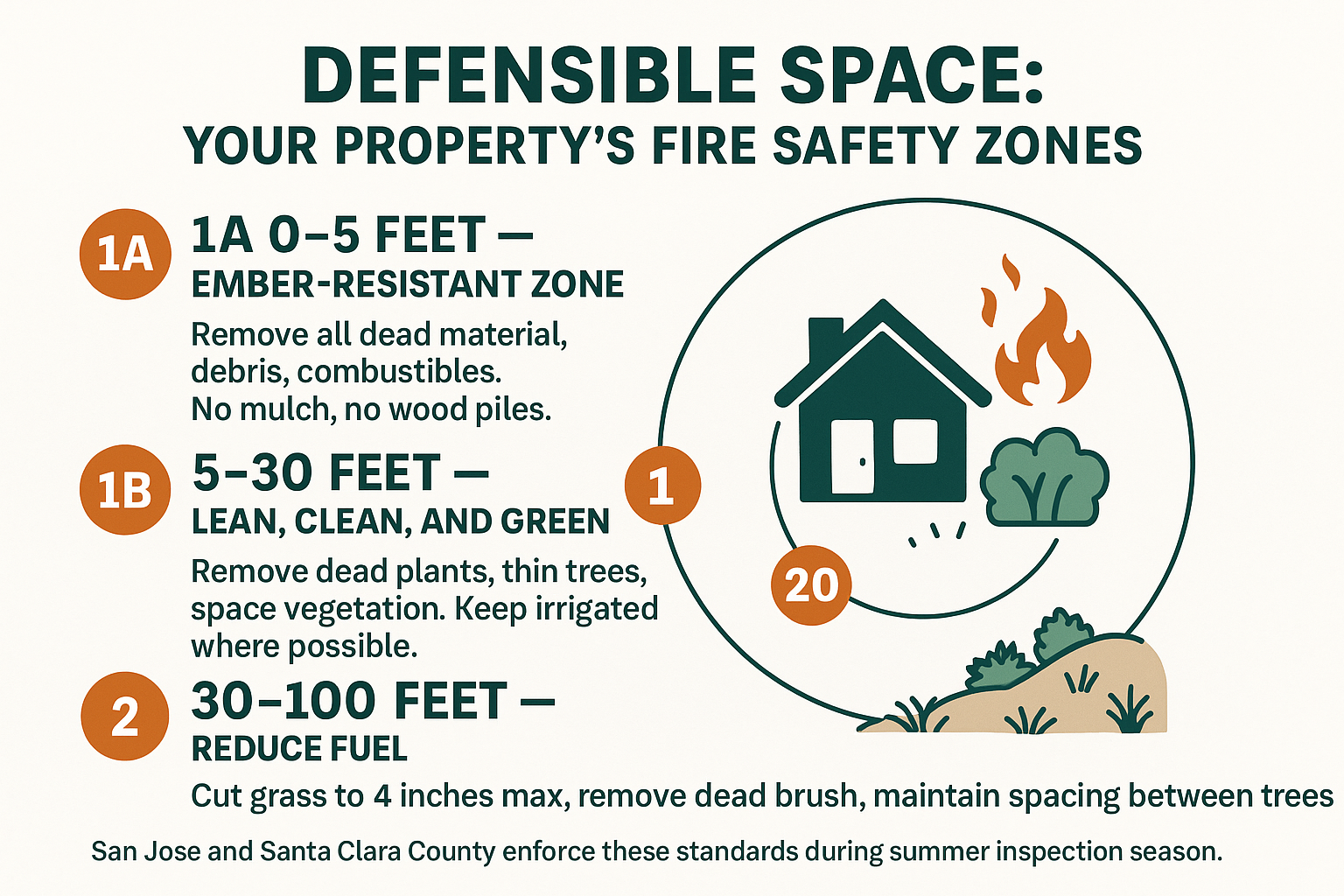
CAL FIRE’s defensible space framework divides the area around a structure into zones. The first five feet immediately surrounding your home — sometimes called the ember-resistant zone — is the highest-priority area for clearing.
This is not just about flames reaching your house. It is about embers. During a fire event, burning embers travel far ahead of the flame front and land in dry vegetation, mulch, or debris right next to your foundation. That is how most homes ignite.
Practically, this means:
– Remove all dead plant material, dry leaves, and loose debris within 5 feet of the structure
– Avoid storing firewood, mulch piles, or combustible materials in this zone
– Keep any vegetation in this zone green, low, and well-spaced
The first five feet is not cosmetic. It is the zone that determines whether embers find fuel or nowhere to land. Clearing it is not optional if you are in a fire-risk area — and in many San Jose foothill neighborhoods, you are.
Defensible Space Zones: What the First 100 Feet Around Your Home Means
This breaks down the CAL FIRE defensible space requirements by zone, so you know what is expected at each distance from your structure.
What happens if I ignore the notice?
This is where it gets expensive. If you do not clear your property by the deadline on the notice, the issuing agency can hire a contractor to do it for you. That contractor will clear the property — on their schedule, on their terms — and bill the county or city for the work.
That cost then gets added to your property tax bill as a special assessment. It does not go away, it accrues interest, and it follows the property. I have spoken with homeowners who were genuinely surprised to find a multi-hundred-dollar charge on their tax statement after assuming the notice would just expire.
Beyond the money, there is a record. A pattern of non-compliance can complicate things with your insurance carrier — and in California’s current home insurance market, that is a problem nobody needs.
If you have received a notice and the deadline is close, treat it as a hard deadline.
When is the enforcement window — and is clearing once enough?
Summer is the primary compliance and enforcement window in San Jose. Most inspections happen between May and October, when vegetation is dry and fire risk is at its peak. But clearing in May and assuming you are done for the year is not a plan.
Fall brings the first rains, which trigger fast regrowth. That regrowth can be significant by the time the next inspection cycle starts. Properties that were cleared in early summer but left unmanaged through September often look completely different by November.
A more realistic approach is two clearing passes — one before the summer inspection window and one in fall to manage regrowth before it gets ahead of you. If you have trees that were affected by the previous wet season, that fall pass becomes even more important, since storm damage creates additional deadwood and debris that feeds right into the fire fuel load.
Weed Abatement Timing: What Happens When
The enforcement calendar in San Jose follows a predictable pattern. Here is a general breakdown of what to expect across the year.
| Season | What’s Happening | What You Should Be Doing |
|---|---|---|
| March–April | Notices begin arriving; vegetation still green | Review your notice, plan your clearing approach |
| May–June | Primary clearing deadline in most years | Complete initial clearing before deadline |
| July–September | Active inspection window; enforcement at peak | Re-check cleared areas; remove new regrowth |
| October–November | First rains arrive; fast regrowth begins | Second clearing pass to manage regrowth |
| December–February | Off-season; new notice cycle begins in spring | Address any storm debris and deadwood accumulation |
Do you handle clearing around mature trees?
Yes — and this is actually one of the places where working with an arborist-led crew makes a real difference compared to a mowing company or a general labor crew.
Clearing brush and weeds around established trees is not straightforward. The root zone of a mature oak or cedar extends well beyond the canopy edge, and aggressive raking, grading, or equipment use in that area can damage feeder roots. The trunk flare — where the base of the tree widens into the roots — is especially vulnerable to soil disturbance and debris piling.
I have seen well-intentioned clearings that buried the trunk flare under displaced soil and debris, which creates moisture and decay problems over time. A crew that understands tree structure clears differently — staying out of critical root zones, avoiding trunk contact, and identifying which plants in the understory are worth protecting versus what genuinely needs to go.
This matters especially in neighborhoods like Willow Glen and Almaden Valley where mature trees are part of the property’s character. If you want to know more about what a trained arborist looks for during this kind of work, this breakdown of what a certified arborist actually evaluates covers it well.
What is this going to cost me?
Weed abatement costs vary considerably based on the size of the property, how dense the growth is, whether there are trees involved, and how much debris needs to be hauled away. I am not going to give you a number that may have nothing to do with your actual situation.
What I can tell you is that a proper site assessment before any work begins is the right starting point. It is how we understand the scope, identify what needs care around trees, and give you a number that reflects your actual property — not a generic estimate.
A few factors that typically drive cost:
– Lot size and terrain — a flat quarter-acre is different from a sloped half-acre in Almaden
– Density of growth — thick brush takes more time and equipment than thin, dry grass
– Proximity to structures and trees — careful hand work near trunks and foundations takes longer
– Debris volume and haul-off — more material means more disposal cost
For an exact number, the right call is to schedule a walkthrough.
Frequently Asked Questions About Weed Abatement in San Jose
I got a notice but the deadline already passed. Is it too late?
Call the issuing agency immediately — do not wait. Some programs allow a brief extension if you contact them proactively and demonstrate you are taking action. Others move straight to contractor dispatch once the deadline passes. The worst thing you can do is ignore it further. Call the number on the notice today.
Can I just mow it myself, or do I need to hire someone?
For smaller, relatively flat lots with accessible vegetation, a homeowner with the right equipment can often handle basic clearance. But if the growth is dense, the lot has slopes, or there are mature trees involved with root zones and trunk flares that need to be respected, a professional crew will do it correctly and give you documentation that the work was done — which matters if the agency does a re-inspection.
My neighbor’s weeds are growing onto my property. Who is responsible?
You are responsible for your parcel. The notice will cite your property, and the compliance burden sits with you as the owner. You can certainly talk to your neighbor — and it is worth doing — but do not wait on that conversation if a deadline is approaching. Clear your side and document what you did.
Will clearing the brush hurt my trees?
Done carefully, no. Done carelessly, yes. The risk is not in the clearing itself — it is in how it is done. Avoiding soil compaction over root zones, not piling debris against the trunk, and not cutting surface roots are all things an experienced crew pays attention to. If you have older or recently stressed trees, having someone with an arborist’s eye lead the clearing is worth it. A professional tree assessment can flag any trees that need special handling before work begins.
Is weed abatement the same as general yard cleanup?
Overlapping but not identical. General yard cleanup is anything you do to maintain the appearance of your property. Weed abatement is a fire-safety compliance requirement with specific standards, deadlines, and legal consequences for non-compliance. The clearing work often looks similar, but the compliance documentation and the specific vegetation types that must be removed are dictated by the notice — not by what looks tidy.
Should I do anything about old stumps in the clearing zone?
Dead stumps and decaying wood are part of the fuel load calculation, so yes — they are worth addressing, especially if they are within the first 30 feet of your structure. Decomposing wood can also harbor the kind of debris and insect activity that spreads to nearby trees. If you have stumps in the defensible space zone, understanding what happens when you leave them in place is useful context before you decide how to handle them.
Have a notice in hand and questions about what it covers?
Robert leads every weed abatement walkthrough with an arborist’s perspective — what to clear, what to protect, and how to get you into compliance without doing unnecessary damage to the trees and plantings that define your property. If you are in San Jose, Almaden Valley, Willow Glen, Los Gatos, or the surrounding South Bay area, San Jose Tree Service & Landscaping is available to assess your property and talk through your options. Reach us at (408) 422-1313 or visit sanjosetreemaintenance.com to request an assessment.
