 Skip to content

Direct Answer: Old stumps stay biologically active for years — roots keep growing, some species resprout aggressively, and decaying wood draws pests and fungi long after the trunk is gone.
A lot of homeowners treat the stump as an afterthought. The tree comes down, the crew cleans up the wood, and the stump sits there looking harmless enough. A few months later, something unexpected starts happening — green shoots push up from the base, a section of lawn starts sinking, or mushrooms appear overnight around the edges.
This is one of the most common things we hear from homeowners across Willow Glen, Almaden Valley, and Los Gatos: they made the decision about the tree, but nobody told them that the stump decision was a separate one — and often the more consequential one for what happens to their yard next.
What follows covers the two situations where ignoring a stump causes real, ongoing damage: species that resprout and root systems that keep working underground. If you’re also weighing your removal options, we’d point you toward Stump Grinding vs. Stump Removal: Which One Do You Actually Need? for a side-by-side breakdown. But first, let’s talk about what the stump is actually doing after the tree is cut.
When the Stump Isn’t Dead — It’s Just Waiting
Some tree species don’t accept removal gracefully. Pittosporum is one of the most common examples we deal with in San Jose yards — it’s widely planted for privacy hedges, and it’s also one of the most aggressive resprouters in the region. Cut the trunk, leave the stump, and within a few weeks you can have dozens of new shoots pushing up from the root collar.
This isn’t just a cosmetic problem. Each new sprout that establishes is drawing energy from the root system, and roots from a mature pittosporum can run 10 to 15 feet from the trunk in any direction. If the stump is near a fence line, a walkway, or a foundation, those roots don’t stop at the property line.
The same principle applies to bamboo, though bamboo spreads through rhizomes rather than from the stump itself. We’ve worked with homeowners in Campbell and Santa Clara who are battling bamboo that originated in a neighbor’s yard — the rhizomes travel underground and continue spreading even after the above-ground canes are cut. Roots, in other words, operate on their own timeline. The trunk is just the most visible part.
If you’re seeing unexpected growth or surface changes after a tree removal, What Happens to a Stump If You Just Leave It in the Ground? walks through the full decay sequence and what to watch for.
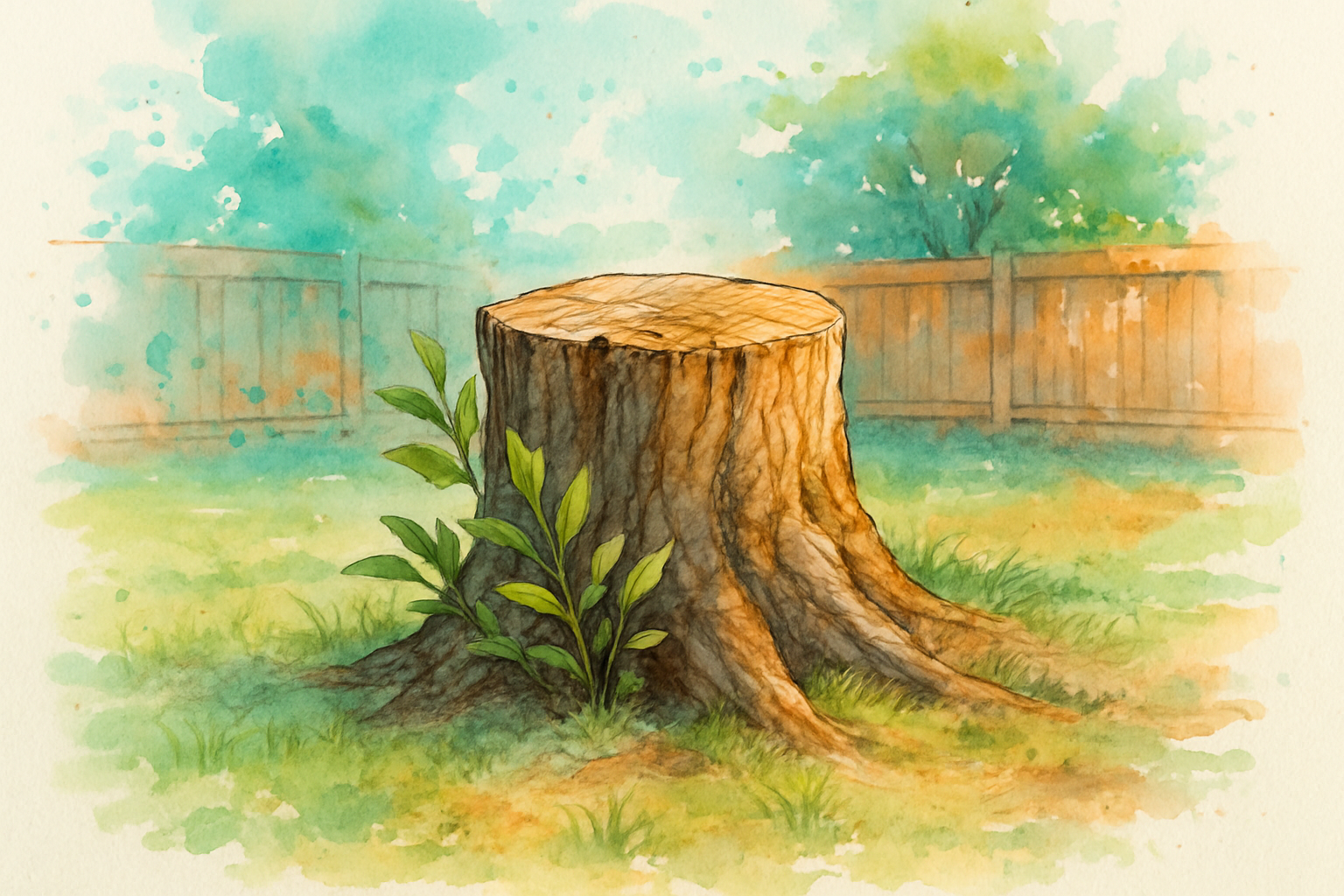
What Grinding Actually Does — and What It Leaves Behind
Stump grinding is the most common solution, and for most residential situations it’s the right one. A grinder removes the visible stump and grinds the wood down 8 to 12 inches below grade, leaving a pit of wood chips where the stump used to be. For most replanting and lawn restoration projects, that’s sufficient.
But grinding has real limits that homeowners should understand before committing to it.
What grinding does:
– Eliminates the above-ground stump completely
– Removes the main root flare down to 8–12 inches below the soil surface
– Stops or significantly slows resprouting for most species
– Creates a planting bed filled with wood chip material
What grinding leaves behind:
– The lateral root system, which can extend far beyond the grind zone
– Decaying roots underground that continue to break down over 5 to 10 years depending on species and soil conditions
– A wood chip-filled void that isn’t ideal for immediate replanting with large trees or deep-rooted plants
For most San Jose homeowners who want to lay sod, install low-growing plants, or pour a patio over the area, grinding is the practical answer. If you’re planning to plant a new large tree in the same spot or run an irrigation line through that zone, the decaying root mass underground matters more — and a full removal may be worth the extra cost. The Tree Stump Removal Guide for San Jose Homeowners covers the cost and scope differences in more detail.
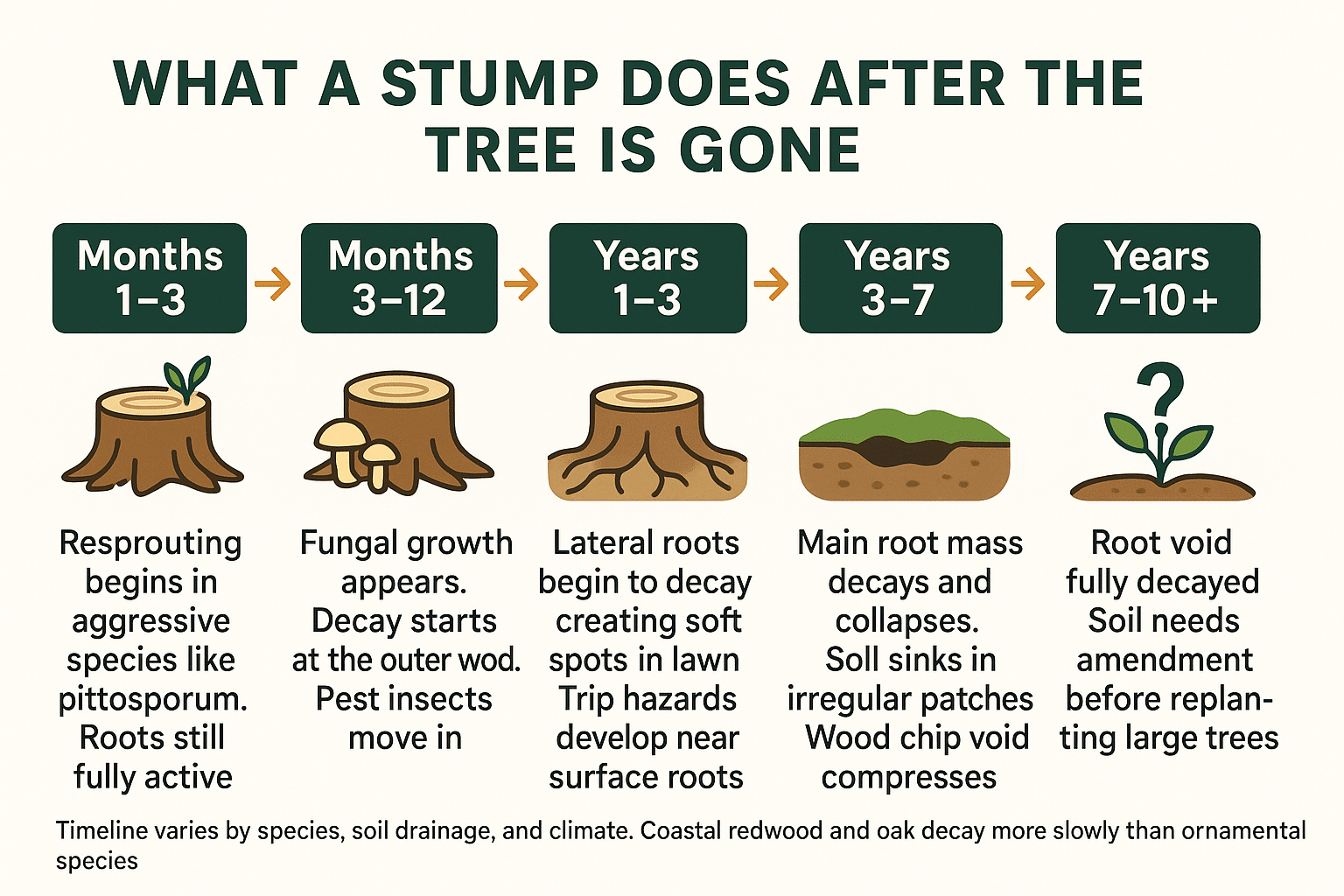
The Stump Timeline: What Happens Underground After Removal
This infographic shows the realistic timeline of what a ground stump does over the years — and when each type of problem typically shows up.
The Slow Problems Nobody Tells You About
An ignored stump doesn’t just sit there quietly decomposing. It becomes a slow-moving problem in at least three ways that tend to sneak up on homeowners.
Fungal growth and disease spread. Decaying wood is exactly what fungal pathogens need to establish. Once fungi take hold in a stump, spores can spread to nearby trees through root contact or soil. In older neighborhoods around Almaden Valley and Los Gatos — where mature oaks, redwoods, and ornamental trees are packed close together — this is a real concern, not a theoretical one.
Pests. Termites and carpenter ants are drawn to softening wood. A stump near the house perimeter is an invitation. We’re not in the pest control business, but we do regularly remove stumps where the homeowner has already dealt with an infestation that started in the decaying wood nearby.
Trip and mower hazards. This one sounds minor until it isn’t. A stump that’s been ground down to just below grade can heave slightly with winter rains or settle unevenly. Near a walkway or in the middle of a lawn in Willow Glen or Campbell, that creates either a mowing obstacle or a genuine trip hazard. Roots that were cut during grinding can also create raised ridges in the lawn as they decay unevenly over time.
For homeowners planning any kind of landscape work in the area afterward — hardscape, irrigation, new planting — it’s worth having someone assess the site before assuming the stump zone is clean. When Does a Tree Problem Require an Arborist — Not Just a Trimmer? covers how to know when a site assessment is genuinely needed.
What Can You Plant Over a Ground Stump — and What Should Wait?
After grinding, homeowners often want to know what’s safe to plant in that spot. The answer depends on what the roots left behind and how long ago the stump was ground.
| Planting Goal | Wait Time After Grinding | Why |
|---|---|---|
| Lawn / sod | 2–4 weeks | Wood chips need to settle and begin breaking down before sod roots can establish well |
| Groundcover or low shrubs | 1–3 months | Shallow roots won’t compete much with decaying material; amend soil with compost first |
| Drought-tolerant perennials | 2–4 months | Works well once wood chip material is mixed with native soil; good for xeriscaping projects |
| Large shrubs or ornamental trees | 12–18 months minimum | Root competition and soil chemistry from decaying wood can stress new plants in first year |
| Replacement tree (same spot) | 2–3 years or full removal | Decaying root mass and potential fungal presence make same-spot replanting risky without full removal |
The Cleanup Question: Why It Matters More Than It Sounds
Tree and stump work generates a lot of debris — wood chips, grindings, surface roots, and the residual mess around the grind zone. How that gets cleaned up affects everything that comes after: whether sod takes, whether new plants establish, and whether your yard looks like the job was actually finished.
Roughly a third of the reviews San Jose Tree Service & Landscaping has received specifically mention crew cleanup — phrases like “left everything spotless” and “swept up every last bit” come up again and again. That’s not accidental. A good cleanup after grinding means:
- Removing excess wood chip material or leveling it below grade
- Raking the surrounding lawn area back to a presentable condition
- Hauling debris fully off the property rather than leaving it piled at the curb
- Checking for surface roots or trip edges near walkways before signing off
This matters especially on jobs involving multiple stumps — we’ve done bids for properties with 3 to 4 large redwood stumps where the grind zone cleanup was more labor-intensive than the grinding itself. A job that ends with a clean yard isn’t just nicer to look at. It sets up every subsequent landscape decision to start from a clean baseline.
If you’re planning a broader landscape overhaul after tree work — new planting, irrigation updates, or hardscape — San Jose Landscape Contractor Services: Design, Installation, and Long-Term Property Care covers how tree and landscape work integrates when it’s managed under one contractor.
Frequently Asked Questions About Stump Problems
My tree was removed two years ago but I’m still getting green shoots from the stump. Is that normal?
Yes, for certain species. Pittosporum, liquid amber, and some ornamental figs can resprout from stumps for several years after removal if the root system is still alive. The only reliable way to stop it is grinding the stump down below the root collar — 8 to 12 inches minimum — or applying a stump treatment immediately after cutting. If you’re already two years out and still seeing growth, the root system still has stored energy. A grind at this point will usually stop it.
How deep does stump grinding actually go?
Most professional grinding goes 8 to 12 inches below grade, sometimes deeper on large stumps. That removes the main stem and root flare but leaves the lateral root system in the ground. For most lawn and planting applications, that depth is sufficient. For new tree planting in the same spot, it generally isn’t.
I have bamboo spreading from my neighbor’s yard. Is that the same problem as a stump?
Bamboo spreads through rhizomes — underground stems that travel horizontally, not from a cut stump. So it’s a different mechanism, but the same principle: cutting what’s above ground doesn’t stop what’s happening below. Rhizomes can push under fences and through lawn areas. Physical rhizome barriers installed at least 18 to 24 inches deep are the standard containment approach, but removal of the existing rhizome network in your yard is a separate and often significant job.
Can I plant a new tree in the same spot where an old one was ground?
We’d generally recommend waiting at least 2 to 3 years, or doing a full stump removal rather than grinding, before planting a new tree in the same location. The decaying root mass creates soil chemistry that can stress young trees, and some fungal pathogens present in the old root system can infect the new planting. If it’s a smaller ornamental tree going in, the risk is lower. If it’s a tree you plan to keep for decades, full removal is worth the added cost.
Are the mushrooms around my stump a sign of something dangerous?
Not always dangerous, but worth paying attention to. Fungal growth on a stump usually means active decay, which is normal and expected. The concern is when the fungal species involved — like Armillaria, sometimes called honey fungus — can spread through the soil to nearby living trees via root contact. If you have mature oaks or other established trees within 15 to 20 feet of the stump, it’s worth having an arborist take a look before assuming it’s just normal decay. See What Does a Certified Arborist Actually Do That a Tree Crew Doesn’t? for more on when that kind of assessment makes sense.
What should I do with the wood chips left over after grinding?
You have a few options. The chips can be used as mulch in planting beds — just keep them a few inches away from plant stems and tree trunks. They can also be raked flat and left in the grind zone to break down over time, which works fine under future lawn. Or they can be hauled away entirely if you want a clean start. What you shouldn’t do is leave a large mounded pile of chips sitting in the grind zone for months — they’ll settle unevenly and create a low spot in your lawn.
Have Questions About a Stump on Your Property?
If you’ve got a stump that’s resprouting, drawing pests, or sitting in a spot where you want to replant or redo the landscape, San Jose Tree Service & Landscaping can walk you through the options specific to your site and species. We serve homeowners across San Jose, Los Gatos, Saratoga, Campbell, and surrounding communities. Reach us at (408) 422-1313 or visit sanjosetreemaintenance.com to get started.
